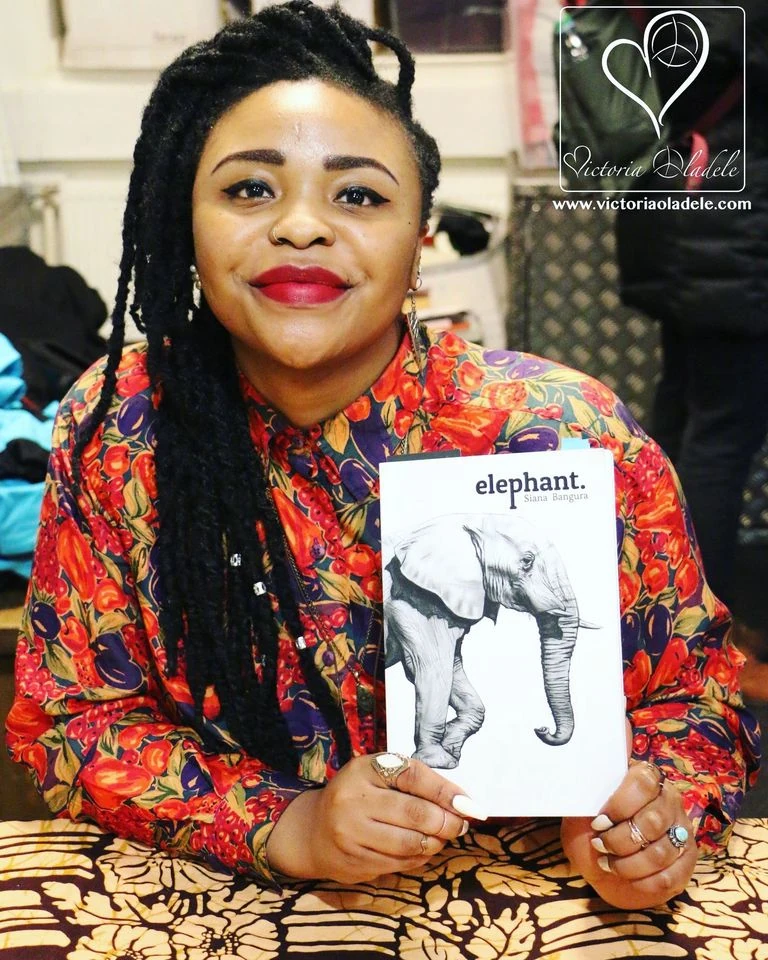
Siana Bangura’s work, as described in the material supplied for this feature, moves between poetry, essays, public speaking, filmmaking and platform-building. Across those forms, she addresses race, feminism and social justice, and seeks to amplify black and minority voices. The connecting thread is an effort to challenge inequality and widen who is heard in British public life.
Bangura is presented not only as a commentator on injustice but as a writer and producer who has sought to create forums for discussion and carry difficult subjects into different kinds of public conversation. The account connects her work to disparities she witnessed growing up in the United Kingdom. It gives no further biographical particulars, but makes clear that Britain is both the setting for her concerns and the society her work seeks to challenge and change.
Her poetry and essays give language to experiences the supplied account says are too often overlooked. Public speaking brings those concerns to audiences directly. No Fly on the WALL provides a platform for discussion, while the documentary 1500 & Counting takes her advocacy into film. These are distinct activities, presented as parts of a shared effort to confront racism and exclusion and to ask who is included in conversations about equality and justice.
Writing from experience
The supplied account describes Bangura’s writing as commentary on racism and inequality in British society. Her poetry and essays are among its clearest examples of her activism. They give her a way to articulate the frustrations and aspirations of marginalised communities, and to draw attention to experiences that can be dismissed or left at the edge of public discussion.
The source connects this writing to Bangura’s personal experience and to disparities she witnessed growing up in the UK. It gives no specific examples from her poems or essays, so their significance is best understood through the role attributed to them: naming injustice and making room for experiences that might otherwise go unheard. The account emphasises language as a form of public engagement, rather than focusing on a particular publication or text.
Public speaking extends that work beyond the page. In speeches as in writing, Bangura is described as voicing the concerns and hopes of marginalised communities. The forms allow different kinds of exchange: writing can develop an argument, while speaking brings it directly before an audience. Both serve the wider effort, as described in the material, to bring questions of race and inequality into public view.
This combination of written and spoken work also helps explain the breadth of the role attributed to her. The supplied material does not identify particular events, audiences or texts, so it would be misleading to attach her work to specific moments or claim a measured reach. It does, however, consistently describe her as using language to make the experiences of marginalised people part of public discussion. That purpose links the personal grounding of her writing with the civic character of her speaking.
Building a forum for dialogue
Bangura founded No Fly on the WALL, a platform dedicated to exploring race, gender and social justice. The supplied material describes it as a forum for black and minority voices and a means of building community around discussion. Its importance, in that account, lies both in the subjects it takes up and in the opportunity it offers people to speak and be heard.
Creating a platform differs from speaking in one’s own name. It involves making room for conversation and for voices that might otherwise be overlooked. The article presents No Fly on the WALL as part of Bangura’s effort to challenge social norms and encourage broader acceptance and understanding. Her role is therefore described as organisational as well as expressive: she is associated with creating a setting for dialogue, not only with contributing to it.
The source emphasises storytelling and conversation as ways of building political understanding. That framing connects Bangura’s creative work with her activism. A platform does not by itself resolve the issues it discusses, but it can bring experiences into view and make them part of a wider exchange. No Fly on the WALL sits alongside her writing and speaking as a way of challenging who is included in public life.
The account also describes the platform as a community that questions social norms and advocates wider acceptance. It does not provide operational details or evidence with which to measure the platform’s reach, so the feature makes no claim about its scale or subsequent history. What the material does support is its purpose: to explore intersecting issues and offer a forum for black and minority voices. That purpose is significant within the wider pattern of Bangura’s work, which combines expressing her own arguments with creating opportunities for others to be heard.
Taking advocacy into film
Bangura’s work in production and filmmaking includes the documentary 1500 & Counting. The supplied account says the film investigates deaths of black men in police custody in the UK, which it characterises as problematic and often unjust. It is the most specific example in the material of her use of a creative medium to address a grave public issue.
Film extends her advocacy beyond the page, the speech and the platform. The source presents the documentary as a means of drawing attention to deaths in custody and confronting uncomfortable truths. It supplies no further particulars about the film’s production, reception or the individual cases it addresses; those details should not be inferred. What the record does establish is the subject of the film and its stated connection to her concern for justice.
Across these forms, Bangura’s work is associated with subjects that expose inequalities affecting black communities. The documentary belongs alongside her writing and public speaking not because each medium works in the same way, but because each offers a means of bringing those concerns before the public. The supplied account describes her move into filmmaking as a continuation of her advocacy.
The original article calls the documentary critically acclaimed, but provides no supporting information about reviews or reception. That evaluative description is not repeated here as established fact. Retaining the film’s stated subject, rather than an unsubstantiated assessment of its reputation, keeps the account specific about what the supplied material supports: a documentary investigation of deaths of black men in police custody in the UK.
Feminism that includes race and class
Intersectional feminism is another defining strand of Bangura’s public work. The supplied article describes her as arguing that gender cannot be considered properly in isolation from race and class. It says she advocates for the rights and recognition of women from black and minority ethnic backgrounds and challenges parts of mainstream feminism when they neglect those dimensions.
This emphasis asks who is included when equality is discussed. A movement can speak broadly about women’s rights while overlooking the different pressures faced by women of colour. Bangura’s position, as represented in the source, is that an inclusive account of gender equality must take race and class into consideration rather than treating women’s experience as uniform.
The argument also turns scrutiny towards spaces that identify themselves with progressive aims. The article describes Bangura as pressing such movements to examine whom they include, whom they overlook and whose voices they recognise as authoritative. Intersectional feminism thus has a practical place in her wider work: it is a way to question whether calls for justice reach the people they claim to serve.
Her advocacy on this point is presented as part of a wider concern with representation. The issue is not simply whether women are present in a discussion of equality, but whether differences in race and class are acknowledged within it. The supplied material offers no specific campaign or publication as an example, so this feature does not attribute a particular intervention to her. It does make clear the substance of the position it describes: equality arguments should recognise the distinct experiences of women from black and minority ethnic backgrounds rather than assuming one account can stand for all.
A consistent purpose across different forms
Writing, speaking, platform-building and filmmaking are distinct activities. They offer different ways to put an issue before the public, invite participation or sustain attention. In Bangura’s case, the source links them through recurring concerns with race, feminism, inequality, justice, voice and community. Her poetry and essays address those themes in writing; her speeches bring them to audiences; No Fly on the WALL makes space for discussion; and 1500 & Counting examines deaths of black men in police custody.
The material places Bangura within a British legacy of activism because of this pattern of work, rather than on the basis of a title or formal honour. It presents her contribution as an effort to challenge silence, widen representation and encourage people to question social norms. It also stresses the collective nature of her aims: the point is not only to express her own views, but to make public culture less exclusive by expanding who can speak and be heard.
The supplied texts do not provide evidence with which to measure the scale or reception of this work. They do, however, describe a consistent set of methods and concerns. Bangura’s public role, as represented here, is shaped by using creative work and platforms to insist that questions of race, gender and power belong within the conversation about British society.
There is a useful distinction between the forms in this account. Writing and speech are presented as ways to articulate experience; the platform as a means of enabling discussion; and film as a way to investigate a serious issue. Together they make the case for a public contribution without requiring claims about celebrity, measurable influence or universal agreement. The evidence supports a description of the work and its aims, not a verdict on its reach.
Why Siana Bangura deserves a place in British Legacy
Siana Bangura deserves a place in British Legacy because the work described here brings creative practice into direct contact with questions of public justice. Her writing and public speaking address racism and inequality in British society; No Fly on the WALL creates a forum for exploring race, gender and social justice; and her documentary 1500 & Counting investigates deaths of black men in police custody in the UK. Each example shows a different way of making difficult issues visible and challenging the exclusion of black and minority voices from public discussion.
Her advocacy of intersectional feminism adds a further, specific contribution. By insisting that gender equality must account for race and class, Bangura’s work asks movements for change to examine whom they include and whose experiences they overlook. That question has practical significance: a discussion of equality is incomplete if it does not recognise the different circumstances of the people affected. Taken together, her writing, film and platform-building form an evidenced British connection, grounded in the society her work addresses. They offer future readers an example of how art and public communication can broaden debate, confront inequality and make room for voices too easily left out.