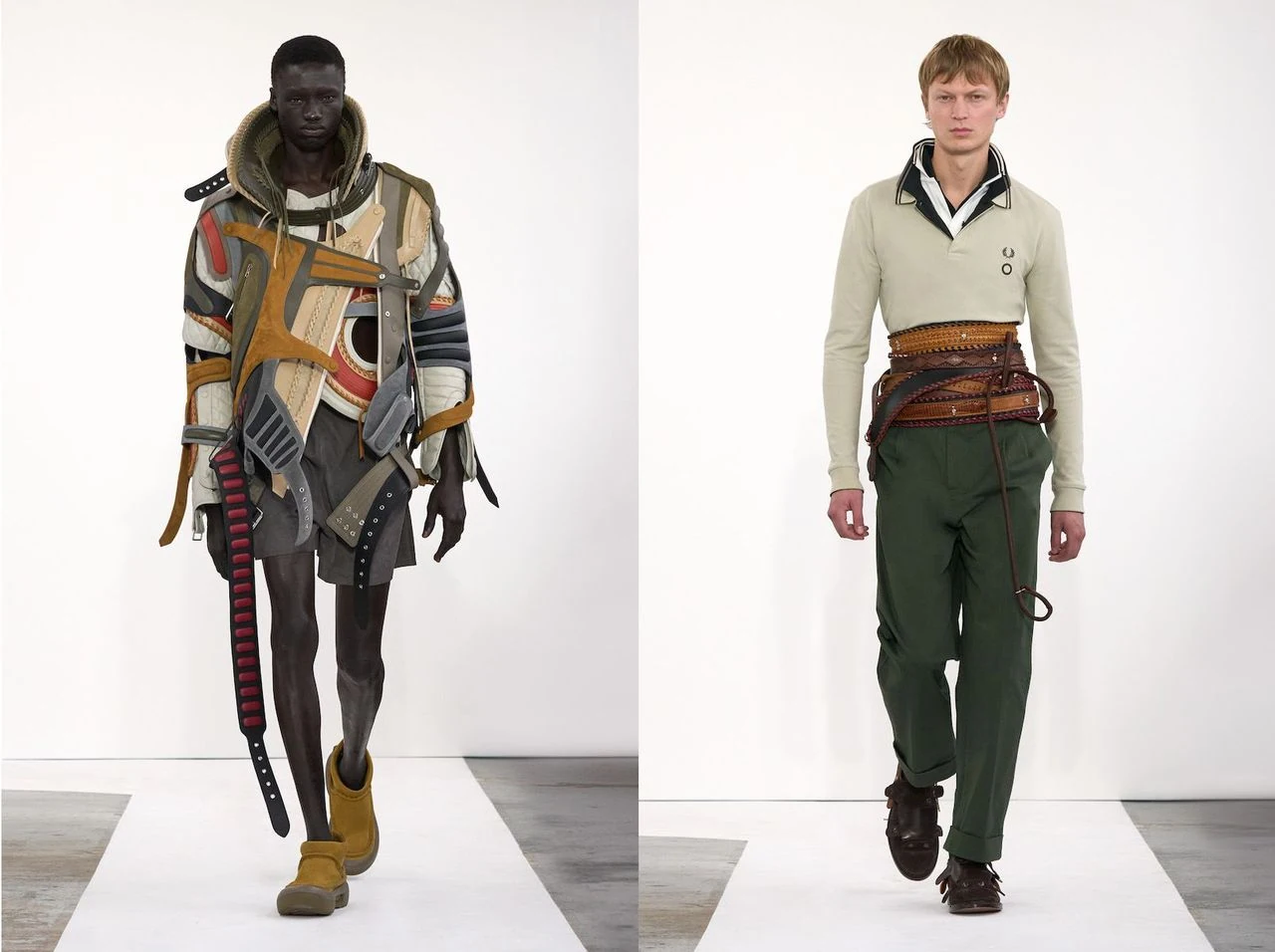
Craig Green’s menswear brings together two ideas often treated as opposites: clothes as practical equipment and fashion as a vehicle for imaginative expression. His designs draw on workwear, military clothing and protective forms, using details such as straps, padding and intricate construction. On the runway, those functional elements become part of a larger visual language, while the garments remain connected to wearability.
Training and an early design language
Green studied at Central Saint Martins, graduating in 2012. His early collections drew attention for a distinctive approach to menswear, combining experimental ideas with practical considerations. Rather than treating a garment simply as an item to wear, his work uses clothing to suggest character and tell a visual story.
Structure is central to that approach. Workwear and military dress provide points of reference, while protective clothing informs the use of padding and constructed forms. Straps and carefully worked details give the pieces an apparent purpose and resilience. These elements are not merely decoration: they help make the clothes feel organised around function, even when their shapes are deliberately unusual.
Clothing as a visual narrative
Green’s collections are organised around themes, with runway presentations extending the ideas expressed in the clothes. Models become figures within a designed scene, and garments contribute to the collection’s wider narrative. The source account describes recurring concerns with vulnerability, struggle and the human condition. That conceptual interest does not remove the practical dimension: the clothes are also intended to be wearable.
This balance gives Green’s work its particular tension. Uniformity and protection can suggest order, yet the collections also explore human vulnerability. Practical construction sits alongside theatrical presentation. Instead of separating the runway image from the garment itself, Green uses both to develop a coherent idea. His work therefore occupies space between fashion and visual storytelling without discarding the everyday purpose of clothing.
Collaborations and recognition
Green has worked with Moncler and Adidas, extending his design work through collaborations with established brands. The supplied article also reports that he has received the British Menswear Designer Award at the Fashion Awards multiple times. These details point to two different aspects of his profile: collaboration beyond his own collections, and recognition within the British fashion industry.
The same account places his collections in international fashion settings, including London and Paris. Its broader claims about his influence on menswear and reach among audiences are less precise, so this feature concentrates on the documented elements of his practice: the design references, the collections and presentations, the named collaborations and the reported awards.
Why Craig Green deserves a place in British Legacy
Green’s place in a record of British fashion rests on a specific contribution: he has made utility a source of design ideas rather than a limit on them. Workwear, military references and protective forms give his menswear a recognisable structure; straps, padding and construction turn those references into garments with visual force. His collections then develop that language through themes and runway presentations, linking clothing to ideas about vulnerability, struggle and the human condition.
His training at Central Saint Martins and reported recognition with the British Menswear Designer Award connect his work to the UK’s fashion education and awards landscape. Collaborations with Moncler and Adidas show that his practice has also extended beyond his own collections. Taken together, these details support a British legacy grounded not in general claims about national character, but in an identifiable design approach: combining practical references with conceptual storytelling, and carrying that approach into both runway work and collaborations.