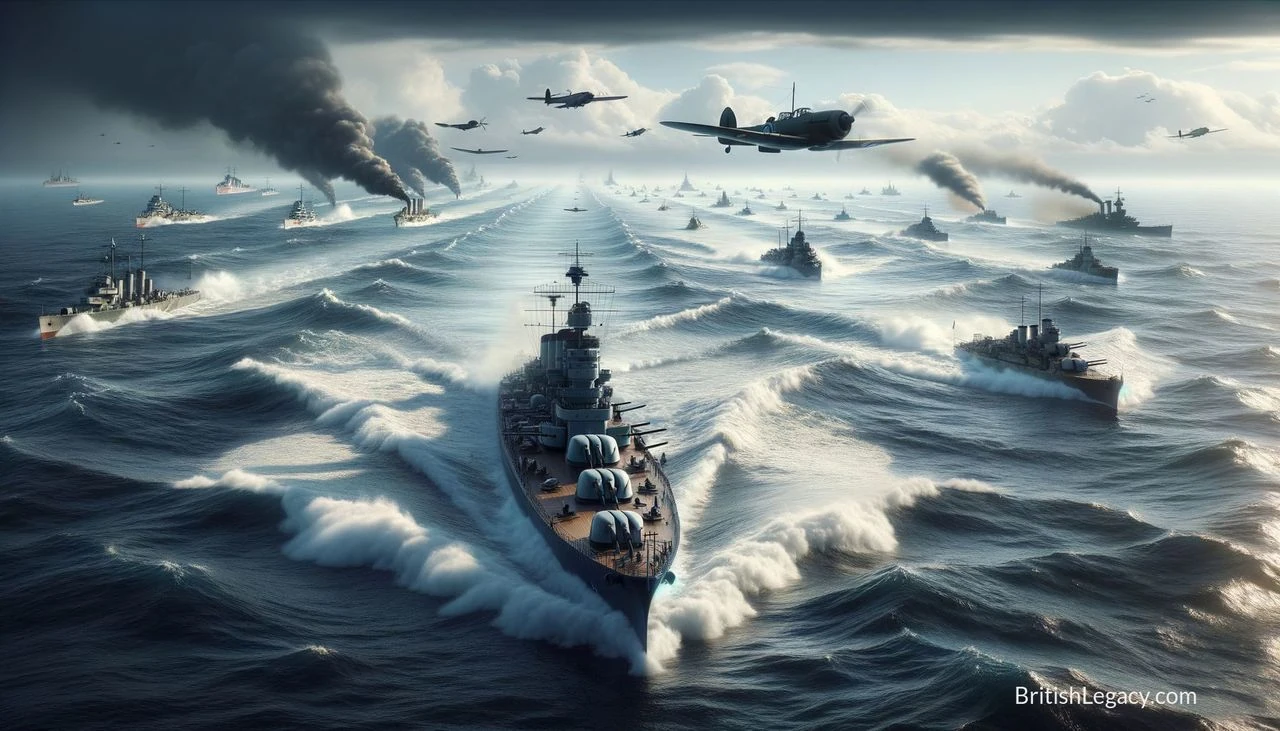
The Battle of the Atlantic: Lifeline of Victory in the Second World War (1939-1945)
The Battle of the Atlantic stands as one of the pivotal chapters in British history, embodying a fierce and relentless struggle that was essential for the sustenance of the United Kingdom during the tumultuous years of the Second World War. Spanning from 1939 to 1945, this prolonged naval campaign was crucial in safeguarding the lifelines that supported not only Britain’s war effort but also its civilian survival.
Prelude to Battle
At the dawn of the Second World War, the United Kingdom, an island nation, found itself incredibly reliant on the constant flow of imports for food, fuel, and raw materials. As the Nazi war machine rolled across Europe, the Atlantic Ocean turned into a vast arena of strategic importance. For Adolf Hitler, cutting these supply lines would choke Britain into submission. Thus began the Battle of the Atlantic, a continuous engagement fostering some of the fiercest confrontations on the high seas.
The Struggle Unfolds
German U-boats (submarines) prowled the deep waters of the Atlantic with the intent to isolate Britain. These “wolf packs” targeted Allied merchant ships, leading to devastating losses. The campaign rapidly escalated, and maritime warfare became an exercise in innovation and endurance. Britain’s response required a Herculean effort of coordination, involving naval strategies, technological advancements, and international cooperation.
To counter the U-boat menace, Britain and its allies developed convoy systems, where groups of merchant ships traveled together, escorted by warships. This tactic sought to mitigate the destructiveness of the German submarines. The evolution of sonar technology and the cracking of the German Enigma code by British cryptologists at Bletchley Park allowed for better tracking and countering of U-boat operations, turning the tides favourably for the Allies.
A Test of Resolve and Ingenuity
The Battle of the Atlantic was not solely a military confrontation but a testament to British resilience and ingenuity. The citizens on the home front played a crucial role, enduring rationing and the grim realities of war. Shipbuilders worked tirelessly to replace lost vessels, and women stepped into roles that fuelled the war effort and kept the economy moving.
The turning point in this marathon of endurance came in 1943, a year that saw notable adversities for German U-boats, culminating from the Allies’ enhanced tactical approaches, including air cover provided by long-range aircraft. These advancements significantly reduced shipping losses, ensuring vital supplies continued to reach British shores.
Global Impact and Legacy
The importance of the Battle of the Atlantic cannot be overstated. It encapsulates the broader struggle for survival and ultimate victory in the Second World War. It highlighted the interconnectedness of international alliances, particularly the support from the United States under the Lend-Lease program, which provided Britain with essential military and economic aid even before officially entering the war.
This battle underscored the strategic role of maritime dominance and the criticality of supply lines in modern warfare. The lessons learned and the breakthroughs achieved during these heated years have had lasting impacts on naval tactics and technology, influencing post-war naval policies and operations across the globe.
Remembrance and Reflection
Today, the legacy of the Battle of the Atlantic is preserved in museums, memorials, and through the tales of veterans who braved the treacherous waters. It serves as a potent reminder of the sacrifices made and the indomitable spirit that defines the British heritage. This chapter of history is a crucial part of the British legacy, showcasing a blend of determination, innovation, and international camaraderie that turned the stormy seas of the Atlantic into the gateway of Allied victory.
This campaign’s story is not merely about ships and submarines; it is about the human resolve to overcome immeasurable odds, safeguarding the freedoms and values that form the cornerstones of the great British legacy that continues to inspire the world today.