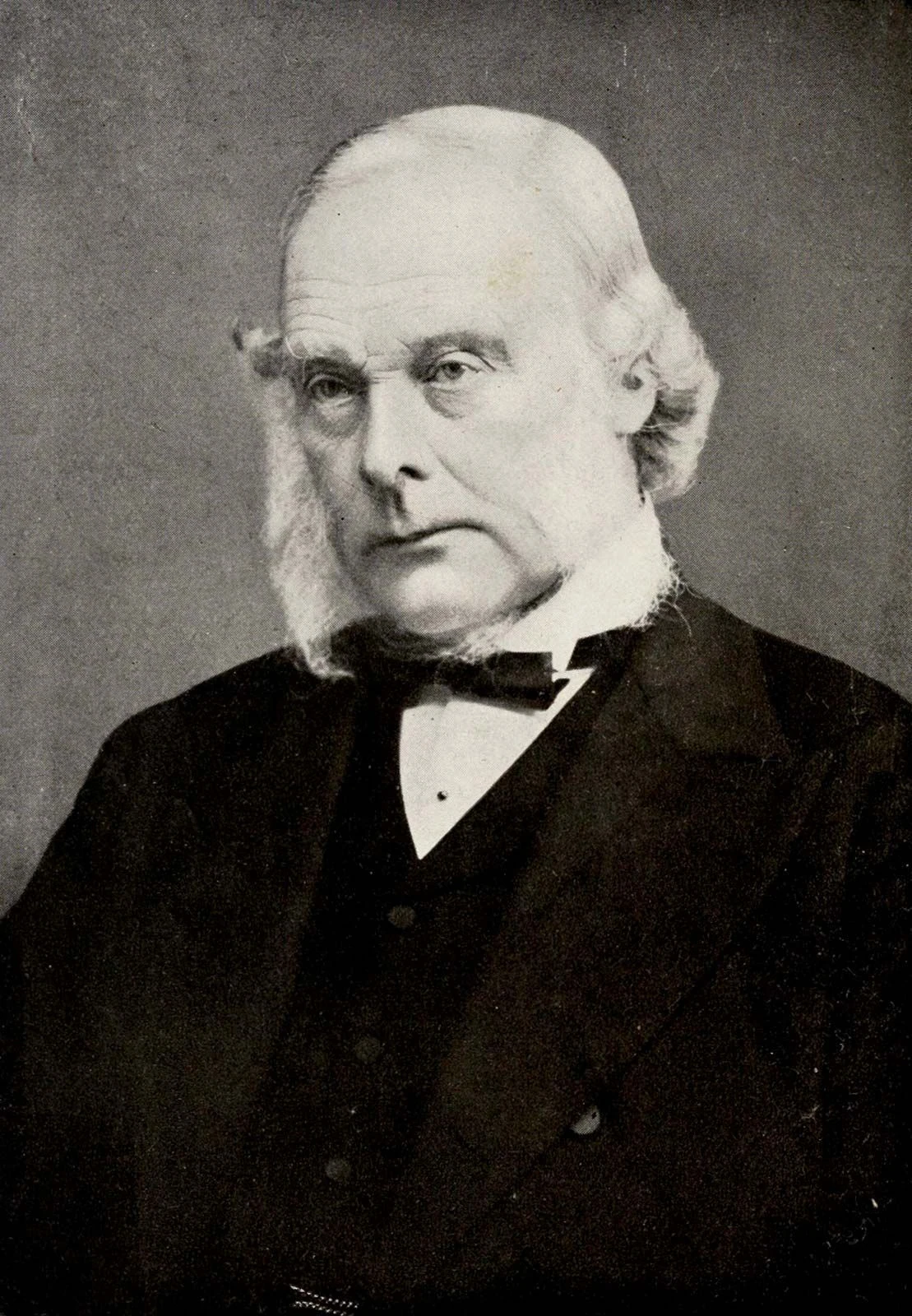
In nineteenth-century hospitals, an operation could be technically successful and still be followed by a fatal infection. Joseph Lister helped change that. He brought experiments with microscopes and close observation of wounds to bear on a problem surgeons had struggled to control, then developed a method for limiting putrefaction and protecting injured tissue. His achievement was not simply the use of carbolic acid: it was the creation, testing and teaching of a system for preventing infection. Developed through work in British hospitals and universities, that system helped make surgery a more dependable form of treatment.
The danger that remained after the operation
Anaesthesia had begun to spare patients the agony of surgery by the 1840s, but it did not make an operation safe. A patient might survive the knife only to develop sepsis, erysipelas or hospital gangrene. In Glasgow during the 1860s, Lister faced a high toll from sepsis among patients undergoing major amputations. Surgeons and hospital administrators debated ventilation, bad smells and “hospitalism”, but they lacked a reliable means of preventing wounds from putrefying.
That context matters. Lister did not solve the problem simply by telling surgeons to wash, nor did he begin with a ready-made theory that everyone else had overlooked. He investigated how damaged tissue behaved and why some wounds deteriorated while others healed. His response joined observations made in the ward to experiments and scientific ideas about fermentation and decay. It gave surgeons a way to act on a difficult problem, rather than treating infection as an unavoidable consequence of injury or surgery.
Learning to look closely
Born in Upton, then in Essex, on 5 April 1827, Lister grew up in a Quaker family with a strong interest in scientific observation. His father, Joseph Jackson Lister, was a wine merchant and a microscopist whose improvements to achromatic lenses helped advance the compound microscope. The younger Lister had access to that instrument from an early age and developed an interest in natural history and the structure of living things.
Religious tests effectively barred Quakers from Oxford and Cambridge, so Lister studied at University College London, one of the British institutions open to him. He began his studies there in 1844 and graduated in medicine in 1852. His education was not confined to the operating theatre. He investigated inflammation, blood vessels and tissue under the microscope, and published early work on the iris and the muscular tissue of the skin. These studies gave him a habit of asking what was happening within the body before deciding how a surgeon should intervene.
In Edinburgh, Lister worked with the surgeon James Syme, first assisting him and later becoming a colleague at the Royal Infirmary. He married Syme’s daughter, Agnes, in 1856. She became closely involved in his working life, copying manuscripts and assisting with experiments. The years in Edinburgh helped establish Lister as a surgeon and experimental investigator before his most influential work began.
Glasgow and the antiseptic idea
Lister’s Glasgow appointment was confirmed in 1860. He became professor of surgery at the university and, after securing a post at the Glasgow Royal Infirmary, worked with patients whose wounds showed the consequences of infection. His appointment did not immediately give him hospital wards: he first had to win a place at the infirmary. That experience brought him into close contact with the conditions his research would address.
The crucial intellectual prompt came from the French chemist Louis Pasteur’s work on fermentation and putrefaction. Lister considered whether minute living organisms, which Pasteur had connected with these processes, could also be responsible for the decay of wounds. He set out to test the idea in practice. His early experiments did not all work. He tried different disinfectants and dressings, and had to revise his methods as he learned how strongly some substances could irritate or damage tissue.
On 12 August 1865, Lister treated an eleven-year-old boy, James Greenlees, who had sustained a compound fracture when a cart wheel passed over his leg. Lister applied carbolic acid and covered the wound with a protective dressing. The fracture healed without the suppuration commonly feared in such injuries. The case did not by itself settle the question, but it gave Lister evidence that a severe open wound need not inevitably decay. He continued treating patients and adjusting the details of his approach.
In 1867, Lister set out his reasoning in “On the Antiseptic Principle in the Practice of Surgery”. The work was about more than spraying carbolic acid. Lister sought to destroy or exclude the agents of putrefaction, prevent fresh contamination and allow healthy tissue to heal without needless disturbance. He used carbolic acid in treating wounds and dressings, and extended antiseptic precautions to instruments, sutures, patients’ skin and surgeons’ hands. His method was a developing system, not a single unchanging recipe.
From experiments to hospital practice
One of Lister’s lasting contributions was to make antisepsis a practical routine that other surgeons could learn, test and adapt. He refined dressings to protect wounds while limiting damage from the antiseptic. He also developed carbolised catgut ligatures, which could be absorbed in the body rather than left protruding from a wound. He applied antiseptic treatment to abscesses as well as fractures and operations. The details changed as he gained experience, but the aim remained consistent: reduce contamination and give the body a better chance to heal.
Lister also argued from results. In 1870, he reported on the effect of antiseptic treatment in a surgical hospital, comparing outcomes in his Glasgow wards before and after its introduction. His account described a marked fall in deaths following amputation and the absence, during the relevant period, of several serious infections in those wards. The figures were part of a wider case: hospital practice could be judged by what happened to patients, and infection was a danger that could be reduced.
His claims met resistance. Some British surgeons questioned the germ theory, doubted the results or misunderstood how the different parts of the antiseptic method fitted together. Elsewhere, notably in Germany, the approach gained ground more quickly. Disagreement was not merely a distraction: it made the question of evidence central. Surgeons had to consider whether a method worked in their own practice, and what counted as a fair test. Later aseptic practice moved beyond some of Lister’s materials, including carbolic spray, but retained the fundamental idea that infection could be prevented rather than accepted as fate.
Building authority in Edinburgh and London
In 1869, Lister moved from Glasgow to Edinburgh to take the chair of clinical surgery. He continued to teach and practise antisepsis, developing the method as he encountered new cases. His work connected surgical technique with an argument about hospital responsibility: a ward should not become a place where injuries were made more dangerous by infection.
In 1877, Lister took a clinical surgery post at King’s College Hospital in London. One purpose of the move was to spread his system in the capital, where its reception among influential medical teachers mattered. In October that year, he operated on a fractured kneecap belonging to Francis Smith, wiring the bone under antiseptic conditions. Smith recovered and left hospital after three months. The operation showed how control of infection could support procedures that had previously seemed too hazardous, as well as improve the prospects of patients with severe wounds.
His reputation eventually reached the highest levels of public life. Lister was elected a Fellow of the Royal Society in 1860 and served as its president from 1895 to 1900. He became a baronet in 1883 and Baron Lister in 1897. In 1902, he was appointed to the Privy Council and became one of the first recipients of the Order of Merit. When King Edward VII developed appendicitis shortly before his coronation, Lister advised on antiseptic practice. The King survived the operation and later credited Lister and his work.
Later life and remembrance
Lister retired from King’s College Hospital in 1893, following the death of Agnes. He had been a surgeon and teacher in Glasgow, Edinburgh and London, and his influence extended beyond Britain as other practitioners adopted and adapted antiseptic methods. He died at Walmer, Kent, on 10 February 1912, aged 84, and was buried in Hampstead Cemetery after a public funeral service at Westminster Abbey.
His name remains attached to institutions and memorials. The British Institute of Preventive Medicine was renamed the Lister Institute of Preventive Medicine in 1903. There are memorials to him in London and Glasgow, including a statue in Kelvingrove Park. These commemorations reflect not only the fame of a medical pioneer, but the practical change associated with his work: a wound could be treated as a problem to understand and prevent, rather than a danger that surgery could do little to avert.
Why Joseph Lister deserves a place in British Legacy
Joseph Lister deserves a place in British Legacy because his work made British hospitals safer and helped change what surgeons could offer their patients. In Glasgow, he took ideas about fermentation and putrefaction and tested their relevance to wounds. In Edinburgh and London, he taught and developed a practical approach that surgeons could use. His work was not a single dramatic discovery: it involved unsuccessful trials, revised dressings, experiments with materials and a sustained effort to persuade colleagues to judge the method by its results. That combination of scientific enquiry and practical service is central to his achievement.
The benefits were direct. Antiseptic practice helped reduce the risk of infection after operations and gave patients with compound fractures and other serious injuries a better chance of recovery. It also supported more ambitious surgery by making infection less likely to determine the outcome. Later practice left behind some of Lister’s methods, but carried forward the principle he helped establish: contamination must be understood and controlled. His British legacy lies in the work carried out in British universities and hospitals, and in the wider medical change that followed. Lister’s story shows how observation, evidence and a commitment to improving care can turn an idea into a lasting public benefit.
Sources
Joseph Lister — Wikipedia, revision 1372034385
Adapted in part from Joseph Lister by Wikipedia contributors, under CC BY-SA 4.0. Text has been edited and combined with the existing article; this adapted text is shared under the same licence. Contributor history.