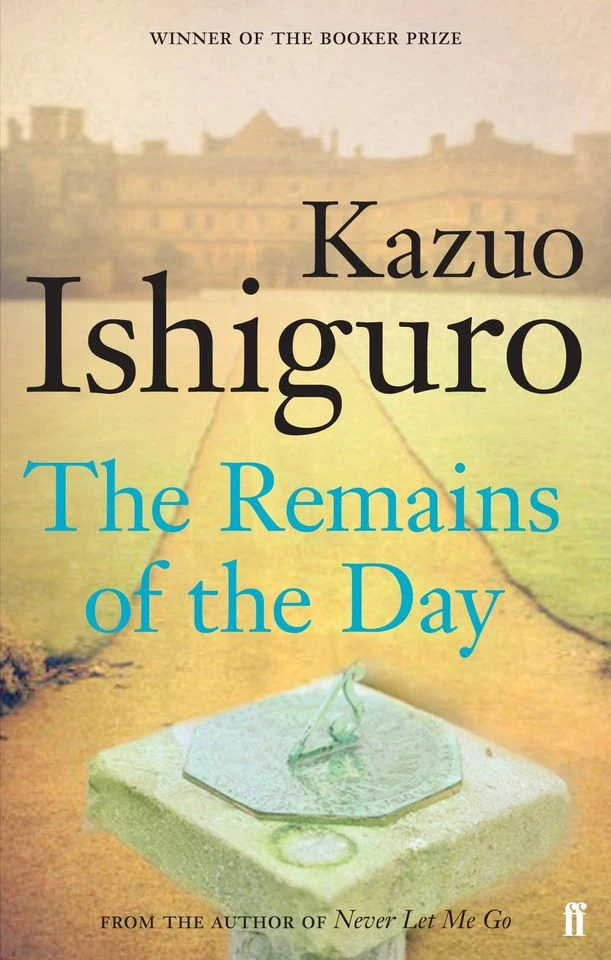
In Kazuo Ishiguro’s The Remains of the Day, Stevens has spent his life mastering the duties of an English butler. On a post-war journey across England, he looks back on his years at Darlington Hall: his service to Lord Darlington and his relationship with Miss Kenton, the housekeeper whose importance to him he did not acknowledge. The journey gives the novel its movement, but its real terrain is Stevens’s account of himself, and the distance between the dignity he claims for his work and the opportunities that claim has cost him.
A journey into the past
Published in 1989, the novel is narrated in the first person by Stevens. His journey through England offers a reason to revisit the past, and his recollections gradually bring two strands of his life into focus: his loyalty to Lord Darlington and his exchanges with Miss Kenton. She may have been the person he loved, but he never expressed his feelings. The novel presents that omission not as a single dramatic decision, but as part of a life in which professional duty has left little room for personal desire.
Stevens’s voice shapes what the reader can see. He describes a life defined by service, yet his reflections also reveal emotional isolation and self-deception. The gap between his explanation of events and what those events suggest gives the narration much of its force. Rather than simply telling the reader what to think about his choices, the novel lets the account itself disclose what Stevens has difficulty facing.
That approach makes memory more than a record of earlier events. As Stevens looks back, his account exposes the assumptions that have governed his life. His devotion to his role offers him a way to understand himself, but it also makes it harder to recognise what he has surrendered. The tension between those things—professional identity and private feeling—gives the story its distinctive restraint.
Service, loyalty and judgement
Lord Darlington’s political inclinations prove misguided, placing Stevens’s allegiance to him under a different light. The novel connects private duty to public history: a servant’s commitment is not separate from the character and actions of the person served. Stevens’s reflections make the consequences of that commitment personal, while the political context raises a broader question about the judgement required when loyalty is treated as an overriding virtue.
The book does not reduce its subject to a simple opposition between work and happiness. Stevens’s profession has given structure to his life, and his dedication is central to the person he understands himself to be. Yet that same dedication has helped him avoid other kinds of choice. His failure to tell Miss Kenton what he felt is bound up with the habits of reserve and service that shape his account of both work and intimacy.
In this way, the novel’s treatment of regret remains closely tied to character. Stevens does not stand outside his own story as a detached judge; he is the person trying to narrate it. Readers encounter his loyalty and self-deception together, through the limits and revealing details of his reflections. That perspective gives the novel room to consider how people make a life seem coherent, even when its unspoken losses are difficult to overlook.
Ishiguro and the English setting
Ishiguro was born in Nagasaki, Japan, in 1954 and moved to the United Kingdom at the age of five. In this novel, he centres the story on an English butler, an aristocratic household and a journey across England. The setting is not simply a backdrop: Darlington Hall and the world associated with it make Stevens’s sense of duty legible, while the post-war journey gives him distance from the place where much of his life has been spent.
The novel’s attention to a declining British aristocracy and the fading grandeur of the English country house places individual recollection against social change. Stevens’s service belongs to a particular household and social order, but the dilemmas the book examines are not limited to that setting. Its portrait of a person who has organised life around duty gives the story a wider emotional reach without losing its connection to English domestic and historical life.
The book received the 1989 Booker Prize for Fiction. A film adaptation followed in 1993, starring Anthony Hopkins and Emma Thompson. These milestones brought the story to readers and audiences beyond its original form, while the novel’s achievement rests in the particular control of its first-person narrative: Stevens’s measured reflections allow loyalty, regret and self-deception to emerge together.
Why The Remains of the Day deserves a place in British Legacy
The Remains of the Day deserves a place in British Legacy because it makes an English setting carry more than atmosphere. Darlington Hall, Stevens’s work as a butler and his journey across England give shape to a story about the costs of organising a whole life around service. The novel links that private cost to the political failings of Lord Darlington, showing how loyalty can leave questions of judgement unanswered. Its attention to the changing world of the country house also places Stevens’s personal reflections within a recognisable social history.
Ishiguro’s connection to Britain is part of the story too: born in Japan and brought to the United Kingdom at five, he wrote a novel centred on English life that has become part of the country’s literary record. The 1989 Booker Prize and the 1993 film adaptation mark the work’s reach, but its lasting value lies in the questions it asks through Stevens’s restrained account. What does duty protect, and what can it prevent a person from saying or choosing? By inviting readers to weigh those questions rather than supplying easy answers, the novel gives British literary heritage a work of emotional and historical precision.
The supplied article also directs readers interested in the book to a retail listing: The Remains of the Day on Amazon UK.