David Gower’s batting could make difficult cricket look unhurried. A left-hander with a reputation for graceful stroke play, he scored 8,231 runs in 117 Test matches for England and captained the side to victory in the 1985 Ashes. His international career also included setbacks and disputes, while retirement from playing led to a second public life as a cricket broadcaster. The story is not simply one of elegance: it is a career of sustained first-class achievement, national-team responsibility and a distinctive presence in the game.
School cricket and a route into the county game
Gower was born in Tunbridge Wells, Kent, on 1 April 1957. His father, Richard Gower, worked in the Colonial Service in Dar es Salaam, and David spent part of his childhood in Tanganyika. The family returned to England after the territory became independent, settling first in Kent and later moving to Loughborough. From the age of eight, Gower attended Marlborough House School in Hawkhurst, where cricket became his preferred sport. He later won a scholarship to board at The King’s School in Canterbury, made the school’s First XI at 14 and went on to captain it.
After leaving school with A levels, Gower was interviewed for a place at St Edmund Hall, Oxford, but was not admitted. He briefly returned to school to pursue further qualifications, then accepted a professional opportunity with Leicestershire after playing for its Second XI. He began in 1975 on £25 a week. A short spell studying law at University College London followed, but he returned to professional cricket after six months.
His first-class debut for Leicestershire came against Lancashire in July 1975. His early county seasons brought gradual progress: he scored his first first-class century in 1976, and became more prolific in one-day cricket the following year. In 1978, having made more than 1,000 first-class runs in a season for the first time, he entered the England team. He was named Wisden Cricketer of the Year that season.
England, Ashes runs and the captaincy
Gower made his Test debut against Pakistan at Edgbaston on 1 June 1978, scoring 58 in England’s innings. He also debuted in one-day internationals that year. His first Test century came against New Zealand in July, and later in the season he scored his first Ashes hundred in Australia. Across his international career, which ran from 1978 to 1992, he played 117 Tests and 114 one-day internationals. His totals were 8,231 Test runs, at an average of 44.25, and 3,170 ODI runs.
His Test record includes 18 centuries, with a highest score of 215. That innings came at Edgbaston during the 1985 Ashes, a series in which Gower also scored 166 at Trent Bridge and 157 at The Oval. He finished with 732 runs at an average of 81.33, and England won the series 3–1. Gower was captain for that success. It stands as the defining result of his leadership, rather than proof that captaincy brought uninterrupted success.
In 1986, England lost both Tests against India and Gower was replaced as captain. The following year he declined to play in the World Cup, having been on nine successive winter tours. He returned to the captaincy for the 1989 Ashes, but later relinquished it to Graham Gooch. Their strained relationship formed part of the background to Gower’s retirement from international cricket in early 1993. He had played his final Test against Pakistan at The Oval in August 1992.
Those episodes complicate the image of the effortless stylist. Gower’s career brought major innings and a celebrated Ashes campaign, but also poor runs of form, changes in leadership and public questions about his commitment. His record and his reputation are better understood together: natural-looking stroke play did not mean a career without pressure or controversy.
County cricket and a recognisable style
Gower’s work in county cricket extended well beyond his England appearances. He played for Leicestershire until 1989, then moved to Hampshire, where he remained through the end of his playing career in 1993. His 448 first-class matches produced 26,339 runs at an average of 40.08, including 53 centuries. In one-day cricket he made 12,255 runs in 430 matches.
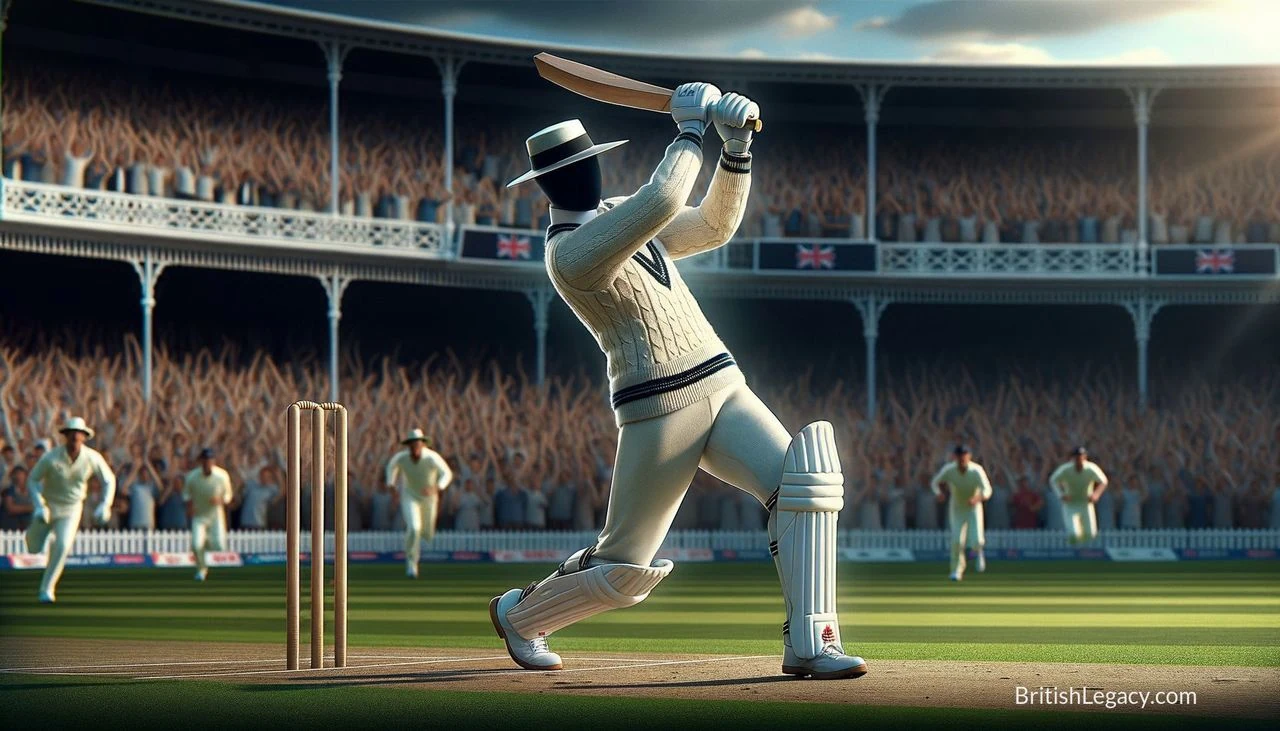
As a batter, Gower was left-handed and played with a dominant top hand. His cover drive became one of the strokes associated with his flowing style. Observers sometimes read his languid manner as indifference; the same apparent ease could make an innings seem unusually fluent when his timing was right. That style had a trade-off: he could be dismissed while attempting a shot that more cautious batters might have left alone.
He was also a right-arm off-break bowler, though bowling was a minor part of his career. He took one Test wicket and four in first-class cricket. A chronic shoulder problem affected his fielding late in his playing days. These details sit alongside the batting record to give a fuller picture of an all-round cricketer whose main contribution was clearly with the bat.
From the dressing room to the commentary box
After leaving the international game, Gower built a substantial broadcasting career. He commentated for Australian television in the 1990s and was among the BBC’s leading cricket commentators. He also presented four series of the BBC2 programme Gower’s Cricket Monthly and appeared as a team captain on the comedy sports quiz They Think It’s All Over. Later, he became a familiar presenter and commentator on Sky Sports’ international cricket coverage. Sky did not renew his contract in 2019; he returned to commentary for BT Sport during the 2021–22 Ashes.
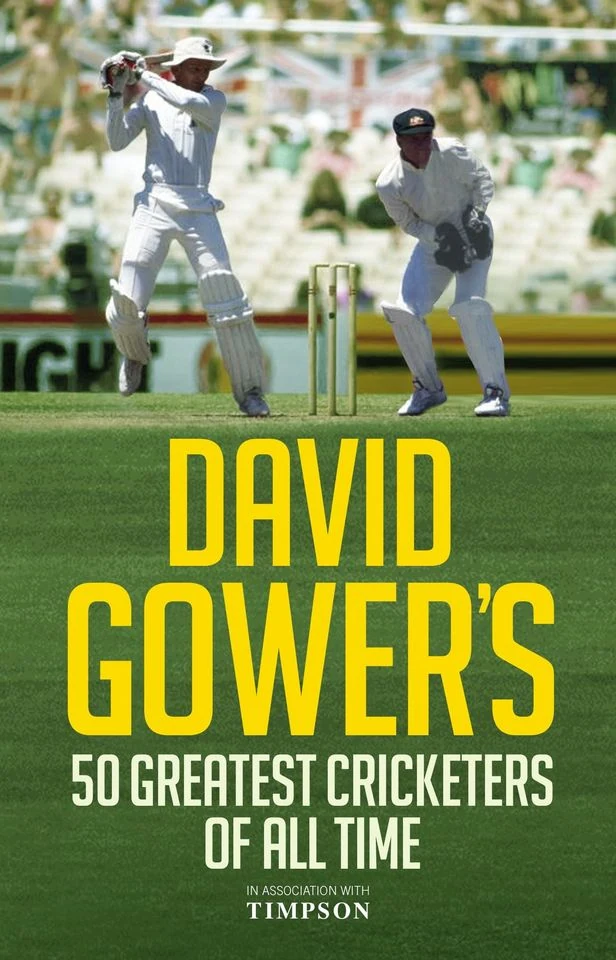
His television work carried his cricketing manner into a different setting: relaxed in delivery, but informed by long experience of the game. That public role helped make him recognisable to viewers who had not watched his playing career. His books also include Gower: The Autobiography, written with journalist Martin Johnson, and later cricket titles with Johnson and Alan Lee.
Cricket was not his only public interest. In 1989, Gower joined Gerald Durrell, Lee Durrell and David Attenborough in launching the World Land Trust, initially to support the purchase of rainforest in Belize. He has also been a patron of the David Shepherd Wildlife Foundation and vice-president of the Nature in Art Trust. His honours include appointment as an Officer of the Order of the British Empire in 1992 and induction into the ICC Cricket Hall of Fame in 2009. Loughborough University awarded him an honorary Master of Arts in 1994.
Why David Gower deserves a place in British Legacy
Gower’s place in British sporting history rests first on a substantial record in English cricket. He scored more than 26,000 first-class runs, made 53 first-class centuries and represented England in both Test and one-day cricket. His 1985 Ashes performances—732 runs in a series England won—provide a particularly clear measure of his impact at the highest level. His celebrated style matters too, not as a substitute for achievement but as part of how spectators remember it: the cover drive and the apparently unforced timing gave his batting a recognisable character.
His legacy also extends beyond the scorebook. As captain, he led England to the 1985 Ashes victory; as a broadcaster, he helped interpret cricket for television audiences over several decades, moving between the BBC, Australian coverage, Sky and BT Sport. His conservation work, including involvement in the launch of the World Land Trust, adds a distinct strand to his public life. These are specific contributions rather than a general claim about national identity: Gower’s career connects county cricket, England’s international side and the broadcast life of the sport. Remembering its successes alongside its difficult episodes makes his place in British Legacy more credible, and more useful to readers interested in how sporting reputations are made and sustained.
Sources
David Gower — Wikipedia revision
Adapted in part from David Gower by Wikipedia contributors, under CC BY-SA 4.0. Text has been edited and combined with the existing article; this adapted text is shared under the same licence. Contributor history.