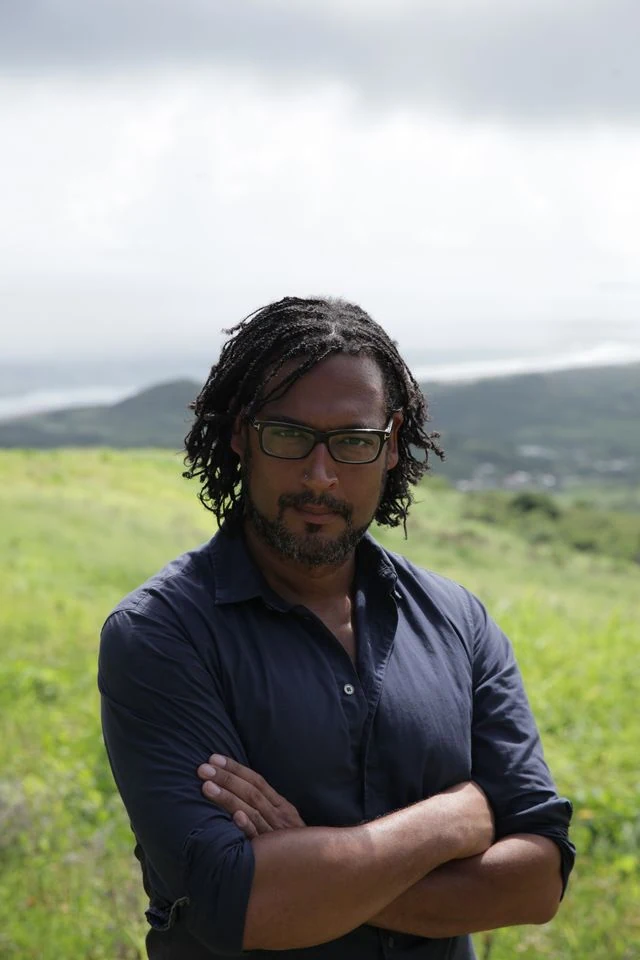
David Olusoga’s work has made it harder to treat Black history as a footnote to Britain’s story. Born in Lagos in January 1970 and brought to Britain as a child, he grew up in Gateshead and became a historian, writer, broadcaster and film-maker. His books and television programmes have brought histories of slavery, empire, war and Black life to broad audiences, while his academic role as Professor of Public History at the University of Manchester reflects a career that connects scholarship with public conversation.
Olusoga’s achievement is not simply that he has told stories previously neglected by mainstream history. He has shown how those stories change the way familiar places, institutions and national events can be understood. From the lives of enslaved people and their owners to the history of a single house, his work asks who appears in the record, what the evidence can reveal and how the past continues to shape the present.
Growing up and learning to make history public
Olusoga grew up on a council estate in Gateshead, one of very few non-white children in the area. The University of Manchester has recorded that repeated attacks by the National Front eventually forced his family from their home. Olusoga has said that he turned to history to make sense of the forces that had affected his life. That starting point helps explain the urgency of his later work, but it does not reduce it to autobiography: his books and programmes pursue their subjects through historical evidence.
He studied the history of slavery at the University of Liverpool, graduating with a BA in History in 1994, and then completed postgraduate training in broadcast journalism at Leeds Trinity University. The combination gave him experience of two different disciplines: historical investigation and the communication of ideas to an audience. Both would shape a career that moved between books, television and academic work.
Olusoga began in television as a researcher on the BBC series Western Front. He later worked as a producer on programmes including Namibia: Genocide and the Second Reich, The Lost Pictures of Eugene Smith and Abraham Lincoln: Saint or Sinner? That early work placed him behind the camera, involved in the construction of historical programmes before he became a familiar presenter. It also gave him a practical understanding of how television research and storytelling fit together.
Black and British: a longer national history
In 2016, the BBC broadcast Black & British: A Forgotten History, accompanied by Olusoga’s book of the same name. The project placed Black British history within the history of Britain as a whole, rather than presenting it as a specialist subject or a story with a recent starting point. Its reach across time and geography helped viewers and readers see that the history of Black Britain is connected to Britain, Africa and the Americas.
That wider view also changes how the national landscape can be read. Olusoga’s account follows history through records and places, including slave forts on the West African coast, plantations and former markets in the Atlantic world, and the houses, street names, statues and memorials found in Britain. Black British history is not an appendix to the nation in this telling; it is one means of understanding the nation’s development and its connections with the wider world.
The book won the PEN Hessell-Tiltman Prize for historical non-fiction in 2017. A later revised edition addressed the Windrush scandal and the Black Lives Matter era. Its continuing development shows that the work is not only a settled account of earlier events, but also an invitation to ask how historical evidence relates to public life now.
Olusoga’s influence on education should be described carefully. The available evidence does not establish that he single-handedly changed what every British school teaches. It does show sustained efforts to make the subject accessible to younger audiences, including Manchester schools lectures and versions of his work aimed at younger readers. Those activities extend his public history beyond television and adult publishing, and encourage pupils to consider how evidence and interpretation shape what they are taught.
Television, archives and everyday lives
Olusoga’s television work ranges across different periods and subjects. In The World’s War: Forgotten Soldiers of Empire, he brought attention to Indian, African and Asian troops who fought in the First World War. In 2018 he co-presented the BBC’s Civilisations with historians Mary Beard and Simon Schama. These programmes form part of a wider body of work concerned with which people and experiences become visible in accounts of history.
Britain’s Forgotten Slave Owners shows how Olusoga has made archival research work on television. The programme followed the records of slave ownership and compensation, using documents to tell a national story. It received a BAFTA award in 2016, and the British Academy later recognised Olusoga’s contribution to public history. The subject is difficult, but the method is direct: establish what the documents record, follow their implications and make the results intelligible to viewers.
A House Through Time takes a different route. Beginning with one address, the series follows the people who lived there and uses their lives to open out wider questions of social change. Its scale makes history tangible without suggesting that one house can represent every experience. Olusoga has said he was proud that the programme encouraged thousands of people to investigate the histories of their own homes. The series therefore offered an example of how historical curiosity can continue beyond the screen.
In 2019, the University of Manchester appointed Olusoga Professor of Public History. The role recognised a career linking historical research with audiences outside the university. He has described public history as a connection between academic history and the histories people encounter in everyday life. His broadcasting treats television not as a substitute for research, but as one place where evidence can be presented, questioned and discussed.
That educational work includes lectures for school pupils from Key Stage 3 to sixth form. The sessions address Black British history, why history matters and how people decide whose account to believe. This extends his contribution from supplying stories to discussing how historical knowledge is formed. It makes questions about sources, interpretation and public memory part of the encounter with history.
Books, production and a wider audience
Although Black and British is central to Olusoga’s reputation, his work covers more than one history or medium. With Casper W. Erichsen, he co-authored The Kaiser’s Holocaust: Germany’s Forgotten Genocide and the Colonial Roots of Nazism, a study of German colonial violence in Namibia and its afterlives. His writing and broadcasting have also addressed war, slavery, empire, race and belonging. Across these subjects, he examines how large structures of power leave traces in individual lives and historical records.
Olusoga has written books connected with his television work as well as stand-alone histories. The World’s War won the 2015 First World War Book of the Year award, and Black and British received both the Longman–History Today Trustees Award and the PEN Hessell-Tiltman Prize in 2017. His other work includes Civilisations and The Black History Book. In 2024 he co-created Black History for Every Day of the Year with his siblings Yinka and Kemi Olusoga. Organised around an entry for each day, the book brings people, places, events and themes into a year-round format rather than restricting Black history to one month.
His work as a producer has also extended to the decisions that shape television. In 2017 Olusoga and Mike Smith founded Uplands Television. Channel 4 has described the independent company as specialising in bringing history to life for contemporary audiences. The move meant that Olusoga was not only presenting programmes made by existing institutions, but also helping to build a production company with a history focus.
Olusoga’s public work has included writing for newspapers and magazines, public lectures and appearances on television. He served on the board of the Scott Trust, which publishes The Guardian, from 2018. His audiences are therefore not confined to viewers of any one series or readers of a single book. They may encounter his work in a classroom, a bookshop, a lecture theatre or through a television documentary.
Recognition and public service
In the 2019 New Year Honours, Olusoga was appointed an Officer of the Order of the British Empire for services to history and community integration. The honour recognised work that reaches beyond a conventional academic audience. In 2021, the British Academy awarded him its President’s Medal for services to the humanities and social sciences, recognising his contribution to making diverse stories from Britain’s past accessible to a wide public.
BAFTA gave Olusoga a Special Award in 2023 for his contribution to television. The award followed earlier recognition for Britain’s Forgotten Slave Owners and marked the importance of his work to factual broadcasting. The range of recognition—from historical and academic institutions to the television industry—reflects the different settings in which he has worked.
Olusoga was appointed a National Trust ambassador in 2025, adding a heritage role to his academic and broadcasting work. The appointment is consistent with the questions that recur in his programmes and writing: what histories are attached to particular places, how do institutions interpret them, and whose lives are included in those accounts?
His approach depends on close attention to documents as well as presentation. Reflecting on Britain’s Forgotten Slave Owners, he remarked that about half of the programme involved sitting in a room with documents. The line captures an important distinction: a public-facing historian may be visible on screen, but the argument rests on research, records and the work of making their significance clear.
Why David Olusoga deserves a place in British Legacy
David Olusoga deserves a place in British Legacy because he has helped people see British history in fuller perspective. Through Black and British, he made a sustained case that Black presence and experience belong within the country’s long history, not at its margins or at a late point in its chronology. His work connects local places and familiar institutions with wider histories of slavery, empire, migration and war. That connection gives audiences more than additional facts: it changes the questions they can ask about a house, a memorial, a street name or a national story.
He has also made historical research available in forms people choose to encounter. Books, BBC documentaries, school lectures, a history-focused production company and his professorship at Manchester all demonstrate different parts of that work. Britain’s Forgotten Slave Owners showed how records could support a compelling public programme; A House Through Time encouraged viewers to investigate the past of their own homes; and Black History for Every Day of the Year placed Black history across the calendar. These are specific contributions to how people learn and talk about the past, not simply claims of general influence.
His British legacy lies in widening the common record without flattening its complexity. Olusoga’s work has helped bring evidence about Black lives, imperial history and slavery into mainstream discussion, while showing that serious historical argument can reach far beyond academic institutions. He has made the country’s past more legible to audiences who might not otherwise consult an archive or a scholarly history. That service—to historical understanding, education and public debate—gives his career a clear place in British cultural life.
Sources
David Olusoga — Wikipedia revision 1375187965
Adapted in part from David Olusoga by Wikipedia contributors, under CC BY-SA 4.0. Text has been edited and combined with the existing article; this adapted text is shared under the same licence. Contributor history.