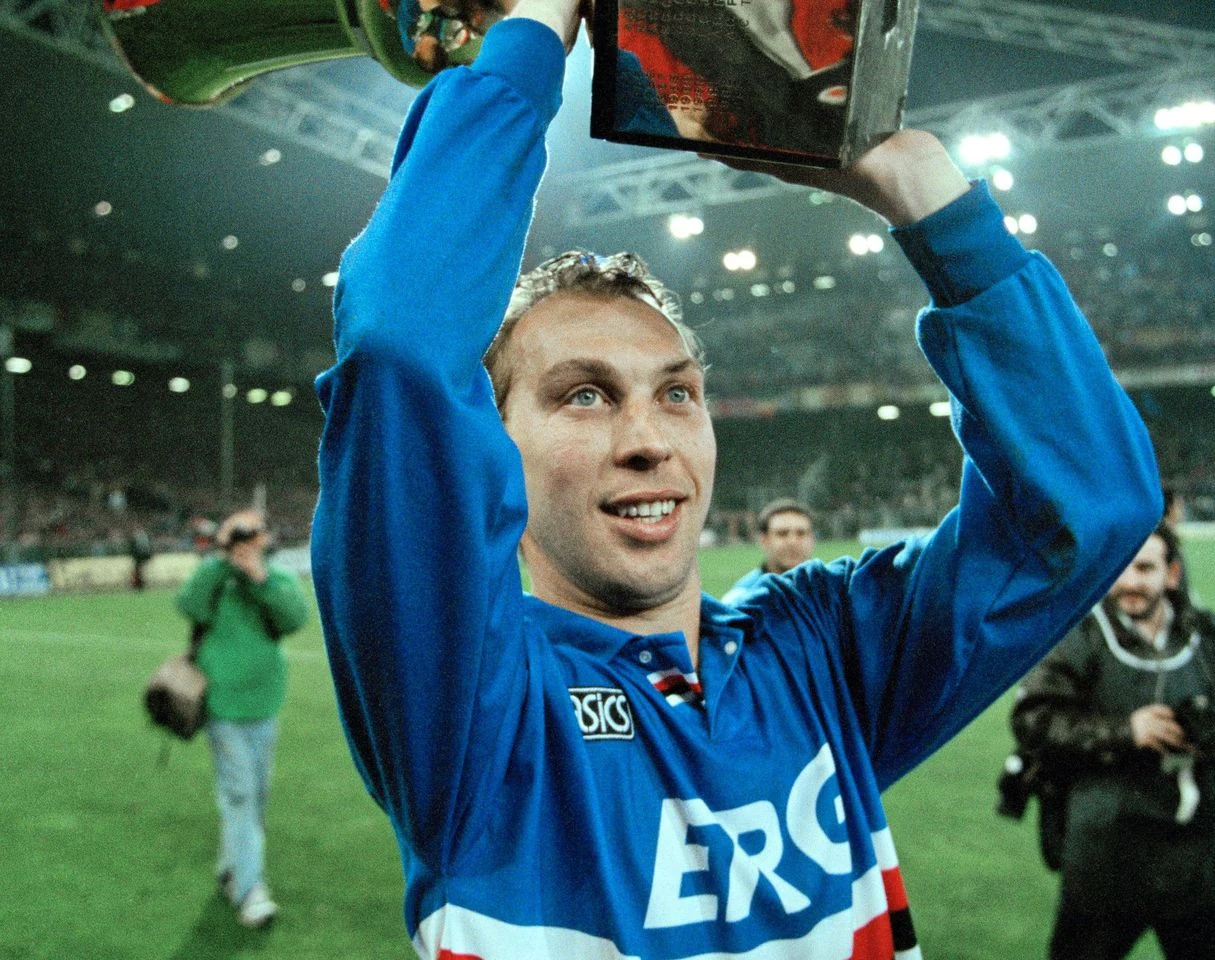
David Platt made a habit of turning midfield runs into goals. His volley against Belgium at the 1990 World Cup made him an England name; his career then carried him from Aston Villa to Bari, Juventus and Sampdoria before a return to English football with Arsenal. Across those changes of country and club, he remained a midfielder with an unusually direct influence on the scoreboard.
From Manchester United apprentice to Crewe scorer
Born in Chadderton, Lancashire, on 10 June 1966, David Andrew Platt was spotted playing for his local side, Chadderton, and joined Manchester United as an apprentice in 1982. He accepted a professional contract offer at the start of the 1984–85 season, but left on a free transfer in February 1985 without making a first-team appearance.
Crewe Alexandra, then in the Fourth Division, gave him the opportunity to establish himself in senior football. Under manager Dario Gradi, Platt became a strong-running, free-scoring midfielder. He scored 55 goals in 134 league appearances for Crewe. The record made him more than a promising former United apprentice: it showed that he could shape matches from midfield and gave a larger club reason to take notice.
Aston Villa and the England breakthrough
In February 1988, Platt moved to Aston Villa for £200,000. Villa were in the Second Division; his goals helped them secure promotion as runners-up that season and re-establish themselves in the top flight. In 1989–90 they finished second to Liverpool, and Platt was named PFA Players’ Player of the Year. Across his Villa league career, he scored 50 goals in 121 appearances.
England manager Bobby Robson gave Platt his first cap in a friendly against Italy in November 1989, then selected him for the 1990 World Cup. He began the tournament as a substitute. In the last minute of extra time against Belgium in the round of 16, he met a Paul Gascoigne free-kick with a volley on the turn. The goal sent England into the quarter-finals and announced Platt on the international stage.
He started the quarter-final against Cameroon and headed England’s opening goal; England eventually won 3–2 after extra time. Platt also started the semi-final against West Germany, where he scored in the penalty shoot-out after a 1–1 draw. England lost the shoot-out, but his tournament continued with a headed goal against Italy in the third-place play-off. He finished the finals with three goals.
Platt remained a regular for England through the following years. At Euro 1992, he scored against Sweden, although England lost and went out in the group stage. England failed to qualify for the 1994 World Cup; Platt scored seven goals during that unsuccessful qualifying campaign. At Euro 1996, he started the quarter-final and semi-final. England again lost to Germany on penalties, with Platt scoring from the spot. His 27th and final England goal had come in a warm-up match against Hungary. He retired from international football after 62 caps.
Italy, then a return to Arsenal
Platt’s World Cup performances preceded a move to Serie A. In 1991 he joined Bari, where he scored 11 league goals in 29 appearances and was given the captain’s armband. Bari were relegated at the end of the season. He moved to Juventus in 1992, scored three league goals and was part of the squad that won the UEFA Cup. A year later he joined Sampdoria, where he won the Coppa Italia in 1994 and scored 17 league goals in 55 appearances.
After four years in Italy, Platt returned to England in July 1995, signed for Arsenal by manager Bruce Rioch. He played under Arsène Wenger after Wenger succeeded Rioch in 1996. Platt scored regularly in his first two Arsenal seasons, but his playing time reduced when Wenger brought in Emmanuel Petit and established Petit alongside Patrick Vieira in central midfield.
Even with fewer starts, Platt made a decisive contribution to Arsenal’s 1997–98 double-winning season. His headed winner against Manchester United helped keep the title challenge alive. He also appeared as a substitute in the FA Cup final, his last match before retiring as a player at the end of the season. Arsenal won both the Premier League and the FA Cup.
Management after playing
Platt’s move into management began at Sampdoria, where he returned as manager in December 1998. His brief tenure ended in January 1999; other clubs had objected that he did not hold the coaching qualifications they considered necessary for the role. In July 1999, he became player-manager of Nottingham Forest, reversing his earlier plan to take time away from the game to study coaching. He made five league appearances for Forest and scored once.
Forest finished outside the Premier League during his two seasons in charge. His tenure included disagreements with senior players, and the club’s spending and debts became part of the difficulty of the period. In 2001, Platt took charge of England’s Under-21 side. The team qualified for the 2002 European Championship but did not qualify for the 2004 tournament; Platt left the role that year.
He later worked as a first-team coach at Manchester City under Roberto Mancini, leaving in 2013 after Mancini’s departure. In 2015, Platt became head coach of FC Pune City in India’s Super League, a position he held for one season. His later football work included a brief consultancy role with Palermo in 2018.
Why David Platt deserves a place in British Legacy
Platt’s place in British football history rests on more than a memorable World Cup volley. At Crewe and Aston Villa, he established the rare, measurable value of a midfielder who could repeatedly turn forward runs into goals. His performances helped Villa win promotion, carried them close to the league title and earned him the PFA Players’ Player of the Year award. For England, his goals at the 1990 World Cup helped take the side to the semi-final, and he continued to contribute at major tournaments through Euro 1996. These achievements made him a prominent English player at a time when his club career was also about to cross into Italian football.
That move gave his career a distinctive reach: Platt played for three Serie A clubs, won the UEFA Cup with Juventus and the Coppa Italia with Sampdoria, then brought that experience back to Arsenal. His role in the club’s 1998 double included a timely winner against Manchester United, even as his place in the starting side diminished. Later, his work with Nottingham Forest, England’s Under-21s and Manchester City placed him in coaching and management as well as playing. The record is mixed as well as successful; it does not need a claim that he single-handedly opened the way for others. What it does show is an English footballer whose goals, overseas career and return to a major domestic club connected several important strands of the game.
Sources
David Platt — revision 1379431551 · David Platt
Adapted in part from David Platt by Wikipedia contributors, under CC BY-SA 4.0. Text has been edited and combined with the existing article; this adapted text is shared under the same licence. Contributor history.