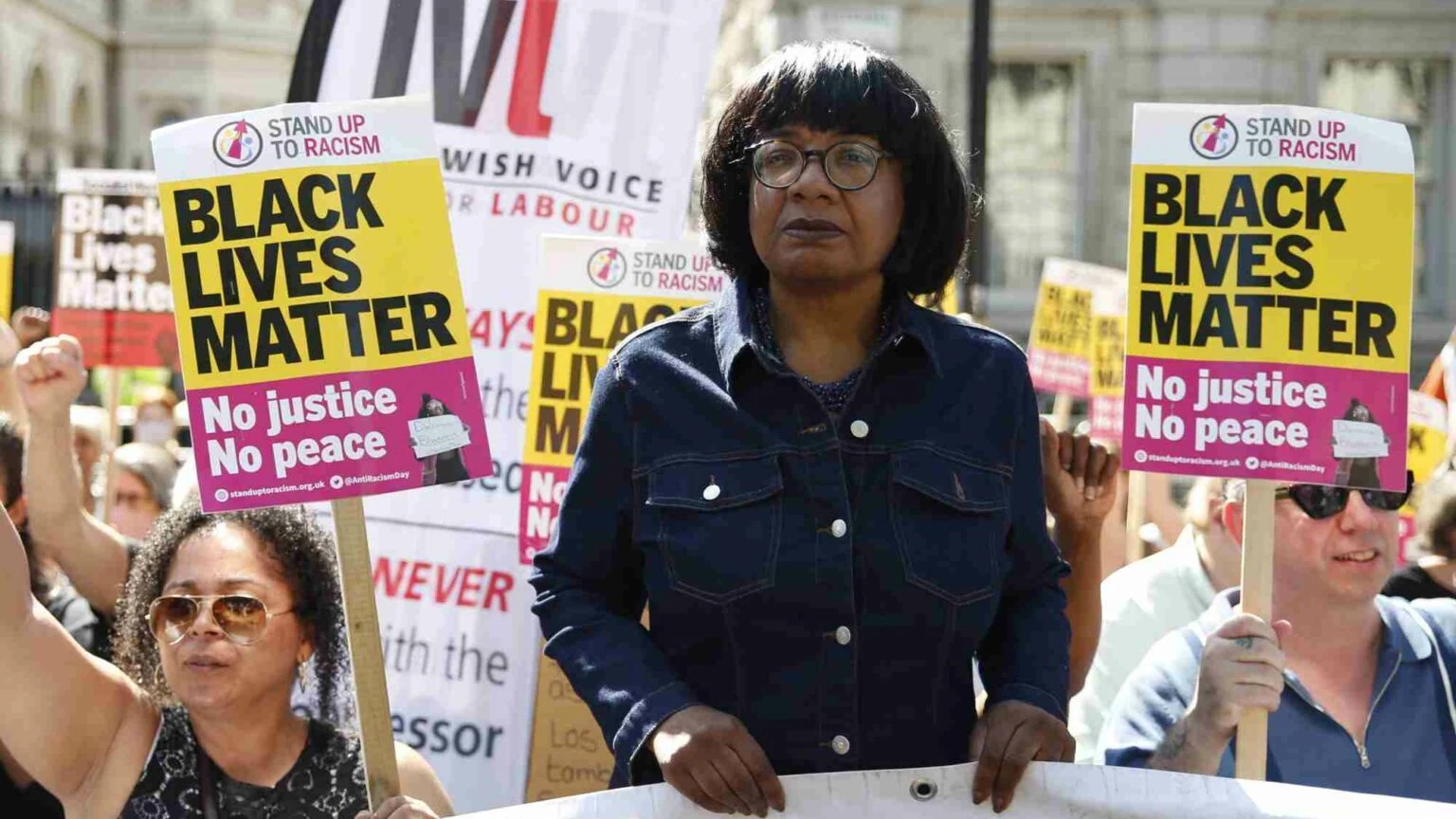
When Diane Abbott was elected to the House of Commons in 1987, she became the first Black woman elected to the UK Parliament. The milestone was historic; the career that followed made it more than a moment of symbolism. Abbott has represented Hackney North and Stoke Newington continuously since that election, held senior opposition posts, challenged the expansion of state powers and backed projects intended to widen educational opportunity. In 2024, her long service brought a further distinction: Mother of the House, the title given to the female MP with the longest unbroken service.
Abbott’s route to Westminster ran through several British institutions: a London school, Newnham College, Cambridge, the Home Office, civil-liberties work, television and local government. Her politics also grew from a wider movement for Black and Asian representation, rather than from individual ambition alone. The result is a public life that speaks both to the changing composition of Parliament and to the difficult, continuing work of making representation matter.
Education, work and political formation
Diane Julie Abbott was born in Paddington, London, on 27 September 1953, to Jamaican parents. Her father worked as a welder and her mother as a nurse; both had left school at 14. Abbott attended Harrow County School for Girls before going to Newnham College, Cambridge, in 1973 to study history. She has described her parents’ encouragement and her experience at Newnham as formative. At Cambridge, she encountered women in positions of authority and developed a sense of the possibilities education could open.
After graduating, Abbott entered public and civic life through work rather than straight into elected politics. From 1976 to 1978 she was an administration trainee at the Home Office. She then worked as a race relations officer at the National Council for Civil Liberties, now Liberty, from 1978 to 1980. These jobs placed her inside institutions concerned with government and individual rights, while giving her experience of how official rules and decisions affect people.
Television followed. Abbott worked as a researcher and reporter at Thames Television from 1980 to 1983, then as a researcher at TV-am from 1983 to 1985. She moved into public relations, serving as a press officer at the Greater London Council under Ken Livingstone and then as head of press and public relations at Lambeth Council. Her working life thus crossed government, campaigning, broadcasting and local administration before she entered the Commons.
Local politics and community organising were part of the same preparation. Abbott was elected to Westminster City Council in 1982. She was also active in Labour’s Black Sections movement, alongside figures including Bernie Grant, Paul Boateng and Keith Vaz. The movement pressed for greater political representation for African-Caribbean and Asian communities. Abbott’s eventual breakthrough was therefore both an individual achievement and part of a collective effort to challenge the narrowness of political institutions.
Hackney became central to that story. Abbott has recalled it as a centre of progressive politics and campaigning. In 1986 she was selected as Labour’s candidate for Hackney North and Stoke Newington; the following year, voters sent her to Parliament. The sequence matters: her first election was not a sudden arrival without political groundwork, but the result of years spent in local government, public-facing work and campaigns over representation.
A first, followed by decades of service
Abbott’s election in 1987 made her the first Black woman MP. She was also one of the first three Black MPs elected to the Commons in the modern era. The change was visible as well as institutional: it challenged assumptions about who could sit in Parliament and speak as part of the country’s political class. A breakthrough can be recorded in a single date; the significance of Abbott’s career is also in what she did afterwards.
She has represented Hackney North and Stoke Newington continuously since 11 June 1987. Over that time she served on Commons committees, including the Treasury Select Committee for much of the 1990s and later the Foreign Affairs Select Committee. Her constituency has returned her at successive general elections, giving her a parliamentary career spanning markedly different governments, party leaders and political debates.
In 2010 Abbott stood in Labour’s leadership contest. She was eliminated in the first round, having received 7.24 per cent of the vote, and subsequently became Shadow Minister for Public Health. The brief covered subjects including children’s health, maternity services, sexual health, tobacco, nursing, obesity and alcohol abuse. After Labour changed leader in 2015, she became Shadow Secretary of State for International Development. In June 2016 she moved to the health brief, and in October that year became Shadow Home Secretary, a post she held until April 2020.
Those responsibilities put her in opposition roles across domestic health, international development and home affairs. They also show why her career cannot be reduced to the fact that she was first. Abbott has been a prominent working parliamentarian, and her public record includes both frontbench service and positions that diverged from the party line. She was sworn of the Privy Council in 2017.
In 2024, after the general election, Abbott became Mother of the House. The title recognises the female MP with the longest unbroken service. In her first speech in that role, on 9 July, she recalled that there had been only 40 women MPs when she entered the Commons in 1987; there were then 264. Her words gave a personal measure of Parliament’s changing membership. The numbers did not mean that all barriers had disappeared, but they marked a transformation she had witnessed from within.
Abbott’s party status has also changed during the later years of her career. Labour withdrew the whip in 2023 following remarks about racism in a letter to The Observer; Abbott withdrew the remarks and apologised. The whip was restored in May 2024, and she was elected again for Hackney North and Stoke Newington that July. In July 2025 she was suspended again after remarks in a BBC interview, and sat as an independent. The supplied parliamentary record states that the whip was restored on 30 July 2026. These episodes belong to the account of a long and sometimes contested political career, but do not erase the continuity of her constituency representation.
Rights, civil liberties and political disagreement
A defining parliamentary intervention came in 2008, during debate on the Counter-Terrorism Bill. Abbott opposed extending pre-charge detention to 42 days. Her speech was recognised as Parliamentary Speech of the Year, and she received a Special Judges Award at the Human Rights Awards for campaigning on civil liberties and defending abortion rights. At issue was the balance between security powers and individual liberty: whether the state should be able to detain someone for longer without charge, and what safeguards a democracy should demand when responding to threats.
The intervention connects to a broader thread in Abbott’s work. Her public-health and home-affairs roles covered areas in which government decisions touch people’s daily lives and freedoms. She has campaigned on abortion rights and spoken in Parliament about the ability of women in Northern Ireland to access abortion care on the same terms as women elsewhere in the UK. She has also challenged the treatment of the Windrush generation, calling for the publication of information about people affected by the scandal and the consequences of the hostile environment.
Abbott has not followed every Labour position. Her record includes opposition to the Iraq War, opposition to identity cards and campaigning against the renewal of Trident. She voted against the Maastricht Treaty and, after campaigning for Remain in the 2016 EU referendum, argued that Labour should respect the result. Her views and votes have sometimes attracted criticism; they are part of a political life in which she has used Parliament both as a party member and as an independent voice.
Her parliamentary career also reached beyond speeches and frontbench posts. In 2012, a jubilee event at Goldsmiths marked her 25 years as an MP with contributions from people working in politics, journalism, education and the arts. A speech she made in a Commons debate on the Caribbean later appeared in Margaret Busby’s 2019 anthology New Daughters of Africa. Such appearances record the reach of her public voice beyond the routine business of the chamber.
Education work beyond the Commons
Abbott’s political activity has included projects intended to make opportunity more practical. She founded London Schools and the Black Child, an initiative aimed at raising educational achievement among Black children. She has also identified Black Women Mean Business and the Diane Abbott Foundation among her projects. The foundation’s stated areas of work include racial disparities in education and employment, with training, mentoring, counselling and advocacy for Black children in the school system and Black business women.
These initiatives place education alongside parliamentary representation as a lasting concern. Abbott’s own route through school and Cambridge gives that work particular context, but its purpose is wider than personal biography: to support children and women facing barriers in education and employment. In 2015 she was shortlisted for the Grassroot Diplomat Initiative Award for her work on London Schools and the Black Child. The recognition was specific to that project, rather than a general claim that one organisation can resolve structural inequality.
Her public career has also included broadcasting. Until taking up a shadow ministerial post in 2010, she appeared on the BBC’s weekly political programme This Week alongside Michael Portillo. A BBC Trust ruling in 2012 found that payments to Abbott for appearances on the programme breached BBC guidelines that prohibited payments to MPs representing their political parties; it also said she had appeared too often. Abbott had declared the payments in the parliamentary register of interests. That episode illustrates the scrutiny attached to a public figure working across politics and television, as well as the need for clear rules governing that overlap.
Visibility, abuse and political memory
Abbott’s prominence has come with intense scrutiny and abuse. Amnesty International’s analysis of online abuse during the 2017 general election found that Black, Asian and minority ethnic women MPs received a disproportionate share of abusive tweets. Abbott alone received 31.6 per cent of the abusive tweets analysed across the study period and, in the run-up to the election, ten times more abuse than any other woman MP. The figures describe the unequal conditions in which some politicians have to participate in public debate.
Abbott has spoken about receiving racist and sexist abuse online and called for a parliamentary inquiry into abuse directed at MPs through social media. That experience is relevant to her political record, not as a substitute for it, but as part of the circumstances in which she has represented a constituency and taken public positions. A Parliament may become more diverse while the culture around its members remains hostile; the two facts can coexist.
Her memoir, A Woman Like Me, was published in 2024. It places her story within the broader history of a London-born daughter of Jamaican parents who moved through education, public service, campaigning and Westminster. A memoir is one person’s account, not a resolution of every political dispute. Its value here is as a record of how one of the country’s most visible MPs understands the experiences behind a career that has unfolded in public for decades.
Recognition has accompanied that career in different forms. In 2008 she received the Human Rights Awards’ Special Judges Award, and in 2015 she was shortlisted for an award for her education work. The title Mother of the House, conferred through her length of service, is different: it links her personal parliamentary record to a visible change in the make-up of the Commons. Taken together, these forms of recognition point to distinct strands of her public life—rights, education, representation and endurance—rather than a single, uncomplicated verdict on a politician.
Why Diane Abbott deserves a place in British Legacy
Diane Abbott deserves a place in British Legacy because she changed who could be seen at the heart of British parliamentary life, then spent decades doing the work of a constituency MP. Her election in 1987 as the first Black woman in the UK Parliament was a barrier-breaking event, but its significance deepened through continuity: she remained the representative for Hackney North and Stoke Newington while politics, Parliament and the country changed around her. Her title of Mother of the House in 2024 made that long service legible in a different way. When she compared the 40 women MPs of 1987 with the 264 then sitting, she connected her own arrival to a measurable change in representation.
Her legacy also rests on what she took into public argument. Her opposition to 42-day pre-charge detention made civil liberties a matter of practical parliamentary scrutiny at a time when security powers were under debate. Her frontbench work covered health, international development and home affairs; her advocacy included abortion rights and demands for accountability over the Windrush scandal. Beyond Westminster, London Schools and the Black Child and her other projects sought to turn concern about unequal opportunity into support for pupils and women. These are different forms of public service, but they share a concern with who is heard, protected and given room to succeed.
Abbott’s career is not a story without disagreement or controversy. Nor should the burdens of racialised and sexist abuse be treated as a necessary price of public life. A fuller account recognises both the disputes and the work: a politician who has challenged her own party, faced sustained hostility, and continued to represent her constituents across generations. For British Legacy, the case is specific. Abbott belongs in the national story because her presence altered Parliament’s possibilities, her service gave that change duration, and her advocacy connected representation to rights and opportunity beyond the chamber.
Sources
Diane Abbott — Wikipedia revision · Diane Abbott — Wikipedia
Adapted in part from Diane Abbott by Wikipedia contributors, under CC BY-SA 4.0. Text has been edited and combined with the existing article; this adapted text is shared under the same licence. Contributor history.