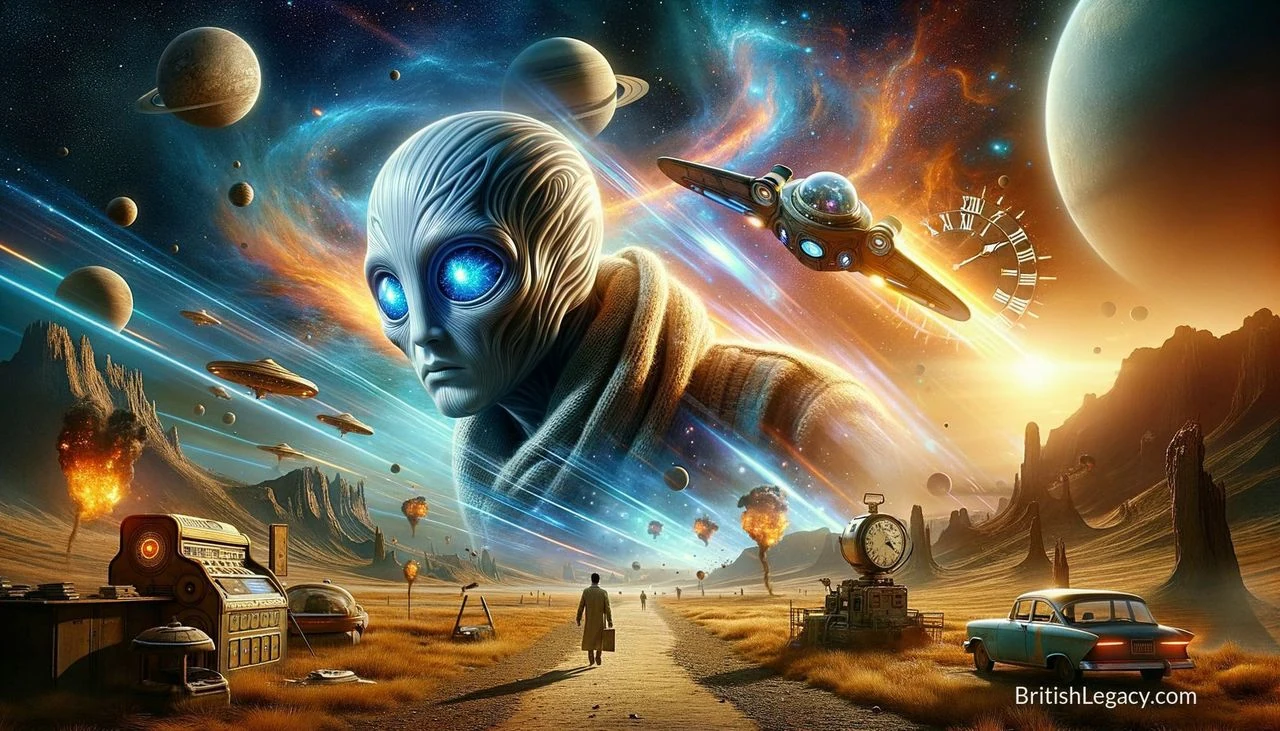
A time machine that looked like a British police box gave Doctor Who one of television’s most recognisable images. The series first appeared on the BBC in 1963, designed for family viewing and built around a traveller moving between historical periods and imagined futures. Its premise made room for adventure; its ingenious idea of regeneration made room for change. When one actor left the lead role, another could take over as the same Doctor, with a new face and personality.
A programme designed to travel
Doctor Who was developed by Sydney Newman, C. E. Webber and Donald Wilson, with Verity Lambert as its initial producer. Its early purpose was educational as well as entertaining: time travel offered a way to explore scientific ideas and famous moments in history. The first stories alternated between the past and adventures in the future or outer space. The Doctor’s original companions included his granddaughter, Susan Foreman, and her teachers, Barbara Wright and Ian Chesterton. They gave viewers fellow travellers through the programme’s unfamiliar worlds.
The first episode was broadcast by the BBC Television Service on 23 November 1963. It began 80 seconds later than scheduled, after announcements about the assassination of US President John F. Kennedy the day before. The BBC repeated it the following week, believing that the news and power blackouts had led some viewers to miss the introduction. The series’ early historical adventures gradually gave way to science fiction, and its second serial, The Daleks, introduced the creatures that would become its most famous adversaries. Written by Terry Nation and designed by Raymond Cusick, the Daleks helped make the programme popular and prompted the BBC’s first Doctor Who merchandising boom.
The TARDIS, the Doctor’s time-travelling spaceship, is much larger inside than its exterior suggests. Its chameleon circuit was intended to make it resemble a local object, but a malfunction left it looking like a blue British police box. That accident gave the show a striking visual signature. The programme’s basic arrangement—a resourceful traveller, companions and a machine that could arrive almost anywhere—also gave its writers a flexible framework for new settings and crises.
One role, many Doctors
When William Hartnell’s poor health made it difficult for him to continue as the Doctor, the programme faced the departure of its leading actor. It answered by changing the character’s appearance, a story device that became known as regeneration. The new performer could bring a different temperament to the part while the Doctor’s adventures continued. From Hartnell onwards, the role has passed through actors including Patrick Troughton, Tom Baker, David Tennant, Jodie Whittaker and Ncuti Gatwa.
The original run lasted 26 seasons, from 1963 until 1989. The programme changed along the way: Jon Pertwee’s arrival in 1970 coincided with the move to colour, while Tom Baker’s years in the part included some of the series’ strongest viewing figures. Audiences declined in the 1980s, and regular production ended in 1989. A television film starring Paul McGann followed in 1996, but did not lead to a new series.
Doctor Who returned to BBC One in 2005, after a 16-year gap in regular production. Starring Christopher Eccleston, the revival continued the earlier story rather than starting it again from scratch. David Tennant followed Eccleston; later Doctors included Matt Smith, Peter Capaldi, Whittaker and Gatwa. Each change of lead brought a different performance, while the travelling Doctor and the possibility of regeneration kept a line of continuity running through successive eras.
Whittaker was the first woman cast as the Doctor. The series had already introduced the idea that a Time Lord could change sex through regeneration, first in dialogue and later through Michelle Gomez’s portrayal of the Master. Gatwa, who played the Doctor from 2023 to 2025, was the first Black actor to headline the series. These changes in casting gave the programme new ways to interpret its central character without discarding the role’s established history.
Companions, enemies and a signature sound
The Doctor usually travels with companions, who give the audience a human point of reference and can question the Doctor’s decisions as well as take part in the adventure. Early companions Susan, Barbara and Ian were followed by characters including Sarah Jane Smith, Jo Grant and Rose Tyler. Later companions included Martha Jones, Donna Noble, Amy Pond and Clara Oswald. Their stories have helped make the series about more than the Doctor’s latest destination: companions form relationships, make choices and change during their time in the TARDIS.
Some enemies have returned across multiple generations of the programme. The Daleks were followed by the Cybermen and the Master, a renegade Time Lord conceived as the Doctor’s Moriarty. The later series added threats such as the Weeping Angels. Returning adversaries give writers and viewers a shared history to draw upon, while new foes keep the Doctor’s encounters from becoming entirely familiar.
The series is recognisable by sound as well as image. Ron Grainer composed its theme, and Delia Derbyshire realised the original arrangement at the BBC Radiophonic Workshop, with assistance from Dick Mills. Derbyshire constructed the electronic music through the careful recording, editing and manipulation of tape, before commercial synthesisers and multitrack mixers were available. Later arrangements altered the sound, but the theme remained a distinctive part of the programme. Incidental music also reflects its changing production history, from Dudley Simpson’s frequent contributions during the early years to Murray Gold’s scores for the revival.
Doctor Who has used science-fiction adventures to engage with ideas beyond the immediate plot. The serial The Green Death (1973), for example, addressed environmental pollution. The series’ changing portrayals and casting have also made it part of wider discussions about representation. Its capacity to move between the fantastic and recognisable concerns has helped the programme find new subjects across different eras.
Beyond the weekly episode
The programme’s world has expanded into novels, audio dramas, films, magazines, games and television spin-offs. Torchwood, set in modern-day Cardiff, began in 2006, and The Sarah Jane Adventures followed in 2007. Characters and performers have moved between the main series and these related programmes, giving some stories a life beyond the Doctor’s own adventures. Anniversary and charity productions have created further occasions for returning actors and characters.
The programme’s cultural reach is also evident in the language and images associated with it. “Hiding behind the sofa” became a familiar description of children watching the frightening scenes while trying not to look, and the police-box TARDIS became a widely recognised emblem. The series has not escaped criticism: complaints about its frightening or violent content have formed part of its public history, alongside affection for its monsters, stories and imaginative effects. The original production’s technical limitations have also been discussed, but its appeal has often been attributed to writing and performance rather than elaborate spectacle.
Its audiences have risen and fallen, with notable periods of popularity during the Dalek stories of the 1960s, the 1970s and the 2005 revival. The programme has also travelled well beyond Britain. Its 50th-anniversary special, The Day of the Doctor, was broadcast in 94 countries. Recognition has included the 2006 BAFTA Television Award for Best Drama Series and an Institutional Peabody Award in 2013. Guinness World Records has listed Doctor Who as the longest-running science-fiction television series.
Why Doctor Who deserves a place in British Legacy
Doctor Who deserves a place in British Legacy because its history is inseparable from the BBC and from the changing possibilities of British television. First broadcast in 1963 as a family programme combining education and adventure, it grew into a series capable of moving between historical settings, science fiction and contemporary concerns. Its production brought together writers, designers, actors, musicians and technical staff. Delia Derbyshire’s tape-built theme is one example of that creative work: an inventive production achievement that gave the programme a sound as distinctive as its blue police-box TARDIS.
The series’ lasting achievement is not simply its length. Regeneration gave successive performers a way to inherit one role, so that a familiar character could change without making the story start again. That structure has allowed different generations of viewers to meet the Doctor on their own terms, while companions and new production teams have continually altered the programme around its central idea. Its spin-offs, books and audio dramas extend that work across media; its international broadcasts have carried a recognisably British television creation to audiences around the world. Doctor Who’s legacy therefore lies both in a durable piece of popular culture and in the adaptable creative form that has kept it open to reinvention.
The Tenth Doctor’s “Allons-y!” is one of the catchphrases associated with that continuing journey. It captures the show’s invitation to move on to the next adventure, but the series’ more substantial achievement is the way it has repeatedly made that next adventure possible: with a new Doctor, new companions and new stories, all travelling from the same blue box.
Sources
Doctor Who — Wikipedia revision 1378841592
Adapted in part from Doctor Who by Wikipedia contributors, under CC BY-SA 4.0. Text has been edited and combined with the existing article; this adapted text is shared under the same licence. Contributor history.