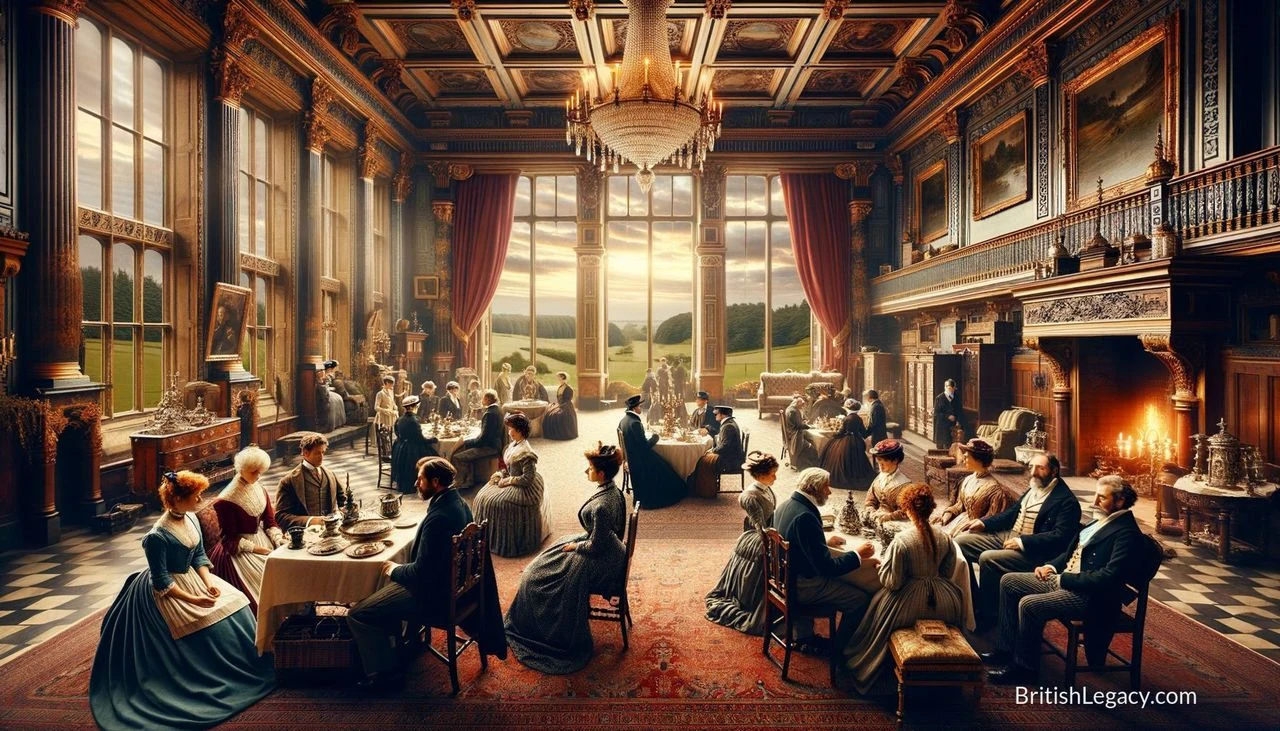
When Downton Abbey began in 2010, it set two households within one story: the aristocratic Crawleys upstairs and the servants whose work sustained their home below. Created by Julian Fellowes, the drama follows their intertwined lives through a period of upheaval. Its enduring subject is not simply the grandeur of an English country house, but the pressure that changing times place on tradition, duty and relationships.
A country house in a changing Britain
The series opens in the wake of the Titanic disaster and covers the years from 1912 to 1926. Across six series, it brings its characters into contact with the First World War, the Spanish flu pandemic and the rise of the working class. These events give the family’s domestic story a wider frame: the Crawleys and their staff inhabit a social order whose customs and assumptions are becoming harder to maintain.
Downton’s upstairs and downstairs households offer distinct perspectives on that transition. The Crawleys’ inherited status and responsibilities shape one set of choices; the servants’ work and prospects shape another. By moving between the two, the drama makes class part of its everyday action rather than a distant historical backdrop. Its concerns include love and duty, but also the routines and relationships that connect people whose positions in the house are unequal.
Performances and the world of Downton
The ensemble is central to the series’ design. Maggie Smith plays Violet Crawley, the Dowager Countess, while Hugh Bonneville and Elizabeth McGovern portray Lord and Lady Grantham. Michelle Dockery, Laura Carmichael and Jessica Brown Findlay play the Crawley daughters. Their stories share the screen with those of the household staff, played by Jim Carter, Brendan Coyle, Joanne Froggatt and Rob James-Collier. The movement between these characters gives the drama room for both family conflict and life below stairs.
Highclere Castle provides the setting for Downton’s grand interiors and grounds. Costumes and period detail help establish the changing years and the different worlds inhabited by the characters. Anna Robbins led the costume design, with clothing reflecting shifts in fashion as well as distinctions between individual characters. Together, setting and dress make the passage of time visible, while the house itself anchors a story whose social landscape is changing.
From television to an international audience
Downton Abbey developed a substantial international following and extended beyond television through merchandise and tours. The series also became the subject of academic courses examining its cultural and historical significance. Its awards included Primetime Emmy Awards, Golden Globes and BAFTAs. A feature film followed in 2019, extending the story beyond its six television series.
The drama’s reach reflects the appeal of its combination of intimate relationships and recognisable historical change. Its British setting is specific, but its focus on family, work and social position gives viewers different points of entry. Rather than treating the past as a static display, the story places personal choices inside a society adjusting to war, illness and shifts in class relations.
Why Downton Abbey deserves a place in British Legacy
Downton Abbey belongs in British Legacy because it made a British country-house setting the centre of a drama about a society in transition. Its account brings the Crawleys and their servants into the same narrative, allowing class and domestic service to shape the plot rather than sit in the background. The series spans the years from 1912 to 1926 and places its characters amid the First World War, the Spanish flu pandemic and the rise of the working class. That structure gives its stories of family and duty a clear historical setting.
Its cultural footprint also extends beyond its original television run. Six series, a 2019 feature film, international audiences, tours and merchandise all speak to the reach of the drama, while its awards recognise its standing in television. Highclere Castle and the work on costume and period detail helped make the setting memorable; the ensemble gave both upstairs and downstairs lives room on screen. The result is a widely watched British drama whose central device—following a household through social change—connects personal stories with a broader account of the period.