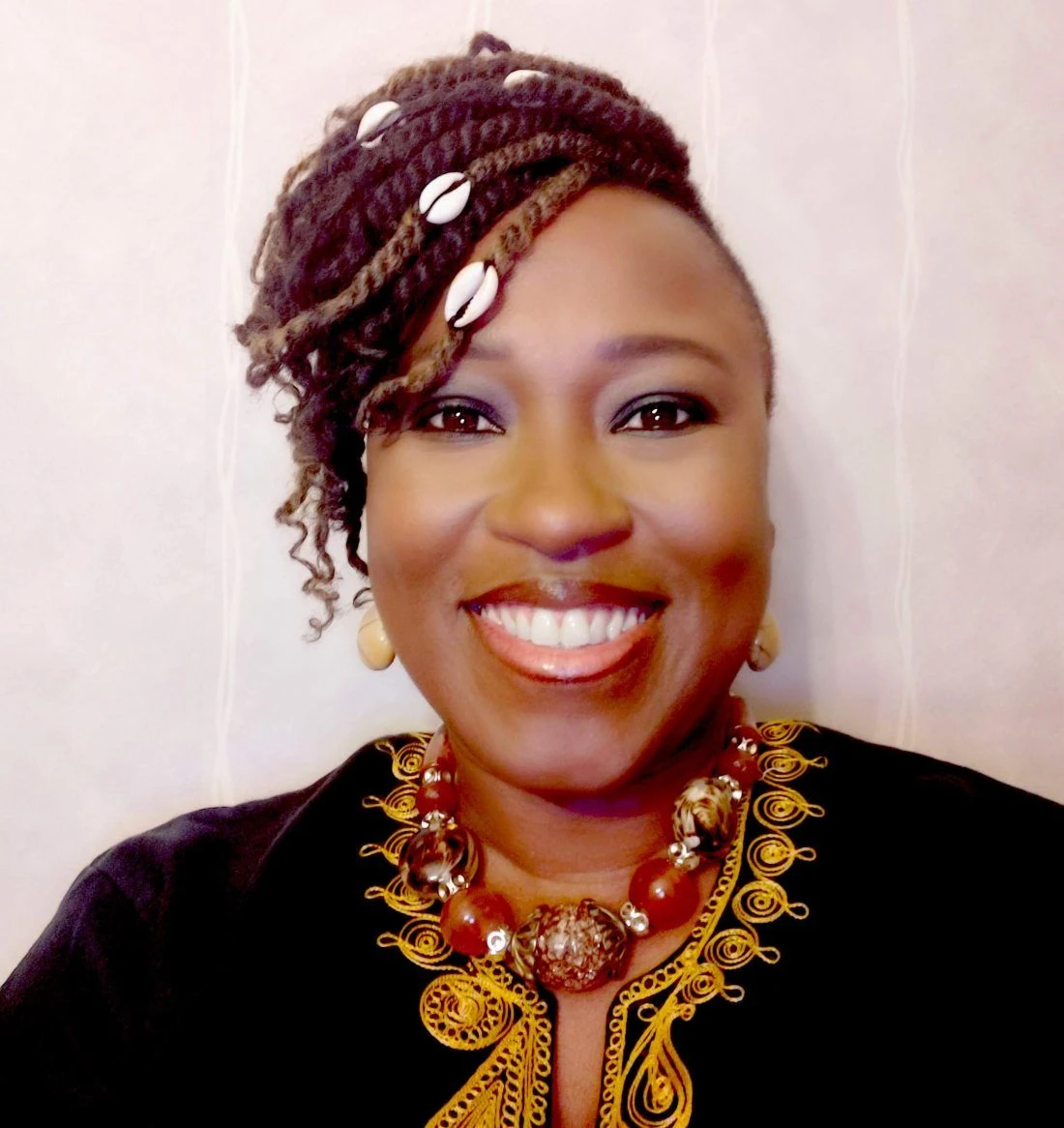
Dr Shola Mos-Shogbamimu has built a public career around difficult questions: how race and gender shape people’s lives, how institutions reproduce inequality, and what it means for rights to be more than words. A British-born lawyer, writer, broadcaster and campaigner, she has taken those subjects into books, television, public speaking and practical initiatives. Her work connects legal and political ideas with the language of everyday debate, asking audiences to examine how fairness is experienced in workplaces, education, public life and the institutions that shape them.
Her background spans Britain, Nigeria, the United States and East Africa. That international perspective sits alongside a sustained engagement with British public life. Rather than treating inequality as an abstract topic or a problem belonging elsewhere, Mos-Shogbamimu has made it a subject for scrutiny in the country where she speaks, writes and organises. Her work has included teaching, campaigning and efforts to widen opportunities for women and minority groups within the legal profession, as well as commentary and a book addressing racism and anti-Blackness.
A British education and a wider perspective
Mos-Shogbamimu was born in Hackney to Yoruba Nigerian parents. Her childhood included time in London, Nigeria and the United States, as well as East Africa, where her mother worked for the Commonwealth. The supplied biographical accounts describe a life shaped by movement between countries and social settings. That experience forms part of the context for her public work, which often looks beyond a single national frame while addressing questions of race, gender and institutional power in Britain.
Her education brought together legal, political and organisational study. She completed an LLB at the University of Buckingham, a master’s degree at the University of Westminster and an LLM at the London School of Economics. She went on to earn a PhD in law at Birkbeck and an Executive MBA at Cambridge. These qualifications reflect a range of approaches to institutions: legal rules, political ideas and organisational practice. In her public commentary, questions about power are often framed in terms of systems and consequences, rather than as matters of individual intention alone.
That combination of experience and study helps explain the breadth of her work. She has written and spoken about the connections between race, gender and class, and about the ways that policies, professional cultures and public language can affect who is included and heard. Her arguments bring those subjects into wider discussion, where specialist terminology can otherwise make difficult issues seem remote from ordinary life.
Taking legal training into public life
Mos-Shogbamimu’s professional background includes work in financial services and legal qualifications in both the United States and England and Wales. The supplied article records that she was admitted as a solicitor in England and Wales on 1 March 2011. It also notes that, according to the register consulted for that article in September 2026, she did not hold a current practising certificate. Her public profile is therefore not best described simply as courtroom practice. A central part of her work has been to bring legal and policy questions into public debate and make them available for wider scrutiny.
On her own account, her activities have included teaching intersectional feminism to female refugees and asylum seekers, examining government policy through questions of gender and diversity, and co-organising women’s marches and social campaigns. She also founded the publication Women in Leadership and established She@LawTalks. The latter was intended to encourage leadership among women and Black and minority ethnic people in the legal profession, including through work with schools and universities.
These projects connect public argument with participation. Representation is not only a question of who appears in a debate; it is also about who gets opportunities to develop expertise, build a career and take positions of leadership. Teaching, publishing and outreach offer practical routes towards that wider participation. In this part of her work, Mos-Shogbamimu has applied her interest in equality not only to what institutions say, but to who is supported to enter and influence them.
Writing about race, power and everyday Britain
Her book This Is Why I Resist was published by Headline on 21 January 2021. The publisher describes it as an anti-racist work concerned with the roots of racism and anti-Blackness in the United Kingdom and the United States. That transatlantic focus allows Mos-Shogbamimu to consider British experience in a wider context without treating racism in Britain as merely a reflection of events elsewhere. The book examines how longer histories of power can remain relevant to contemporary behaviour and institutions.
The subjects identified in the publisher’s description include racial gatekeeping, performative allyship, identity politics and abuse directed at Black trans people. Together, they point to a particular emphasis in the book: anti-racism must be considered not only as a general commitment, but in relation to the treatment of people within movements and communities as well as outside them. Questions of who is centred, who is excluded and whether support amounts to sustained action are part of that examination.
That approach also informs Mos-Shogbamimu’s broader writing and commentary on race, gender and class. Rather than separating feminism from race or public debate from daily experience, she brings those subjects into contact. The result is an invitation to look at the operation of inequality as well as its existence: how conventions, institutional routines and familiar ways of speaking can shape access and belonging. Her work seeks to give readers and audiences language with which to identify and question those patterns.
The broadcaster and public speaker
Mos-Shogbamimu’s public work extends across mainstream and online media, speaking engagements and writing. Her TEDx talk, released in December 2019 under the title This why I resist, addressed the refusal to be defined by skin colour, gender or religion and invited its audience to join what she described as a conscious revolution. The talk brings together themes also present in her book and commentary: identity, resistance and the possibility of collective action.
Broadcast discussion requires ideas to be expressed clearly under pressure and within limited time. Mos-Shogbamimu has used that format to argue about intersectional questions in language aimed at a broad audience. Her work as a commentator places questions of race and gender in the flow of current public debate, rather than confining them to specialist settings. It also means those arguments can be challenged, discussed and taken up by people who may not encounter them through a book or a formal course.
Her style is direct, but its substance is not simply provocation. A recurring feature of her public work is the effort to identify how an apparently neutral practice or phrase can conceal a distribution of power, and to bring the human consequences back into view. The combination of legal training and public communication gives her a way to move between the language of rules and the experiences those rules affect.
Recognition and public impact
On 4 December 2023, Newcastle University awarded Mos-Shogbamimu an honorary Doctor of Civil Law. The university’s citation recognised her actions against what it described as the intersectional oppressions of the present and her ability to help people engage with what comes next. The award marked her public contribution to debate and advocacy as well as her work across different settings.
Recognition does not remove disagreement from political argument. Mos-Shogbamimu’s work engages with subjects that can be contentious, including institutional racism, misogyny and the structures that influence belonging. The supplied material describes her as an outspoken advocate and commentator, and her book and public appearances provide settings in which those positions are expressed and debated. Her significance lies not in an absence of dispute, but in the sustained presence of these issues in public conversation.
Her work also has a practical dimension beyond commentary. Teaching, organising marches and campaigns, creating a publication focused on women’s leadership, and establishing She@LawTalks each address a different part of the route into public and professional life. Taken together, they show an interest in both the argument for equality and the means by which people can gain the skills, visibility and opportunities to participate.
Why Dr Shola Mos-Shogbamimu deserves a place in British Legacy
Dr Shola Mos-Shogbamimu deserves a place in British Legacy because her work has brought questions of race, gender and institutional power into British public life through several distinct routes. She has written a book about racism and anti-Blackness in Britain and the United States; spoken to broad audiences through broadcasting and a TEDx talk; and used legal training to frame questions of rights, policy and institutional practice. These are not separate interests. Together, they allow complex issues to be examined in public, connected to everyday experience and tested against the ways organisations behave.
Her contribution also reaches beyond making arguments. Teaching intersectional feminism to female refugees and asylum seekers, co-organising campaigns, founding Women in Leadership and establishing She@LawTalks are concrete efforts to support participation and leadership. The benefit is not only that more people may be represented in professional settings; it is that institutions and public debate can draw on a broader range of experience and knowledge. Her work asks who is heard and who has the chance to shape decisions, then seeks routes by which those answers can change.
That record makes her part of a living British history: one formed not only by public office or landmark inventions, but also by people who challenge accepted explanations of fairness and make room for difficult arguments. Mos-Shogbamimu’s legacy is not a claim that every audience must agree with her. It is the enduring value of bringing issues that are too often softened or sidelined into discussion, and of linking that discussion to teaching, organising and professional opportunity. In a country still negotiating what equality means in practice, her contribution is specific: she has helped make those questions more visible and given people tools and platforms with which to pursue them.