The Battle of Arras: A Pivotal Chapter in the British Legacy
The First World War was a cataclysmic conflict that reshaped Europe and the world at large. Among its defining confrontations, the Battle of Arras in 1917 stands out as a notable episode that underscores the resilience, ingenuity, and courage of British forces. This offensive, dictated by the larger context of the war, not only exemplifies military strategy and technological innovation but also represents a significant chapter in the great British legacy, symbolising determination and sacrifice.
Background: The Setting of a Great Endeavour
By 1917, the Western Front had long been a site of attrition and deadlock, with both the Allied and Central Powers entrenched in a grueling stalemate. In an effort to break this deadlock and relieve pressure on French forces embroiled in fierce battles further south, the British high command initiated an offensive at Arras, a town in northern France. This attack was part of a coordinated effort to disrupt German lines and gain a strategic advantage.
Orchestrating the Offensive: Vision and Innovation
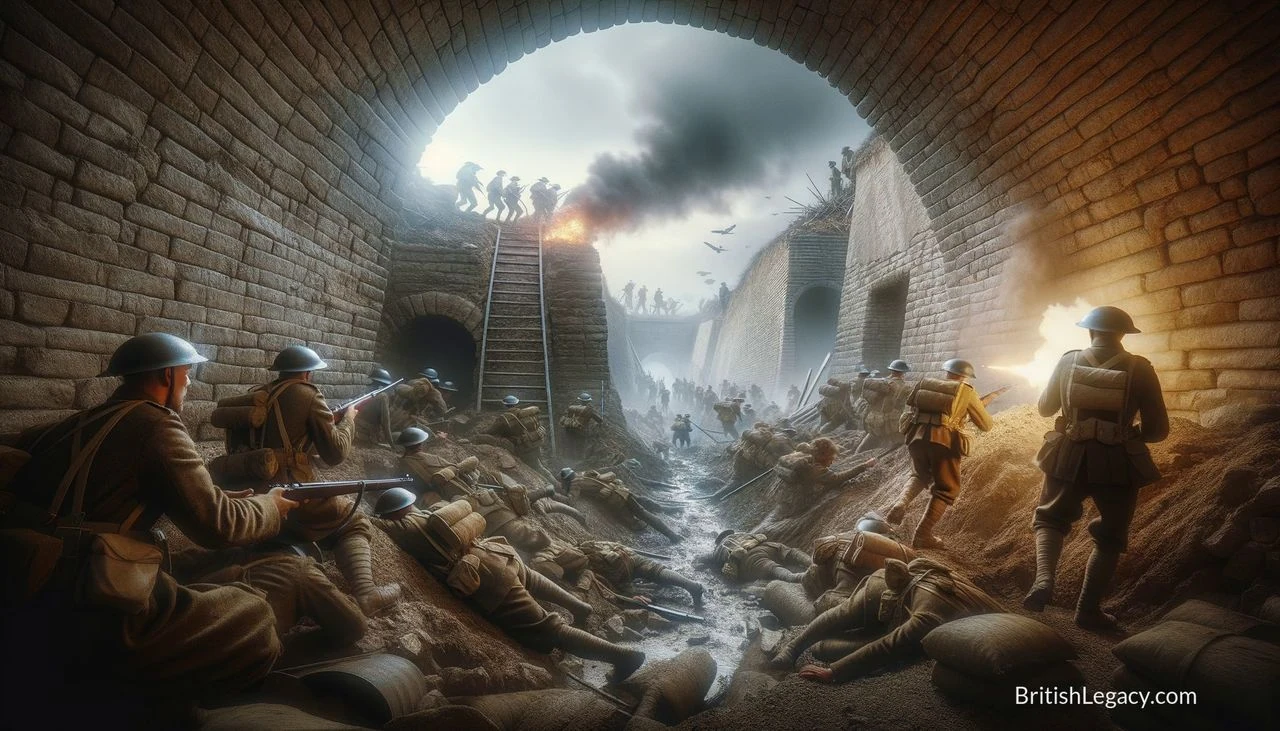
One of the most extraordinary aspects of the Battle of Arras was the extensive use of tunnels. Prior to the attack, the Royal Engineers carried out extraordinary feats of engineering, constructing a vast network of tunnels beneath the German lines. These subterranean passages, some of which were repurposed medieval quarries, allowed for the movement of troops and supplies with an element of surprise, demonstrating a blend of historical resourcefulness and modern tactical thinking.
The tunnels were more than mere passageways; they were equipped with amenities like lighting and ventilation, reflecting the meticulous planning and commitment to safeguarding soldiers' well-being amidst the harrowing conditions of trench warfare. This innovative approach not only provided a tactical advantage but also showcased British engineering prowess.
The Confrontation: Bravery Amidst Brutal Combat
The offensive commenced on April 9, 1917, with a thunderous artillery barrage, one of the heaviest of the war, heralding the start of an advance. Over several days, British and Commonwealth forces engaged in intense combat, capturing critical positions and making notable territorial gains.
One of the most iconic moments of this battle was the capture of Vimy Ridge by Canadian forces, a feat that remains a proud moment in Canadian and British military history. The audacious and well-coordinated attack on Vimy Ridge illustrated the strategic junction of courage, preparation, and execution.
Aftermath: Legacy of Sacrifice
While the Battle of Arras did not yield a decisive strategic victory and ultimately reverted to the attritional grind of trench warfare, its significance lies in several dimensions. The advances made during the initial days of the battle demonstrated that with innovative tactics and unwavering resolve, breakthroughs were possible even in the face of formidable defences.
The battle also had a profound human cost, with heavy casualties on both sides. The sacrifices of those who fought at Arras resonate through history, their bravery and commitment contributing to the overarching legacy of resilience and fortitude that characterises British heritage.
A Lasting Impact
The Battle of Arras is a testament to the complexities and horrors of war, as well as the ingenuity and dedication that defined British efforts in the First World War. It underscores a period when the British forces demonstrated not just their tenacity but their capacity for strategic innovation and engineering excellence.
This battle forms a vibrant thread in the rich tapestry of British history, symbolising a moment where every inch of ground gained was earned through sheer determination and skill. The enduring legacy of the Battle of Arras lies in its lessons of sacrifice and the relentless pursuit of overcoming adversity - qualities that continue to inspire and shape the spirit of the British nation.
In commemorating this battle, we acknowledge not only a pivotal military engagement but also a deeper narrative of courage, ingenuity, and the enduring human spirit that are integral to the great British legacy.