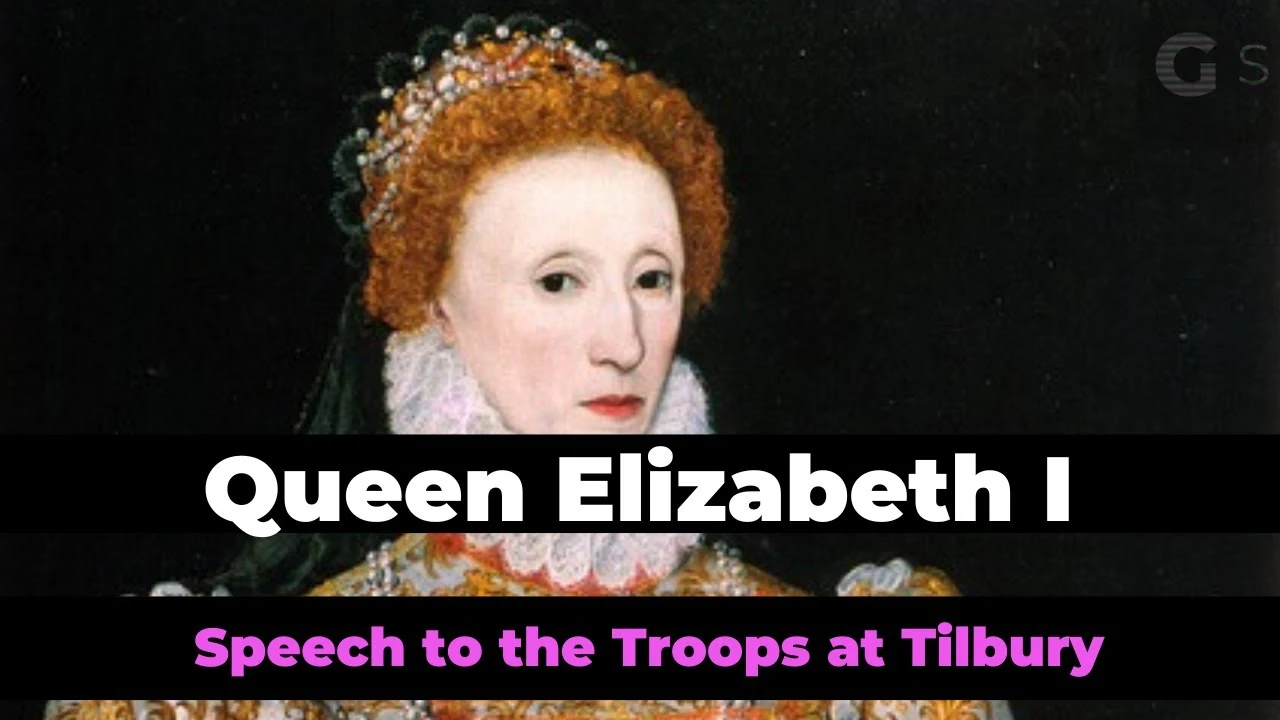
“I know I have the body but of a weak and feeble woman; but I have the heart and stomach of a king, and of a king of England too.” Elizabeth I’s declaration at Tilbury is the most familiar passage in a speech built around trust, shared danger and the defence of her realm. Addressing English land forces as they prepared for the threatened Spanish invasion, she promised to stand with them and placed her confidence in their loyalty.
England faces the Armada
In 1588, England faced the Spanish Armada, the fleet sent by Philip II of Spain. The imported account places the threat amid political and religious tensions between Catholic Spain and Protestant England, intensified by the Protestant Reformation and the execution of Mary, Queen of Scots. It describes an atmosphere of apprehension as people anticipated the possibility of invasion.
Elizabeth’s address took place at Tilbury, in Essex, on 9 August 1588, according to the supplied article. She spoke to the land forces assembled to defend the realm. Her presence made the speech more than a statement of policy: its words cast the monarch’s fate and the troops’ service as bound together.
A promise of trust and shared danger
The speech opens by acknowledging advice that Elizabeth should be wary of placing herself among armed crowds. She answers that warning with a declaration of trust in her “faithful and loving people”. She says that their loyalty, under God, is her chief strength and safeguard. Rather than remain apart, she has come among them prepared, she says, to “live and die amongst you all”.
That promise leads into the speech’s best-known contrast. Elizabeth acknowledges that she has the body “but of a weak and feeble woman”, then asserts the heart and stomach of a king, specifically a king of England. The passage joins a recognition of her sex to a claim of royal courage and national authority. She says she would take up arms rather than allow dishonour to come to her realm, and pledges to serve as the troops’ “general, judge, and rewarder”.
Her address also recognises the soldiers’ service and promises that their rewards will be paid. She names a lieutenant general to act in her stead and asks the troops to obey him, maintain concord in the camp and show valour in the field. The closing appeal brings together God, kingdom and people: the enemy is presented as a threat to all three, and victory as the hoped-for outcome of discipline and courage.
The supplied text of the speech
The article supplies the following text as the speech delivered at Tilbury:
My loving people,
We have been persuaded by some that are careful of our safety, to take heed how we commit ourselves to armed multitudes, for fear of treachery; but I assure you, I do not desire to live to distrust my faithful and loving people. Let tyrants fear, I have always so behaved myself, that, under God, I have placed my chiefest strength and safeguard in the loyal hearts and goodwill of my subjects; and therefore I am come amongst you, as you see, at this time, not for my recreation and disport, but being resolved, in the midst and heat of the battle, to live and die amongst you all; to lay down for my God, and for my kingdoms, and for my people, my honour and my blood, even in the dust. I know I have the body but of a weak and feeble woman; but I have the heart and stomach of a king, and of a king of England too, and think foul scorn that Parma or Spain, or any prince of Europe, should dare to invade the borders of my realm; to which, rather than any dishonour shall grow by me, I myself will take up arms, I myself will be your general, judge, and rewarder of every one of your virtues in the field. I know already, for your forwardness you have deserved rewards and crowns; and we do assure you, on the word of a prince, they shall be duly paid you. In the mean time, my lieutenant general shall be in my stead, than whom never prince commanded a more noble or worthy subject; not doubting but by your obedience to my general, by your concord in the camp, and your valour in the field, we shall shortly have a famous victory over those enemies of my God, of my kingdom, and of my people.
Why Elizabeth I deserves a place in British Legacy
The Tilbury address deserves attention not simply for its most quoted line but for the way it connects royal authority with an undertaking shared between monarch and troops. Elizabeth answers suspicion with trust, describes herself as willing to face danger alongside her people, acknowledges their service and promises rewards. She also makes a practical appeal for obedience to her lieutenant general and concord in the camp. In the supplied text, courage is not separated from military organisation: loyalty, discipline and valour all contribute to the hoped-for defence of the realm.
Its lasting place in British historical memory rests on the force of that combination. Elizabeth’s reference to a “weak and feeble woman” is immediately answered by her claim to a king’s heart and resolve, making gender and political authority central to the speech’s most memorable passage. The address gives a distinctive account of leadership under threat: the monarch stakes her honour and blood on the security of her kingdoms and people, while asking the troops to fulfil their part. Preserved and repeated, the speech offers British Legacy a concrete example of how a ruler’s words can express solidarity, assert authority and frame national defence as a common responsibility.