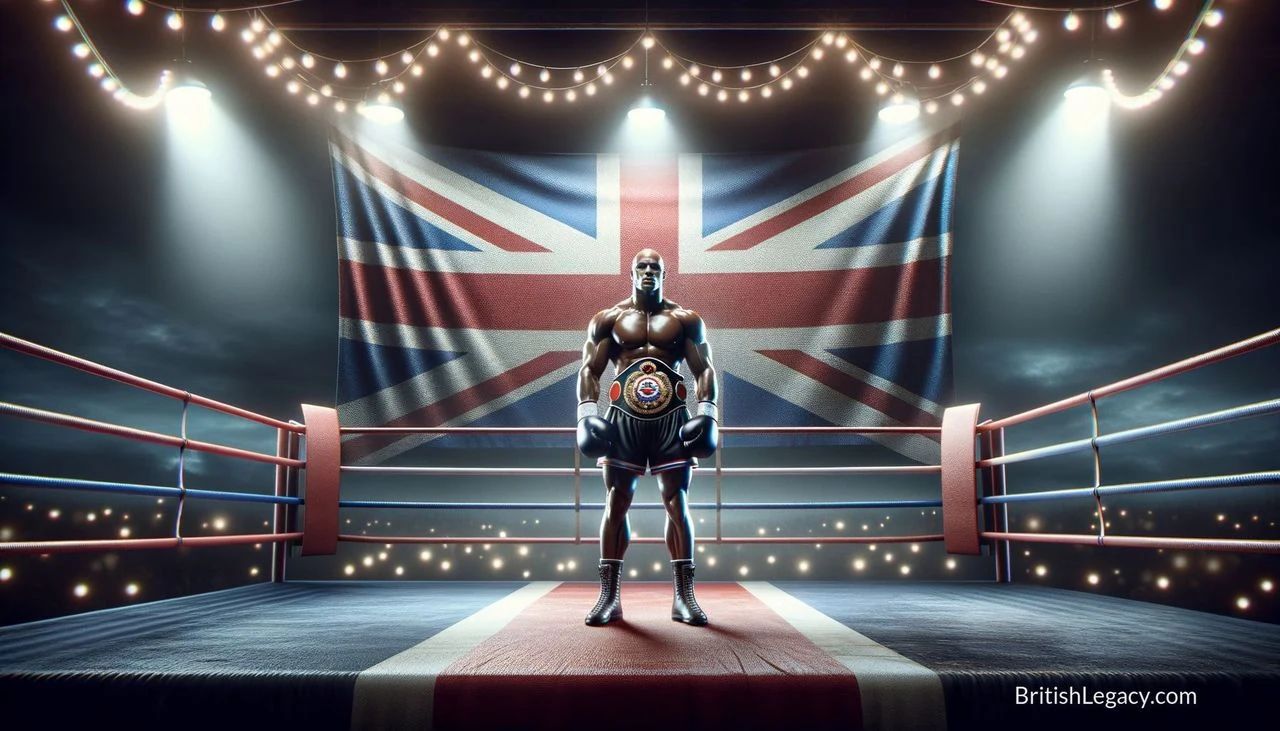
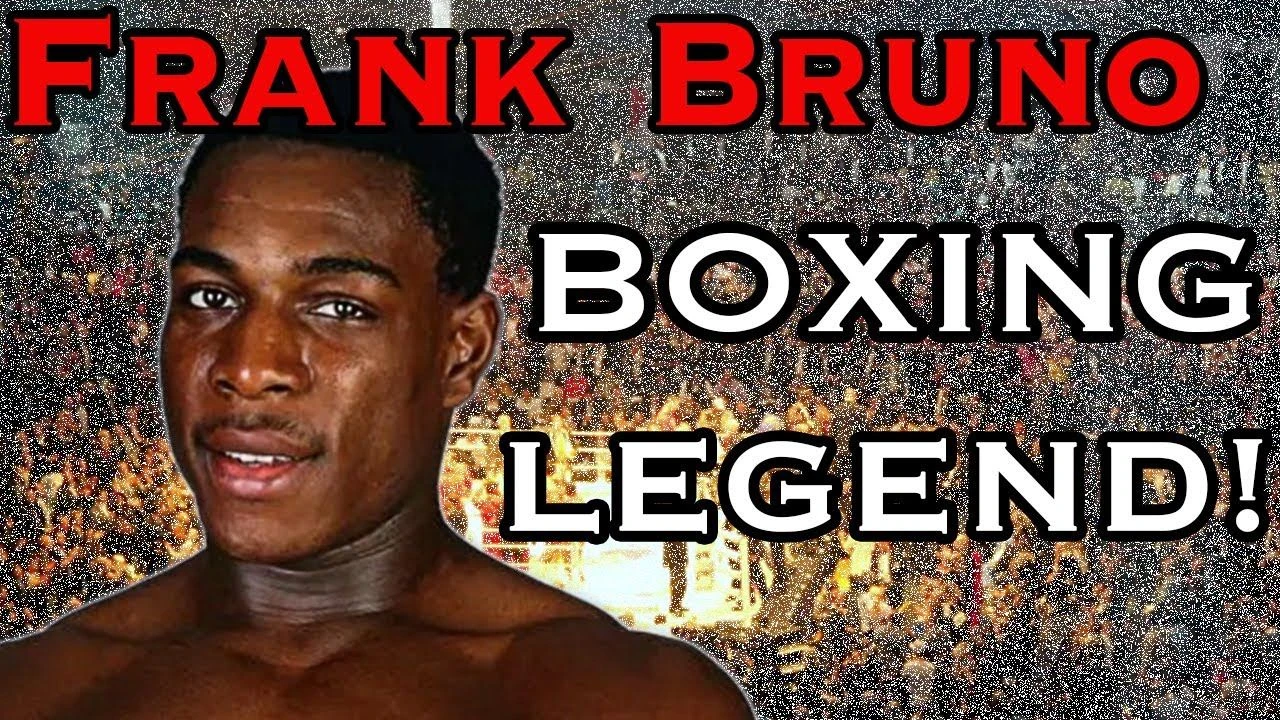
Frank Bruno spent years approaching the summit of heavyweight boxing. He won the European title, challenged for world honours three times and was stopped in the late rounds of bouts in which he had been competitive. On 2 September 1995, at Wembley Stadium, he finally became world champion: he outpointed Oliver McCall over 12 rounds to win the World Boxing Council (WBC) title. The achievement was the high point of a professional career built on exceptional punching power, but it was only one part of Bruno’s public life. Television appearances and his later openness about mental health made him a widely recognised figure beyond the ring.
From Wandsworth Boys Club to the professional ring
Born Franklin Roy Horatio Bruno in Hammersmith, London, on 16 November 1961, he was the youngest of six children. He took up boxing at the age of nine after joining Wandsworth Boys Club, and attended Oak Hall Community School in Heathfield, East Sussex. He also joined the Sir Philip Game Amateur Boxing Club. Bruno won 20 of his 21 amateur bouts; his sole defeat was to Irish international Joe Christie.
Bruno represented Young England and won the Amateur Boxing Association heavyweight title in 1980, aged 18. He became the youngest boxer to win that title, an early distinction in a career soon marked by rapid progress. His professional debut came in March 1982 at the Royal Albert Hall in London, where he knocked out Lupe Guerra. Bruno then won 21 consecutive fights by knockout. The run brought attention from international boxing magazines and established his reputation as a powerful, fast-rising heavyweight.
The streak ended in May 1984 against American James “Bonecrusher” Smith. Bruno was ahead on all three judges’ cards, but Smith knocked him out in the tenth and final round. It was an early example of a recurring pattern: Bruno could build a lead, but an opponent’s ability to withstand his attack and take advantage late in a fight could change the result.
European champion and world-title setbacks
Bruno regained momentum with wins over contenders, including Lucien Rodriguez, whom he stopped in the first round in March 1985. On 1 October that year, he knocked out Sweden’s Anders Eklund in the fourth round to win the European heavyweight title. He held the title until 1986 and then moved into a first world-title challenge.
In July 1986, Bruno fought Tim Witherspoon for the WBA heavyweight title at Wembley Stadium. Once again, he led for much of the contest but ran out of energy and was knocked out in the eleventh round. He returned to contention with victories over James Tillis and others. In October 1987, he beat former world-title challenger Joe Bugner in an all-British bout, the referee stopping the fight in the eighth round.
Bruno’s second world-title challenge came in February 1989, against Mike Tyson for the undisputed heavyweight championship. Bruno was hurt in the opening exchanges, recovered and landed a left hook near the end of the first round, but Tyson eventually overwhelmed him. The referee stopped the fight in the fifth. Bruno then spent two years away from the ring while recovering from surgery for a detached retina. After his return, he rebuilt his standing with wins including those over José Ribalta, Pierre Coetzer and Carl Williams.
In 1993, Bruno challenged Lennox Lewis for the WBC title. It was the first time two British boxers had fought one another for the world heavyweight championship. Bruno was ahead on points when Lewis shook him in the seventh round, and the referee stopped the bout. Bruno had now lost three world-title challenges, each after being stopped despite periods of success.
The Wembley night that made him champion
Two more wins, including a first-round stoppage of Jesse Ferguson, helped Bruno earn another opportunity. On 2 September 1995, he met defending champion Oliver McCall at Wembley Stadium. Bruno built a strong lead through the middle rounds. Although he appeared to tire late, McCall could not break through his defences. Bruno won unanimously on points after 12 rounds and secured the WBC heavyweight title.
The reign was brief. The contract Bruno had signed to secure the McCall fight required him to meet Tyson in his first defence. Their rematch took place on 16 March 1996, and Tyson stopped Bruno in the third round. An eye injury, which had recurred after first being caused in the earlier Tyson fight, contributed to the end of Bruno’s boxing career. He was advised not to fight again because further damage risked permanent blindness, and he retired soon afterwards.
Bruno’s professional record was 40 wins and five defeats, with 38 victories by knockout. He had held the European heavyweight title and the WBC world title, and had challenged for the world championship against Witherspoon, Lewis and Tyson. Those results give a fuller picture than a simple rise-and-triumph story: his career included hard losses, medical setbacks and repeated returns to title contention before the Wembley victory.
A life in public beyond boxing
Bruno became a familiar television personality and entertainer after establishing himself as a boxer. His interviews with BBC boxing commentator Harry Carpenter helped popularise the phrase “Know what I mean, Harry?” He appeared on television and on stage, including in pantomime. In 1989 and 1990, he was voted BBC Sports Personality of the Year, and he was appointed a Member of the Order of the British Empire (MBE) in the 1990 New Year Honours.
His reach into popular culture took several forms. In 1985, a boxing game bearing his name was released for the ZX Spectrum, Commodore 64 and Amstrad CPC. The game was later reissued as Frank Bruno’s World Championship Boxing to coincide with his first fight against Tyson. In 1995, the year he won the WBC title, Bruno released a cover of “Eye of the Tiger”, which reached number 28 in the UK chart. He also appeared in television entertainment and charity programmes, and completed the 2011 London Marathon, his third successful marathon.
Bruno has spoken publicly about his experiences of mental ill health. The article’s earlier claim that this definitively changed national awareness is not established by the detailed career account, but his public discussion of the subject is part of his later public life. After retiring from boxing, he supported the Frank Bruno Foundation, described as dedicated to improving men’s mental health. The combination of a high-profile sporting career and discussion of an issue often treated as private brought his public role into a different arena from boxing.
Conclusion
Bruno’s career was not a straightforward ascent. His early knockout run, European championship and eventual WBC title sit alongside defeats to Smith, Witherspoon, Tyson and Lewis, as well as an eye injury that ended his time as a professional boxer. The Wembley victory over McCall came after those setbacks, and the title was lost in Bruno’s first defence. Beyond the ring, television, stage and popular-culture appearances kept him in public view, while his later discussion of mental health and support for a foundation extended that public role.
Why Frank Bruno deserves a place in British Legacy
Bruno’s place in British sporting history rests on a clear achievement: he became WBC heavyweight champion by beating Oliver McCall on points at Wembley in 1995. That victory followed three unsuccessful world-title challenges and a career in which he had already won the European title. His record—40 victories, including 38 knockouts, from 45 professional fights—shows both the force that made him a leading heavyweight and the persistence required to keep returning to the top level after defeat. The first world-title fight between two British boxers, Bruno and Lennox Lewis in 1993, also situates his career within a significant moment in British heavyweight boxing.
His legacy extends beyond those results. Bruno became a recognisable television personality, appeared on stage and in popular entertainment, and received national recognition as Sports Personality of the Year and through his MBE. Later, his willingness to speak about mental ill health brought a personal subject into public view, while his support for the Frank Bruno Foundation connected that experience with work focused on men’s mental health. These are distinct strands of a British public life: championship sport, mass-media familiarity and an association with mental-health support. Remembering them together gives a more complete account than either the nickname “People’s Champion” or the image of a powerful boxer alone.
Sources
Frank Bruno — revision 1376843893 · Frank Bruno
Adapted in part from Frank Bruno by Wikipedia contributors, under CC BY-SA 4.0. Text has been edited and combined with the existing article; this adapted text is shared under the same licence. Contributor history.