The Battle of Loos: A Critical Chapter in the British War Legacy
As we navigate through the rich tapestry of British heritage, dotted with historic milestones, the Battle of Loos emerges as a poignant testament to the bravery, innovation, and unyielding spirit of the British forces during the First World War. Fought from 25th September to 8th October 1915, this significant battle was a part of the larger Artois-Loos offensive and holds a critical place in our collective memory, not just for its immediate tactical outcomes but for the enduring legacy it carved into the annals of British military history.
The Context of the Battle
The Battle of Loos was a pivotal confrontation on the Western Front and was notable as the largest British offensive mounted in 1915. Strategically, it was aimed at breaking through the German defences in the town of Loos-en-Gohelle in France, hoping to exploit the weakened lines and create a significant breach. It was a part of broader Allied efforts to relieve pressure on the Eastern Front and to support the additional concurrent assaults planned by the French armies during the Artois-Loos operation.
Innovation Amidst Tragedy: The Introduction of Chlorine Gas
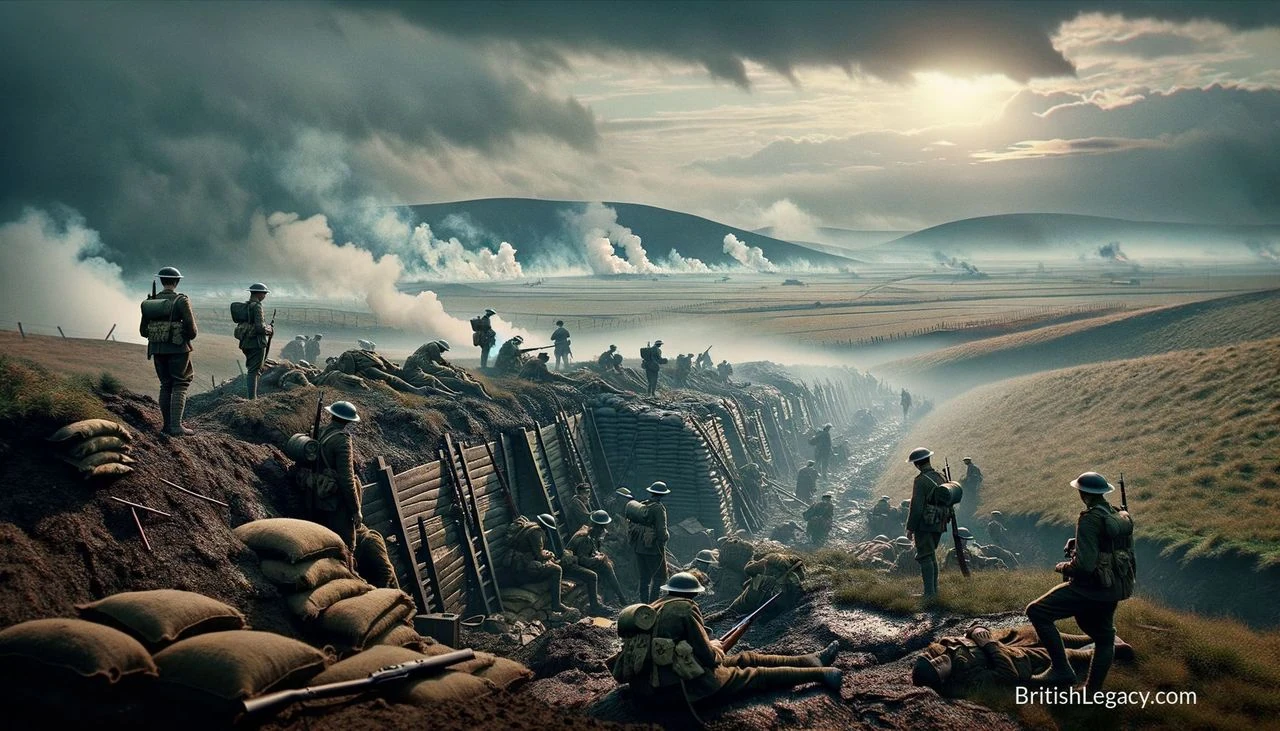
The Battle of Loos holds a critical place in military history as the first instance of British forces employing chlorine gas as a chemical weapon. This use came as an attempt to counteract deep-set German defences bolstered by barbed wire and entrenched positions. The decision to deploy chlorine gas, however, resulted in mixed outcomes. While it demonstrated a new method of warfare that underscored the increasingly industrialised and brutal nature of WWI, it also showcased the initial lack of effective coordination and protection, ultimately leading to significant British casualties, including those from Friendly Fire.
The introduction of chemical warfare during the Battle of Loos was a stark reminder of the evolving and harrowing tactics of World War I, marking a transition to more devastating and indiscriminate means of engagement. This tragic innovation undeniably left an indelible mark on military strategy and underscored the growing technological competences of the British Army amidst the horrors of trench warfare.
The Cost: High Casualties and a Mixed Outcome
The British forces, led by General Douglas Haig, managed to secure some initial successes, including the capture of the town of Loos itself. However, the triumph was short-lived. The follow-up attacks were met with formidable German resistance and counter-attacks, leading to an immense number of casualties. In the grim tally of war, the British suffered approximately 60,000 casualties, highlighting the severe human cost of the engagement.
Despite the initial gains, the Battle of Loos is often remembered for its tragic and high casualties, reflecting the brutally inefficient nature of wartime tactics and the severe learning curve faced by the British Army in adapting to the gruesome realities of modern warfare.
Remembering the Sacrifice
The Battle of Loos is a profound narrative within British military history – it is a story of valour, of grand strategic aims, and of harsh lessons learned at a grave cost. The brave soldiers who fought and fell in the eerie, gas-laden fields of Loos exemplify the spirit and resilience that is woven into the fabric of British heritage.
Their sacrifices resonate to this day as part of our shared legacy, underscoring the enduring ideals of duty and courage. The battle stands as a solemn chapter, reminding us of the complexities and the cost of the freedoms upheld by the generations before us.
The memorials that stand in the environs of Loos-en-Gohelle today serve as lasting tributes to those who partook in this significant chapter of the First World War. They remind us of the importance of understanding and preserving our military history, not just as a tale of strategic and tactical evolutions, but as a human story of sacrifice, resilience, and legacy.
Wrap-Up
The Battle of Loos remains an integral part of the British war legacy, illustrating the grim realities of warfare while also highlighting the resolve and bravery of the British Army. It holds lessons and memories that have shaped not only military strategy but also the broader understanding of World War I's impact on society. In remembering Loos, we honour the past and fortify our appreciation for the historical paths that have shaped today's Britain.