
Gareth Bale’s career carried him from Cardiff to the summit of European club football, but Wales remained its defining thread. A left-back at Southampton, he became one of the game’s most dangerous attacking players at Tottenham, won five Champions League titles with Real Madrid and helped Wales reach the Euro 2016 semi-finals and return to the World Cup in 2022. His career was built on pace, acceleration, a powerful left foot and the ability to change a match at speed.
Cardiff beginnings and a first professional season
Born in Cardiff on 16 July 1989, Bale came to Southampton’s attention as a schoolboy playing for Cardiff Civil Service. He joined the club’s youth set-up in 1999 and made his first-team debut in April 2006, aged 16 years and 275 days. Southampton used him at left-back, where his delivery from free-kicks and capacity to create chances made him a notable young player. He scored five league goals in his first professional season and received the Football League Young Player of the Year award in 2007.
Tottenham Hotspur signed Bale in May 2007. His early years in London were disrupted by injuries, including ankle ligament damage that restricted his first season. A later knee injury also interrupted his progress. He gradually established himself in the side, initially as a left-back and then, under Harry Redknapp, as a winger. The change brought his pace and attacking instincts to the fore. In April 2010, he scored in consecutive wins over Arsenal and Chelsea; the latter helped secure Tottenham’s qualification for the Champions League.
Tottenham’s breakthrough and the move to Madrid
Bale’s performances in the 2010–11 Champions League made him an international name. He scored a hat-trick against Inter Milan in a 4–3 defeat in the San Siro, then supplied two assists in Tottenham’s 3–1 home win over the same opponents. He was named PFA Players’ Player of the Year at the end of that season, an award he won again after his 2012–13 campaign. That final Tottenham season also brought the PFA Young Player of the Year and Football Writers’ Association Footballer of the Year awards.
In September 2013, Real Madrid signed Bale for a transfer fee reported as £85.1 million, then a world record. He scored in his debut season’s defining finals: first the winner against Barcelona in the Copa del Rey, after a sprint past Marc Bartra, then the go-ahead goal in extra time of the Champions League final against Atlético Madrid. Madrid won 4–1 in the 2014 final, securing its tenth European Cup. Bale finished his first season with 22 goals and 16 assists in all competitions.
His contribution in Spain was not limited to those two goals. In the 2015–16 Champions League final, he assisted Madrid’s opening goal against Atlético and scored in the penalty shoot-out. In 2017, he appeared as a substitute in the final as Madrid defeated Juventus. The 2018 final against Liverpool became one of the defining episodes of his career: introduced from the bench, Bale scored twice, including an overhead kick, and was named man of the match. He also won the Golden Ball at the 2018 FIFA Club World Cup. Across his Madrid career he scored more than 100 goals and won five Champions League titles.
Wales: records, tournaments and a final chapter
Bale made his senior international debut in May 2006, aged 16, and provided the assist for Robert Earnshaw’s winning goal against Trinidad and Tobago. Later that year he became Wales’s youngest senior international goalscorer, with a free-kick against Slovakia. Over the following years he became the national team’s leading scorer, passing Ian Rush’s record in 2018. He finished his Wales career with 111 appearances and 41 goals, both national records in the account of his career.
Wales qualified for Euro 2016, its first major tournament since the 1958 World Cup, with Bale scoring seven goals in qualifying. At the finals he scored three times, including in wins over Slovakia and Russia, as Wales reached the semi-finals. The team’s run ended against eventual champions Portugal, but the tournament marked a historic achievement for Welsh football. Bale also played at Euro 2020, where he helped Wales reach the last 16.
In June 2022, Bale scored the decisive free-kick against Ukraine in the World Cup qualifying play-off final, taking Wales to its first World Cup since 1958. He captained the side in Qatar later that year and scored Wales’s goal against the United States. It was the team’s only goal at the tournament. His final professional appearance came in Wales’s last group match, against England.
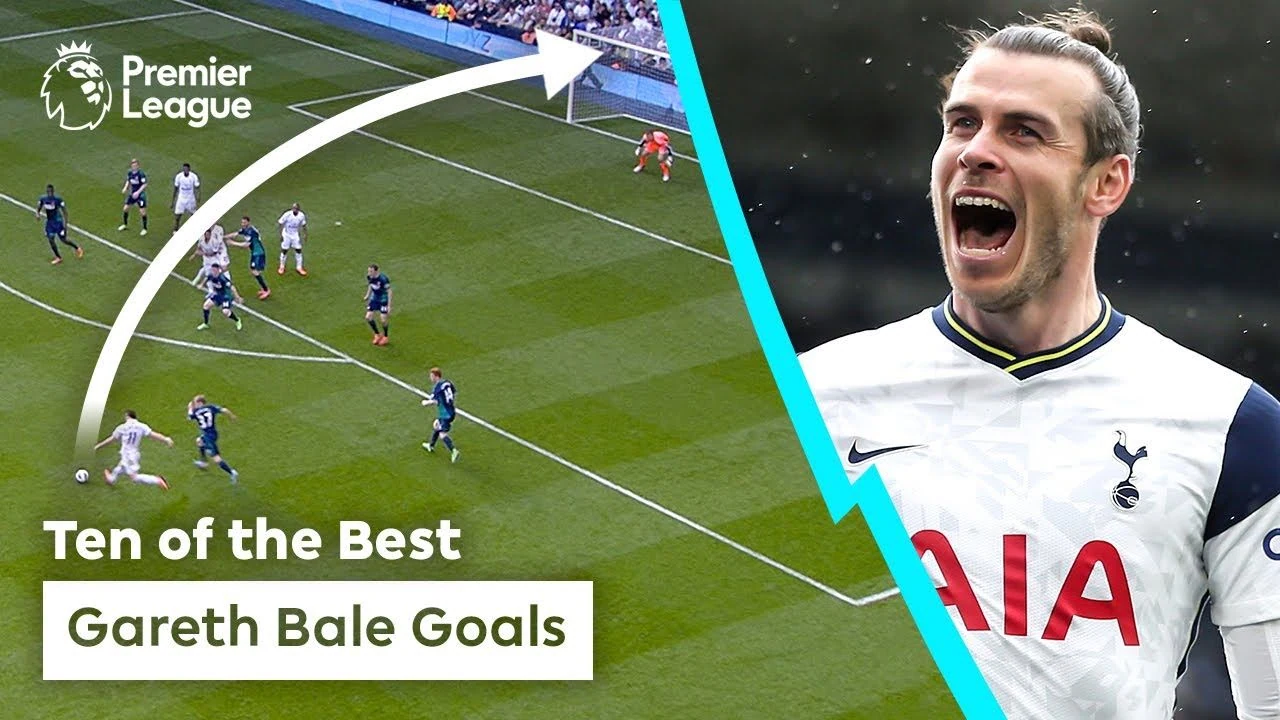
Between his international milestones, Bale returned to Tottenham on loan for the 2020–21 season, scoring 11 Premier League goals. He then rejoined Real Madrid before signing for Los Angeles FC in 2022. In the MLS Cup final, his stoppage-time header took the match to a penalty shoot-out, which LAFC won. Bale announced his retirement from professional football in January 2023. His honours also include six Welsh Footballer of the Year awards and appointment as a Member of the Order of the British Empire in 2022 for services to football and charity.
Why Gareth Bale deserves a place in British Legacy
Bale’s place in British Legacy rests on achievements that are both individual and shared. He became one of the most successful British players in European club football, winning five Champions League titles and scoring in major finals for Real Madrid. His decisive goals were not simply highlights: the 2014 Copa del Rey winner and his two goals against Liverpool in 2018 helped deliver major trophies. At Tottenham, his development from full-back to attacking force showed how a change of position could make full use of his acceleration, shooting and ability to carry the ball past opponents.
His Welsh career gives that record a distinct national significance. Bale was Wales’s leading scorer and most-capped player, and he helped the team reach a first European Championship semi-final in 2016. Six years later, his free-kick sent Wales back to the World Cup after a 64-year absence. Those campaigns gave Welsh supporters landmark moments and helped establish the national side among the leading stories of both tournaments. His record therefore belongs not only to the clubs that won trophies with him, but to the history of Welsh football and to the wider British game. The combination of elite club success and sustained service to Wales is the clearest measure of his legacy.
Sources
Adapted in part from Gareth Bale by Wikipedia contributors, under CC BY-SA 4.0. Text has been edited and combined with the existing article; this adapted text is shared under the same licence. Contributor history.

_(cropped).jpg)