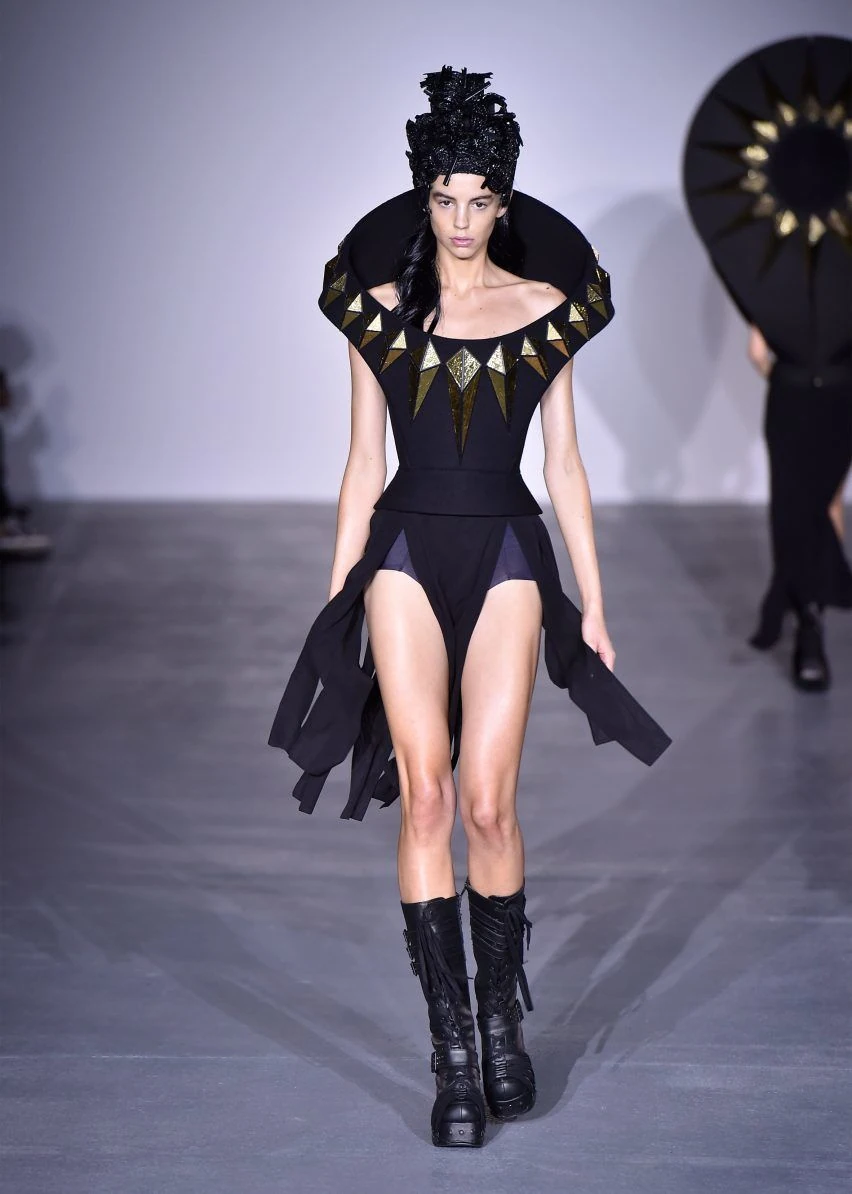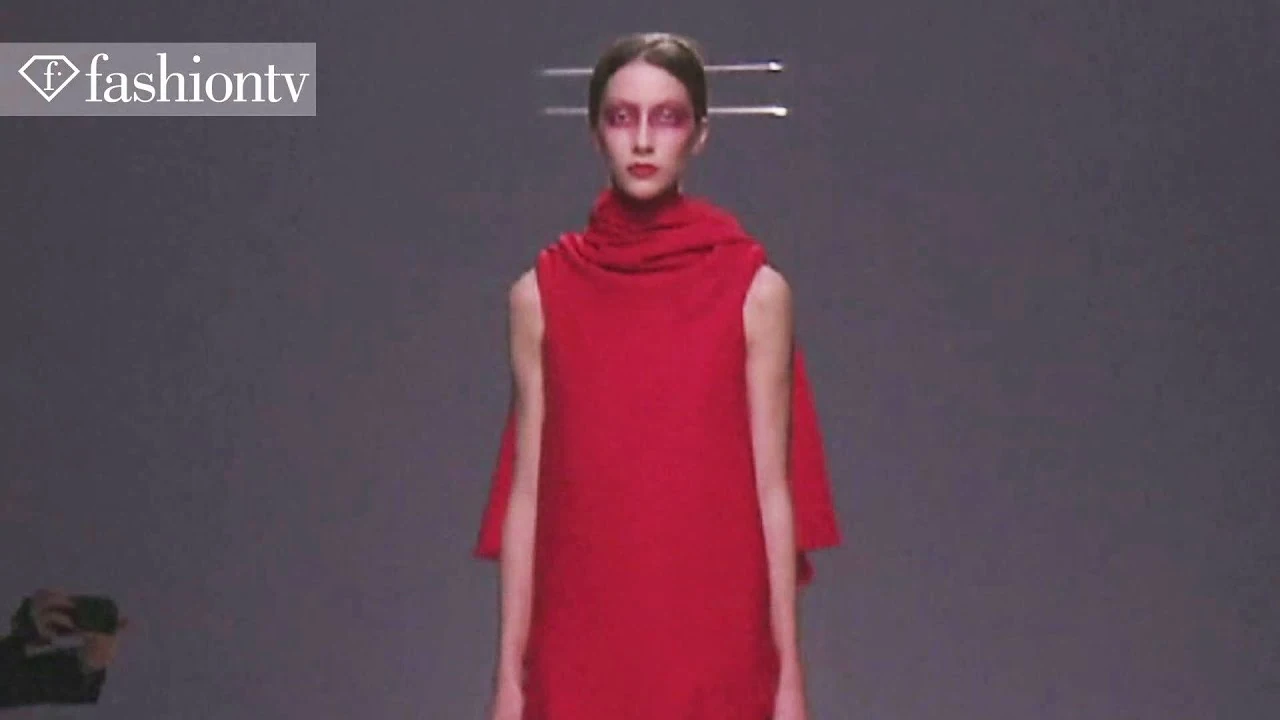
Gareth Pugh’s clothes are designed to change the shape of the body in the eye of the beholder. Inflated PVC, Perspex discs and sharply constructed silhouettes turn garments into something closer to wearable sculpture; his shows make that transformation part of the event. The Sunderland-born designer built his career through experimental fashion, from a collection made with balloons at Central Saint Martins to a solo premiere at London Fashion Week in 2006.
Early work and a defining collection
Pugh began working as a costume designer for the National Youth Theatre when he was 14. He studied fashion at City of Sunderland College before completing a degree in Fashion Design at Central Saint Martins in 2003. His final collection there used balloons to exaggerate the joints and limbs of the models. The idea of changing the body’s outline would become one of the recurring features of his work.
The collection also brought early attention: the senior fashion editor of Dazed & Confused placed one of its designs on the magazine’s cover. Pugh then appeared on the British reality programme The Fashion House, an experience he later described as difficult. He interned with designer Rick Owens in Paris, and the rise of his label, !WOWOW!, helped bring his work to a wider fashion audience.
In 2005, Pugh showed at Kashpoint’s Alternative Fashion Week and was invited to take part in the Fashion East group show. He had four weeks to make the collection, without a studio, assistants or much money. The show attracted critical attention. It was a group-show appearance, rather than his solo London Fashion Week premiere, which came the following year.
Volume, material and performance
Pugh’s practice centres on form and volume. His clothes can distort the familiar outline of the wearer, turning the body into a surface for sculptural shapes. Materials used in his collections have included PVC inflated into large coats, Perspex discs linked like chain mail, latex, parachute silk and foam footballs. He has also worked with synthetic and human hair and electrically charged plastic. The combinations are not simply decorative: material and silhouette help make each look read as a performance.
Black and white recur in his work, including patchwork squares, masks and leggings. The effect is often described as gothic or futuristic, but Pugh has said that his designs are about a struggle between lightness and darkness. His collections, he has explained, are autobiographical rather than referential, drawing inspiration from Britain’s extreme club scene. Comparisons with other designers and performers have been made, but Pugh has rejected frequent comparisons with Leigh Bowery as lazy journalism.
His runway presentations extend the same visual approach beyond individual garments. Pugh’s solo premiere was at London’s Fall 2006 fashion week, after which he presented Spring 2007 and Autumn 2007 collections there. The shows drew critical praise, while their theatrical staging helped establish performance as an important part of how audiences encountered his clothes. British Vogue described the Spring 2007 show as an “incredible, unmissable show”.
Design beyond the catwalk
Pugh’s designs have also reached audiences through performers and popular music. Kylie Minogue wore his work on her Showgirl – The Greatest Hits and Showgirl – The Homecoming tours. Róisín Murphy wore one of his outfits in the video promoting her 2007 album Overpowered and on the cover of the single “Let Me Know”. Beyoncé wore Pugh designs at the 2008 MTV Europe Awards and in the video for “Diva”. Lady Gaga, Ashlee Simpson and the Pet Shop Boys have also worn his work in performances or videos.
The Pet Shop Boys wore Pugh outfits at the 2012 Summer Olympics, in designs that reinterpreted a look associated with their 1993 Very era. The different settings for these clothes—from music videos and tours to a major sporting event—show how Pugh’s design language can function as costume and spectacle as well as fashion.
In 2010, Pugh opened his first boutique, in Hong Kong. The commercial side of his career has not been as straightforward as the visibility of his shows might suggest. In March 2007, he said he had not yet sold a dress and was struggling to make ends meet; until his Spring 2007 collection, his clothes had been catwalk experiments and were not available to buy. Rick Owens and Michèle Lamy later supported the development, production and marketing of his collections and held a 49 per cent interest in his firm. The balance between artistic experimentation and commercial clothing has been a persistent question around his work.
Recognition and continuing reach
Pugh received the ANDAM Fashion Award in 2008 and an honorary Doctorate of Arts from the University of Sunderland in 2018. In 2014, fashion journalist and stylist Katie Grand selected one of his wrapped outfits, made from calico and plastic sheeting, for the Fashion Museum, Bath’s Dress of the Year collection. The selection placed his work within a record of contemporary dress as well as on the runway.
His projects have continued to include commissions beyond conventional fashion shows. In 2019, Virgin Voyages revealed a collection designed by Pugh. He has also been associated with opera and ballet costume design; the supplied account specifically identifies a collaboration with the English National Ballet on The Rite of Spring, although the available biographical reference does not provide details of that production. Pugh’s work has thus been presented in settings where clothing contributes to a larger performance, though the evidence supplied here is more detailed about his fashion collections and music collaborations.
Why Gareth Pugh deserves a place in British Legacy
Gareth Pugh merits a place in British Legacy because his career shows a distinctive British contribution to fashion: treating clothing as a medium for performance and experimentation, not only as a product to be worn. His path from the National Youth Theatre to Central Saint Martins and the London catwalk connects training in costume and fashion design with a body of work that challenges familiar ideas about the dressed body. The balloon-shaped final collection, sculptural use of materials and theatrical runway presentations make that approach concrete.
His impact also travels beyond the fashion audience. Performers including Kylie Minogue, Beyoncé and the Pet Shop Boys have taken his designs into concerts, videos and a globally watched Olympic ceremony. A Pugh outfit selected for the Fashion Museum’s Dress of the Year collection provides another form of recognition, preserving an example of his work within a public account of dress. His career also offers a useful, less romantic lesson: critical attention and striking images do not guarantee straightforward sales. That tension makes his story relevant to British design—not as a generic tale of national brilliance, but as a record of how an individual designer has carried experimental London fashion into popular culture while negotiating its commercial limits.
Sources
Gareth Pugh — Wikipedia revision 1319484238 · Gareth Pugh — Wikipedia
Adapted in part from Gareth Pugh by Wikipedia contributors, under CC BY-SA 4.0. Text has been edited and combined with the existing article; this adapted text is shared under the same licence. Contributor history.