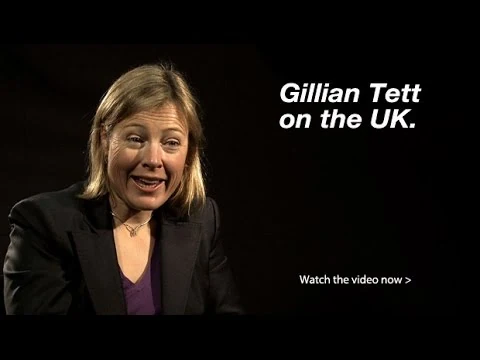
Financial markets can be described in numbers, but understanding them also means asking how people and institutions behave. Gillian Tett’s reporting, as described in the supplied account, drew on that broader perspective. Trained in social anthropology at the University of Cambridge, she joined the Financial Times in 1993 and went on to hold senior editorial roles. The account singles out her coverage of collateralised debt obligations before the financial crisis of 2008: work that connected specialist financial structures with the risks they could carry.
From social anthropology to the Financial Times
The supplied article says that Tett holds a PhD in social anthropology from the University of Cambridge. It presents this training as relevant to her approach to finance: looking beyond market figures and headlines to the people, institutions and practices behind them. That connection gives the account its central idea, although it does not describe her doctoral research or provide particular examples of how her studies informed individual reports.
Tett joined the Financial Times in 1993. The article lists Deputy Editor and Assistant Editor among the positions she held, and describes her as US Managing Editor. It does not give dates for those appointments, so these details sketch a career rather than establish a full chronology. Together, they place her work within a publication whose reporting on finance reaches readers beyond the specialist industry.
Explaining complex financial instruments
The account identifies collateralised debt obligations, or CDOs, as a focus of Tett’s reporting. It says that in 2006 she wrote about dangers associated with CDOs and other complex financial instruments, before the financial crisis of 2008. It connects her Financial Times articles on the subject with her book Fool’s Gold. The supplied material gives no article titles or examples, but presents this coverage as an early effort to make the risks of complicated financial products visible.
Explanation is as important to this account as warning. Tett is credited with writing about intricate financial systems in clear language, making them more accessible to readers without specialist knowledge. That emphasis matters: describing a financial instrument is not the same as showing why it might pose a risk or how it fits into a wider system. The article’s account links those tasks, portraying financial journalism as both scrutiny and translation.
Recognition and public discussion
The supplied article reports that Tett received the British Academy’s President’s Medal in 2011 for services to the humanities and social sciences, and was named Columnist of the Year at the British Press Awards in 2014. It also describes her as a speaker at international financial forums and a contributor to radio and television programmes. No award citations, events or programme names are provided, so these details offer an outline of recognition and public-facing work, rather than a fuller record of either.
The account’s broader claims about Tett’s influence are best understood through the specific work it describes: reporting on complex financial instruments and making their possible significance intelligible. It does not supply evidence to assess the reach of individual articles or broadcast appearances. Its strongest point is the value it places on explaining how finance operates, not simply recounting what happens in markets.
Why Gillian Tett deserves a place in British Legacy
The supplied account makes a specific case for Tett’s place in British journalism. It connects her social-anthropology training at Cambridge with financial reporting that looks beyond figures to the structures and behaviour behind them. Its clearest example is her reported coverage of CDOs and other complex instruments in 2006, before the 2008 financial crisis. The article presents that work as an effort to identify risks and explain difficult financial subjects to a broader readership.
That combination of scrutiny and explanation is a meaningful contribution: readers can better understand financial systems when reporting makes their mechanisms and potential vulnerabilities legible. Tett’s reported Financial Times career, book and public appearances extend that account from newspaper coverage into wider discussion. The available material does not establish every detail of her influence, and this article does not need to claim more than it supports. It does, however, show why clear reporting on complex finance belongs in a record of British journalism.