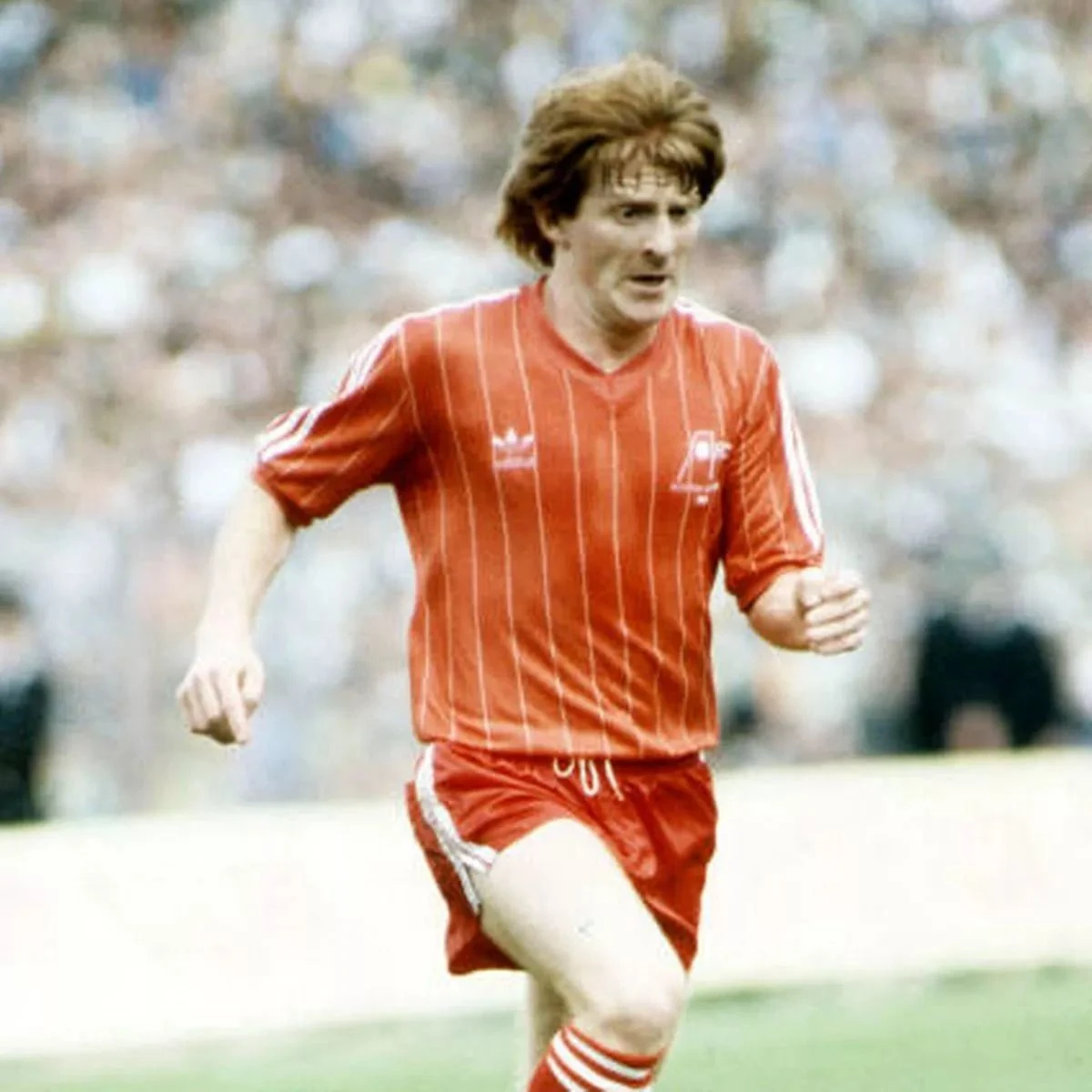
Gordon Strachan’s career crossed Scottish and English football at a time when club success could mean domestic titles one season and European nights the next. A midfielder of sustained influence, he helped Aberdeen win the European Cup Winners’ Cup, lifted the FA Cup with Manchester United and captained Leeds United to the English league title. Later, he managed five clubs and Scotland. His story is not a straight rise: it includes injuries, difficult transitions and a late-playing career that lasted into his forties.
From Dundee to Aberdeen
Born in Edinburgh on 9 February 1957, Strachan joined Dundee as a teenager and made his senior debut in 1974. He chose the club partly because he thought it offered a better opportunity to establish himself in the first team. He became a regular in the 1975–76 season, when the Scottish Premier Division began, and was appointed Dundee captain the following campaign. The club’s struggles in the lower divisions helped prompt his departure.
Aberdeen signed him in November 1977, while Billy McNeill was manager. Alex Ferguson took charge the following summer. Under Ferguson, Strachan developed into a key member of a side that challenged the established order in Scotland. Aberdeen won the league in 1979–80, then the Scottish Cup in 1981–82. In the latter final, a 4–1 extra-time win over Rangers, Strachan scored and supplied an assist.
The 1982–83 season brought Aberdeen’s most striking European achievement: a 2–1 victory over Real Madrid after extra time in the European Cup Winners’ Cup final in Gothenburg. The club also won the Scottish Cup. In 1983–84, Aberdeen secured the league and cup double, then beat Hamburger SV to claim the European Super Cup. Strachan’s years at Pittodrie were therefore marked not by one isolated upset, but by a run of domestic and European honours.
Success in England
Manchester United paid £500,000 for Strachan in August 1984. The move followed a pre-contract agreement with 1. FC Köln; United also paid compensation to resolve the dispute. In his first season, Strachan helped United win the 1985 FA Cup. He later missed much of a campaign through injury, and the club’s league form fluctuated. When Ferguson became United manager in 1986, the two men were reunited after their time at Aberdeen.
Strachan moved to Leeds United in 1989 and became club captain. He led the side to the Second Division title in 1989–90, then helped Leeds win the First Division in 1991–92. His performances earned him the Football Writers’ Association Footballer of the Year award for 1990–91; he had already won the Scottish writers’ award while at Aberdeen. He played 197 league matches for Leeds and was named the club’s Player of the Year in 1993.
In March 1995, he joined Coventry City as assistant manager under Ron Atkinson, with an understanding that he would take over as manager in 1997. He continued playing, making 26 Premier League appearances for Coventry before retiring. When Atkinson became the club’s director of football in November 1996, Strachan was appointed manager earlier than planned.
Scotland: player and manager
Strachan made his Scotland debut in 1980 and represented the country at the 1982 and 1986 World Cups. He scored in the 1986 tournament, in a 2–1 defeat by West Germany. Across his international career he won 50 caps and scored five goals. He retired from international football in 1992 after long-term back trouble, having captained Scotland during qualification for the European Championship that year.
His club career ended in 1997, aged 40. As a Coventry player-manager, he helped the club avoid relegation in his first season in charge; he had played in a win over Chelsea at the age of 40, then a Premier League record for an outfield player. Coventry finished 11th in 1997–98, but later seasons were harder. The club was relegated in 2001, and Strachan was dismissed after five matches of the following campaign.
At Southampton, which he took over in October 2001, Strachan guided the team to 11th place in the Premier League in his first season. Southampton finished eighth in 2002–03 and reached the FA Cup final, losing 1–0 to Arsenal. He resigned in February 2004 and took a break from management before returning to Scotland.
Strachan became Celtic manager in 2005. After a difficult opening, his first season brought the Scottish League Cup and the league title, clinched with six matches remaining. Celtic won the league again in 2006–07 and 2007–08, giving him three successive titles, and added the Scottish Cup in 2007. The side also reached the Champions League round of 16 in consecutive seasons. He resigned in May 2009 after failing to win a fourth league title.
A brief spell at Middlesbrough ended by mutual consent in October 2010. In January 2013, Strachan took charge of Scotland. The national side improved after his appointment, but did not qualify for the 2014 World Cup or Euro 2016. Scotland again missed out on a major tournament when it failed to qualify for the 2018 World Cup; Strachan resigned in October 2017.
Honours, approach and life beyond the dugout
Strachan’s honours reflect a career shared between two football systems. As a player, he won league titles in Scotland and England, the European Cup Winners’ Cup and European Super Cup with Aberdeen, the FA Cup with Manchester United and the First Division title with Leeds. He was appointed an Officer of the Order of the British Empire in the 1993 New Year Honours for services to association football. He was inducted into the Scottish Football Hall of Fame in 2007.
As a manager, his three consecutive league titles with Celtic stand out, alongside Southampton’s FA Cup final run. His teams were associated with a 4–4–2 formation and close attention to fitness and diet. Strachan’s own long playing career continued to attract notice: he played in the Premier League into his forties. His dry humour also became a familiar part of his public persona, particularly in media interviews.
He has worked as a football pundit and, in 2006, was appointed FIFA’s official ambassador for Scotland for the World Cup, joining a fundraising effort for SOS Children’s Villages. In July 2019, he took up a technical director role at Dundee, the club where his senior career began. His sons Craig and Gavin also played football.
Why Gordon Strachan deserves a place in British Legacy
Strachan’s place in British Legacy rests on achievements that link Scottish and English football without reducing either to a stepping stone. At Aberdeen, he was part of a side that won domestic trophies and beat Real Madrid to claim the European Cup Winners’ Cup, then completed a further league-and-cup double and won the European Super Cup. In England, he helped Manchester United win the FA Cup and captained Leeds to league titles in both divisions. Those honours show a player able to contribute across different clubs, managers and football cultures over a long career.
His managerial record adds another chapter. Three consecutive league titles at Celtic made his time in Glasgow a sustained success, while Southampton’s run to the 2003 FA Cup final brought a smaller club to Wembley’s final stage. Later, he took charge of Scotland, carrying his connection with the national side from player to manager. His career also offers a concrete account of longevity: he remained a top-flight player into his forties before moving into coaching and management. Together, these achievements make Strachan a significant figure in the shared history of British football, rather than simply a list of clubs and trophies.
Sources
Gordon Strachan — Wikipedia, revision 1379231814 · Gordon Strachan — Wikipedia
Adapted in part from Gordon Strachan by Wikipedia contributors, under CC BY-SA 4.0. Text has been edited and combined with the existing article; this adapted text is shared under the same licence. Contributor history.