The Battle of Mons: A Pivotal Chapter in British Martial Tradition
In the annals of British military history, the Battle of Mons holds a distinguished place as the first major engagement for the British Expeditionary Force (BEF) during the tumultuous days of the First World War. Fought on 23rd August 1914, this battle marked not only a seminal moment in the early stage of the war but also showcased the tenacity, skill, and bravery of British soldiers in the face of overwhelming odds. It's a tale of resilience, tactical prowess, and the indomitable spirit that characterises British legacy on the global stage.
The Prelude to Battle
The First World War, often dubbed 'The Great War', erupted in July 1914, drawing in nations from across the globe into a conflict of unprecedented scale. The British Expeditionary Force, a highly professional and well-trained contingent, was swiftly dispatched to the Western Front to support Belgium and France against the advancing German armies.
Mons, a small industrial town in Belgium, became the focal point for the BEF's initial encounter with the German forces. The British troops, commanded by General Sir John French, took up defensive positions along the Mons-Conde Canal, preparing to face the might of the German First Army under General Alexander von Kluck.
The Battle Unfolds
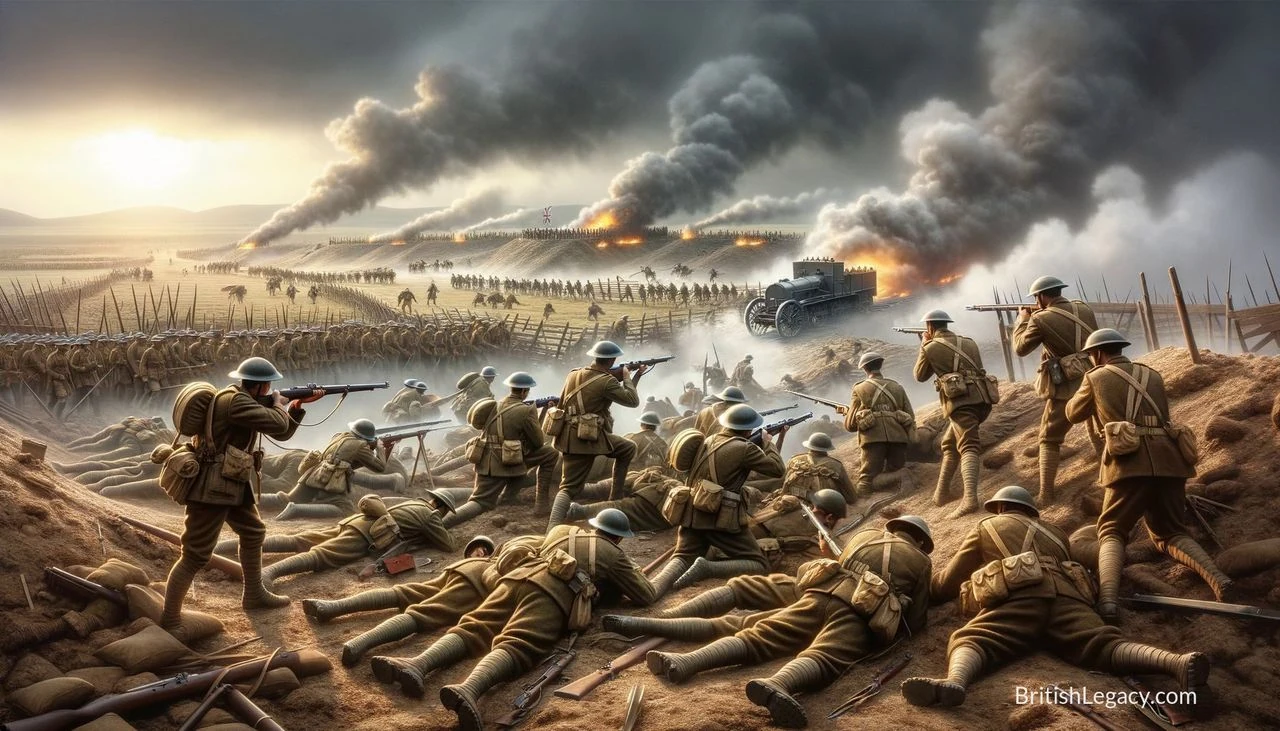
On the morning of 23rd August, the quietude of Mons was shattered by the roar of artillery and the rattle of machine-gun fire. The Germans, seeking to outflank the Allied forces, launched a ferocious assault. Outnumbered and outgunned, the British soldiers demonstrated exemplary defensive fighting skills, holding their ground against the onslaught.
The BEF’s use of rapid, accurate rifle fire became legendary. British infantrymen, using the Short Magazine Lee-Enfield rifle, were trained to fire 15 rounds per minute, a feat that has since become part of military folklore as the "Mad Minute." This sustained rate of fire gave the impression that the British had far more machine guns than they actually did, confusing the German attackers.
Despite their valiant defence, the sheer weight of the German forces began to tell. Recognising the untenable position, General French ordered a tactical retreat to avoid encirclement and total annihilation. This retreat, though, was not a simple withdrawal; it involved a series of well-executed rear-guard actions that continued to delay and disrupt the German advance.
Legacy and Significance
The Battle of Mons was characterised by a combination of steadfast defence and strategic withdrawal, highlighting the professionalism of the BEF. While it was technically a German victory, the battle had significant implications:
- Demonstration of British Resolve: The Battle of Mons reinforced the reputation of the British soldier as a formidable opponent. The BEF, though small in number, proved its mettle against a larger, well-equipped enemy.
- Moral and Psychological Impact: The conduct of the British troops in the battle bolstered the morale of the Allies and sent a clear message to Germany about the resilience and capability of British forces.
- Tactical Lessons: The battle provided critical lessons in modern warfare, particularly the importance of mobility and the effective use of rifle fire, which would inform subsequent military strategies throughout the war.
The Angel of Mons
An intriguing part of the Battle of Mons narrative is the legend of the "Angel of Mons." According to popular accounts, some British soldiers reported seeing angelic warriors in the sky, believed to be Saint George and a heavenly host, who protected the British troops. Though the story was later attributed to wartime propaganda and the power of collective imagination, it underscored the profound impact of the battle on British cultural consciousness.
Wrap-Up
The Battle of Mons is etched in the tapestry of British heritage as a symbol of courage and tactical acumen. It set the tone for the British army's role in World War I, reflecting a legacy of steadfastness and skill that continues to resonate through generations. This encounter is a testament to the enduring spirit of the British Expeditionary Force, whose early exploits in the Great War contributed significantly to the overarching narrative of British military history and its indelible impact on world events. The Battle of Mons, with its tactical brilliance and legendary tales, remains a pivotal chapter in the great British legacy, reminding us of the fortitude and resilience that are the hallmarks of the British armed forces.