Harold Pinter made ordinary conversation feel uncertain. In his plays, a pause can carry as much force as a line of dialogue, while seemingly everyday exchanges give way to threats, evasions and struggles for control. That dramatic language, heard in works such as The Birthday Party, The Caretaker and The Homecoming, helped make him one of the defining English playwrights of the modern stage. His career also crossed into acting, directing, screenwriting and political campaigning, and brought him the Nobel Prize in Literature in 2005.
Hackney, war and the first stages
Pinter was born in Hackney, east London, on 10 October 1930, the only child of British Jewish parents. His father, Hyman Pinter, was a tailor; his mother, Frances, was a housewife. During the Blitz, Pinter was evacuated from London to Cornwall and Reading. The experience of separation and danger became part of the emotional territory of his writing, though his plays transform such material rather than simply recounting it.
At Hackney Downs School, he ran, played cricket and acted in school productions. He began writing poetry as a teenager; some of his earliest published poems appeared in the school magazine. English teacher Joseph Brearley encouraged his interest in literature and theatre, and directed Pinter as Romeo and Macbeth. After leaving school, Pinter attended the Royal Academy of Dramatic Art but did not complete the course. He later studied at the Central School of Speech and Drama.
His early adult years were shaped by acting and by his refusal of National Service as a conscientious objector. After legal proceedings and a fine, he obtained recognition as a conscientious objector. He worked in repertory theatre in Ireland and England, performing under the stage name David Baron, and took jobs including waiter, postman and bouncer to supplement his acting income. The stage experience gave him a practical understanding of performance: how a line lands, how a silence alters a scene, and how much an audience can infer from what is left unsaid.
A new kind of theatrical menace
Pinter’s first play, The Room, was written and staged in 1957. His next, The Birthday Party, opened in 1958 at the Lyric Hammersmith. It closed after only eight performances, but the critic Harold Hobson recognised its originality in a review published after the production had ended. The play’s initially poor reception did not prevent it from becoming one of Pinter’s best-known works.
Critics applied the phrase “comedy of menace” to his early plays: apparently ordinary situations turn threatening, while the characters’ motives remain uncertain. In The Birthday Party, The Dumb Waiter and The Caretaker, speech does not simply explain what is happening. It can conceal, test or unsettle. The gaps between words matter, as do repeated phrases, abrupt changes of subject and the pressure of what characters will not say. “Pinteresque” became a familiar description of this mixture of pause, ambiguity and menace, although Pinter himself disliked the label.
The first production of The Caretaker in 1960 established his theatrical reputation. The Homecoming, first staged in 1964, carried his work to a still wider audience; its Broadway production won four Tony Awards. Pinter’s writing was not confined to the stage. He adapted his own plays for film and wrote screenplays based on other authors’ work, including Joseph Losey’s films The Servant, Accident and The Go-Between. His screenwriting brought the same attention to power, withheld information and unstable relationships into a different medium.
From memory plays to political drama
From the late 1960s into the early 1980s, Pinter wrote plays that made memory itself unstable. Works including Landscape, Old Times, No Man’s Land and Betrayal allow past events to surface unevenly in present conversation. Characters may disagree about what happened or reveal it in fragments; the audience is left to weigh competing versions rather than settle comfortably into a single account.
His later drama became more directly political. In the 1980s and 1990s, plays such as One for the Road and Mountain Language confronted coercion, torture and the suppression of human rights. Pinter had been involved in the Campaign for Nuclear Disarmament and the British Anti-Apartheid Movement, and his political commitments grew more prominent in his public work. In 1985, he travelled to Turkey with the playwright Arthur Miller on a mission to investigate and protest the torture of imprisoned writers. His knowledge of the suppression of Kurdish language and culture informed Mountain Language.
Pinter opposed the 2003 invasion of Iraq and repeatedly criticised the conduct of powerful states. His Nobel lecture, delivered after he received the 2005 prize, brought together his reflections on drama and his indictment of political deception and violence. The speech made clear that his public argument was not separate from his artistic concerns: both asked who has the power to define events, whose account is accepted and what happens to those who resist.
Recognition, illness and a final performance
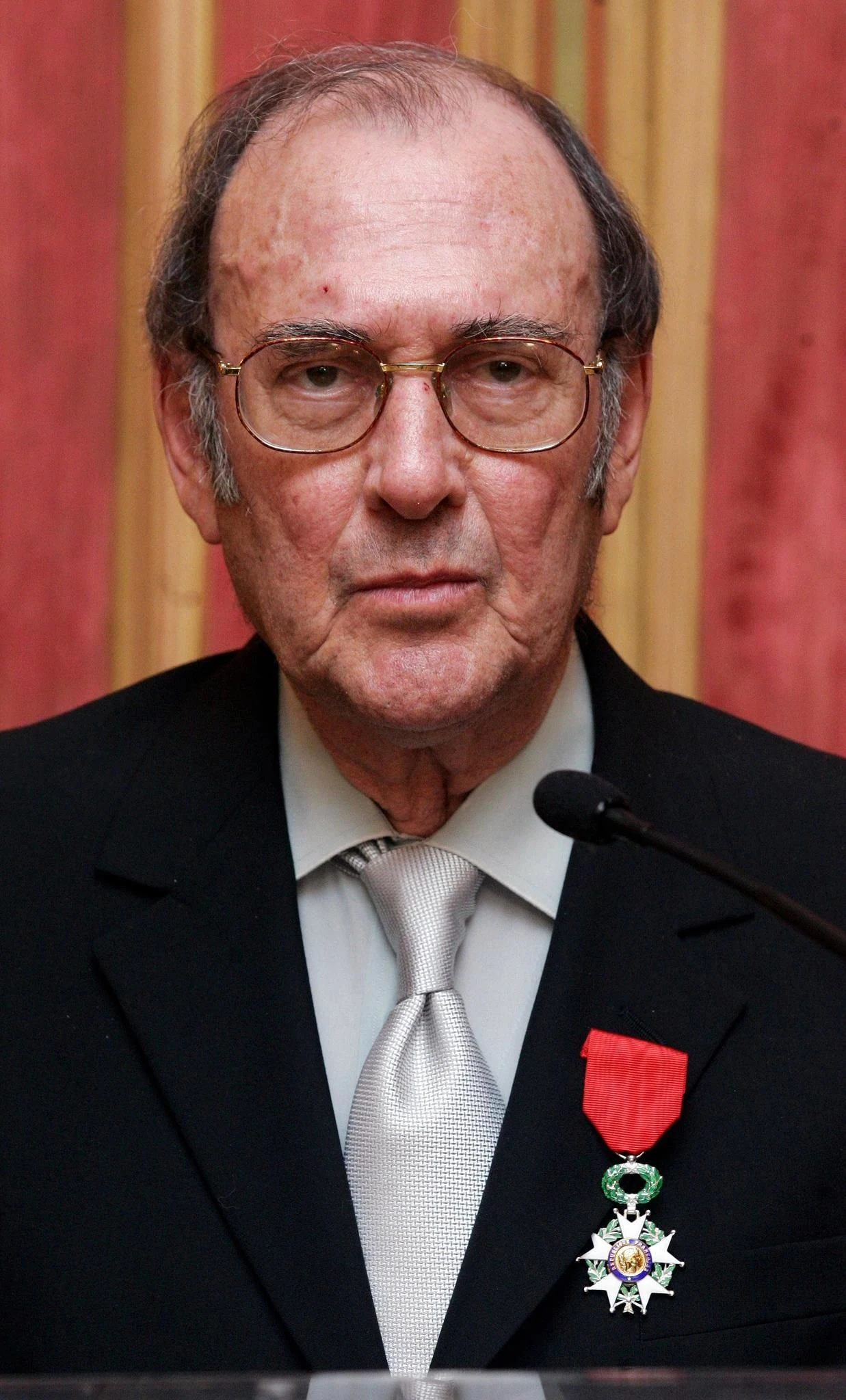
The Nobel Prize recognised Pinter’s contribution to literature, but it was one distinction among many. He received the David Cohen Prize for lifetime literary achievement, a Laurence Olivier Special Award and a BAFTA Fellowship. He was appointed CBE in 1966 and became a Member of the Order of the Companions of Honour in 2002, having declined a knighthood. His work also earned international recognition, including France’s Légion d’honneur in 2007.
Diagnosed with oesophageal cancer in 2001, Pinter continued to work through serious illness. He directed productions, wrote poetry and remained active in public debate. In 2006, he played the title role in Samuel Beckett’s Krapp’s Last Tape at the Royal Court Theatre, performing from a motorised wheelchair. The production formed part of the theatre’s 50th-anniversary season and was his final stage performance. He died in London on 24 December 2008, aged 78.
Pinter’s presence in British theatre is marked not only by productions of his plays but by institutions and continuing work in his name. In 2011, the Comedy Theatre in London was renamed the Harold Pinter Theatre. English PEN established the annual PEN Pinter Prize in 2009, recognising writers who confront the world with intellectual determination and share the prize with an international writer of courage. These commemorations connect his name to both dramatic craft and the public responsibilities of writing.
Why Harold Pinter deserves a place in British Legacy
Pinter deserves a place in British Legacy because he changed what audiences could expect from dialogue on a British stage. His plays made pauses, evasions and ordinary speech dramatic forces in their own right. From The Birthday Party and The Caretaker to The Homecoming, he showed how a domestic room or a casual exchange could become a contest over authority, identity and belonging. His influence is visible not only in the continuing performance of his work but in the language used to describe theatre: “Pinteresque” entered common usage because his handling of silence and menace offered a recognisable, influential model. The Nobel Prize acknowledged that achievement internationally; his career as actor, director and screenwriter shows how widely his dramatic intelligence travelled.
His British legacy also includes the insistence that art can examine political power without becoming a mere slogan. Pinter’s public opposition to war and oppression was expressed alongside, not instead of, a demanding artistic career. Plays such as Mountain Language gave theatrical form to the denial of language and the coercion of vulnerable people; his campaigning and Nobel lecture made those concerns part of public debate. The Harold Pinter Theatre and the PEN Pinter Prize keep his name present in British cultural life, linking performance with the defence of free expression. His work continues to benefit audiences and artists by making them attend closely—to speech, to silence, and to the power that can hide in both.
Sources
Harold Pinter — supplied Wikipedia revision · Harold Pinter — Wikipedia
Adapted in part from Harold Pinter by Wikipedia contributors, under CC BY-SA 4.0. Text has been edited and combined with the existing article; this adapted text is shared under the same licence. Contributor history.