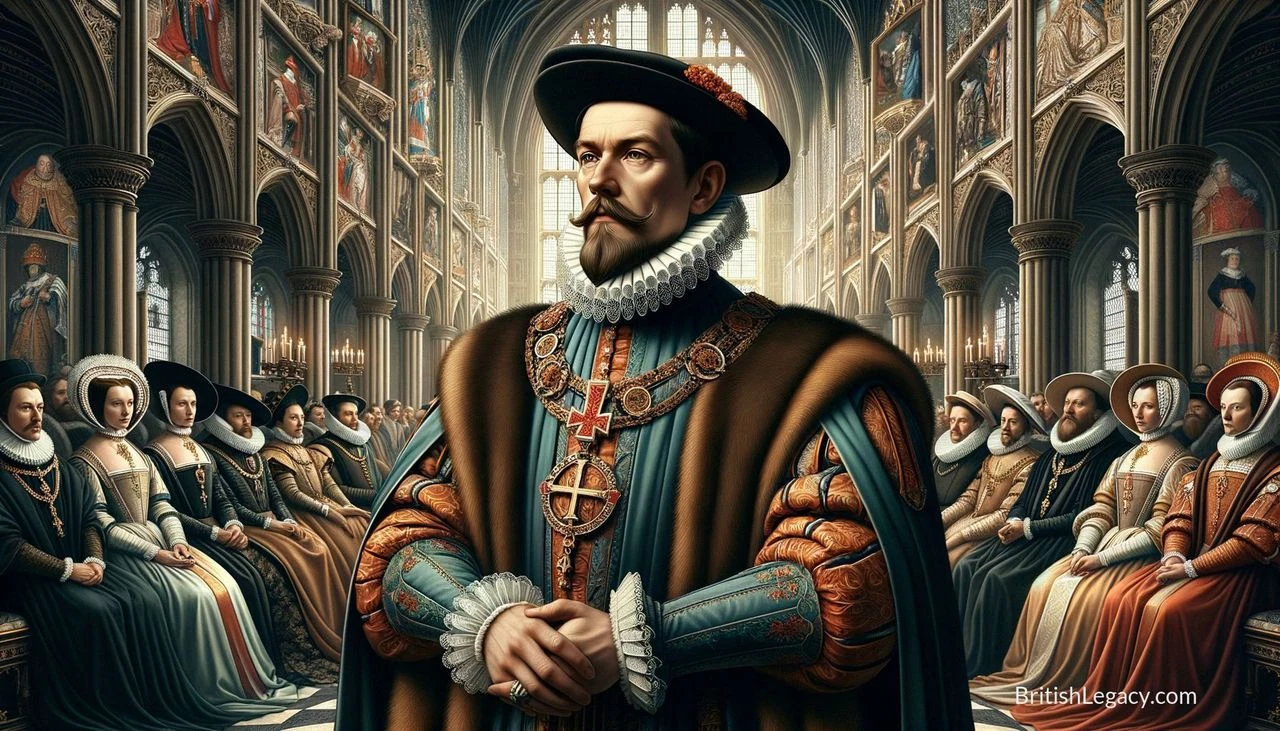
Henry VIII is often remembered through the six women he married. Yet the king’s pursuit of a male heir also helped bring about a lasting rupture with papal authority, the dissolution of England’s monasteries and a reshaping of the relationship between Crown and church. His reign, from 1509 to 1547, joined dynastic anxiety to formidable royal power—and left a legacy that cannot be separated from either its institutional changes or its human cost.
A second son becomes king
Born at Greenwich on 28 June 1491, Henry was the second son of Henry VII and Elizabeth of York. His elder brother, Arthur, Prince of Wales, was expected to inherit the throne. Arthur’s death in 1502 changed the younger prince’s prospects: Henry became heir, was created Prince of Wales in 1504 and succeeded his father in 1509, aged 17.
Henry had received a first-rate education, learning Latin and French and at least some Italian. His early reign presented a striking contrast with the later image of an ageing, increasingly unwell monarch. He was described as attractive and accomplished, took part in sport and court display, and cultivated the image of a learned Renaissance ruler. Music was among his interests: he played instruments including the lute and organ, and his best-known composition is “Pastime with Good Company”. The familiar claim that he wrote “Greensleeves” is not supported by the chronology: the song’s Italianate style reached England after his death.
Royal display was not merely private entertainment. Tournaments and lavish events projected status to domestic and foreign audiences. The Field of the Cloth of Gold, a fortnight of elaborate meetings and festivities with Francis I of France in 1520, showed the scale of that ambition. Henry also took part in military campaigns in France, including the 1513 invasion, while England’s shifting alliances drew him into the rivalries of European rulers.
Marriage, succession and the break with Rome
Henry’s first marriage, to Catherine of Aragon, was made with papal dispensation. Catherine had been married to Arthur, and the union’s validity later became central to Henry’s effort to secure a different succession. Their surviving daughter, Mary, was born in 1516. Henry sought an annulment, arguing that his marriage had been contrary to biblical law. Pope Clement VII did not grant it. Henry’s desire to marry Anne Boleyn and his concern over the succession turned a dynastic dispute into a constitutional and religious confrontation.
Henry and Anne married in a secret ceremony in 1532, followed by a second ceremony in January 1533. Archbishop of Canterbury Thomas Cranmer declared Henry’s marriage to Catherine void in 1533, and Anne was crowned queen. Their daughter Elizabeth was born that September. The Acts of Supremacy in 1534 established the king as Supreme Head of the Church of England, while legislation restricted appeals to Rome and made refusal of royal supremacy punishable. The pope excommunicated Henry and Cranmer.
The break did not mean that Henry embraced a straightforward Protestant programme. His religious position remained complex, and his government’s changes combined royal control with periods of doctrinal conservatism. The Act of Six Articles, for instance, affirmed traditional positions on several questions of faith. But the transfer of authority away from Rome altered the structure of English religious life and created a settlement that his successors would continue to reshape.
The change also had severe consequences for opponents. Thomas More and John Fisher were executed in 1535 after refusing to accept the royal supremacy. Resistance to religious policy contributed to the Pilgrimage of Grace, a major rising in northern England in 1536. Henry offered pardon, but after renewed unrest, leading participants were arrested and executed. The Crown’s new authority was therefore established not only through statutes but also through coercion.
The six marriages and the Tudor succession
Henry’s marriages were bound up with the question of who would inherit the Crown. Anne Boleyn was executed in 1536 after accusations of adultery and treason; historians have debated the circumstances and the evidence against her. The day after her execution, Henry became engaged to Jane Seymour. Jane bore his son, the future Edward VI, in 1537 and died soon afterwards.
Henry’s fourth marriage, to Anne of Cleves, was arranged in the context of European diplomacy. The marriage took place in 1540 and was annulled later that year. He married Catherine Howard in July 1540. She was executed in 1542 after allegations about relationships before and during the marriage. In 1543 Henry married Catherine Parr, who outlived him and helped restore his daughters Mary and Elizabeth to the succession after Edward.
The six marriages produced three surviving legitimate children: Mary, Elizabeth and Edward. Each became monarch. Edward succeeded Henry in 1547, but died young; Mary followed in 1553, and Elizabeth in 1558. Their different religious policies made the settlement Henry had created a continuing source of political and religious change rather than a finished resolution.
Monasteries, government and the Crown
From 1536, the Crown dissolved religious houses and took possession of their property. The process transferred a substantial body of land and wealth into royal hands and then to new owners. Monasteries had been part of religious life and provided support to the poor; their closure altered local communities as well as the national economy. By January 1540, no religious houses remained. The changes helped finance the Crown, but they also contributed to popular opposition, including the northern rebellion.
Henry governed through ministers whose fortunes could rise and collapse with the king’s favour. Thomas Wolsey oversaw policy for much of the period from 1514 to 1529. Thomas Cromwell later drove major legislative and administrative work, including measures that established royal supremacy and advanced the dissolution. Cromwell was executed in 1540. Historians have differed over how far ministers shaped events and how far Henry directed them; the king’s reign cannot be reduced either to the work of his advisers or to a single, consistent royal plan.
The Crown’s increased reach was not without financial strain. Henry spent heavily on his court, buildings and wars. The wealth obtained from monastic lands replenished royal resources, but military campaigns and costly government put pressure on the realm’s finances. He also strengthened coastal defences against the threat of invasion and developed a permanent navy, including dockyards and an administrative council for naval affairs. These measures extended the Crown’s military capacity, even as the expense of war contributed to serious economic difficulties.
Illness, death and a contested reputation
A jousting accident in 1536 left Henry with a serious leg wound. It became chronic, and his health and mobility deteriorated in later life. He died at the Palace of Whitehall on 28 January 1547, aged 55, and was buried at St George’s Chapel, Windsor Castle, beside Jane Seymour. His only surviving son, Edward, inherited the throne.
Henry’s reputation has never settled into a single judgement. The young king celebrated for learning, athleticism and courtly display became the ruler associated with executions, religious upheaval and the destruction of religious houses. The balance between his personal agency and the influence of ministers remains a subject of historical debate. What is clear is that the decisions taken in his reign reshaped the English monarchy and established changes that succeeding generations could neither ignore nor easily reverse.
Why Henry VIII deserves a place in British Legacy
Henry VIII belongs in British Legacy because his reign left a direct and enduring mark on the institutions and history of England. The Acts of Supremacy removed the English church from papal authority and made the monarch its supreme head. The dissolution of the monasteries transferred land and wealth on a vast scale, changing the resources of the Crown and the ownership of property across the country. These were not abstract constitutional adjustments: they affected religious houses, local communities, political loyalty and the succession to the throne.
His legacy also shows how personal rule could become national policy. The king’s effort to secure a male heir helped precipitate a break with Rome; the children of his marriages—Edward, Mary and Elizabeth—each succeeded him and presided over further changes in religion and government. His reign expanded royal authority, strengthened coastal defences and developed naval administration, while war and royal spending strained the economy. Remembering Henry in British Legacy means holding those consequences together: institutional change and cultural patronage alongside coercion, executions and the loss of monastic life. The result is a consequential, contested history, not a simple story of either achievement or notoriety.
Sources
Henry VIII (revision 1377274074)
Adapted in part from Henry VIII by Wikipedia contributors, under CC BY-SA 4.0. Text has been edited and combined with the existing article; this adapted text is shared under the same licence. Contributor history.