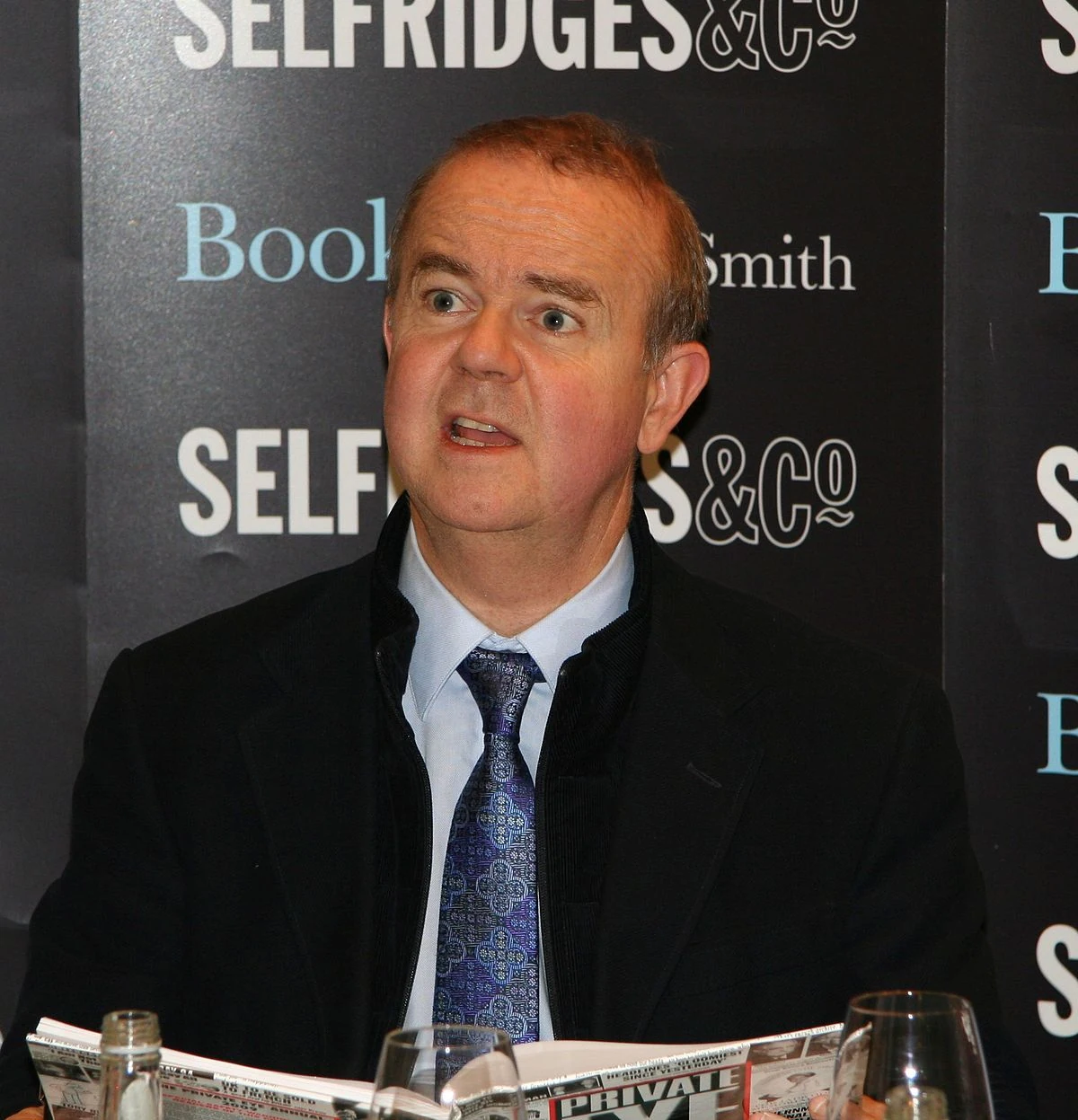
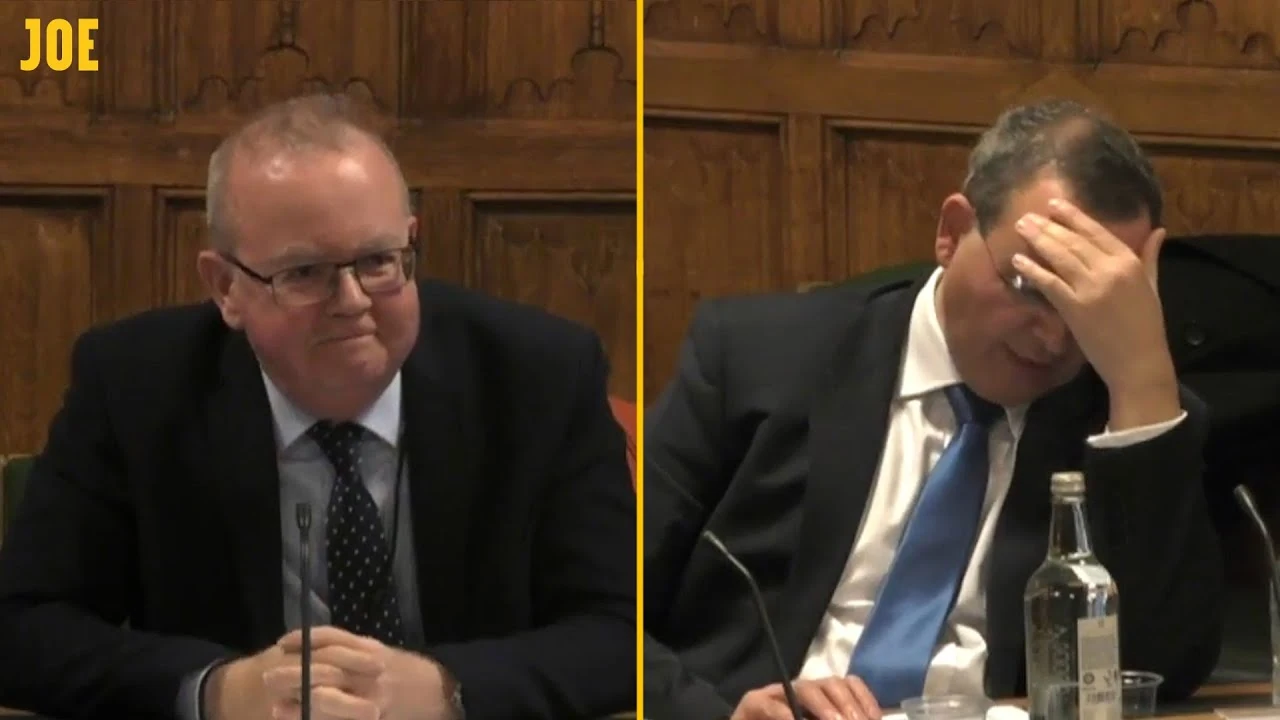
Ian Hislop’s career has joined two kinds of scrutiny: the pointed joke and the documented argument. As editor of Private Eye since 1986, he has led a magazine known for combining satire with journalism. On television, as a team captain on Have I Got News for You, he has brought political commentary to a much broader audience. His work also ranges across radio, documentaries, comedy writing and theatre.
School satire and Oxford journalism
Hislop was born in Mumbles, Swansea, on 13 July 1960. His father was Scottish and his mother was born in Jersey. His family travelled because of his father’s work as a civil engineer, and Hislop spent part of his early childhood in Nigeria, Kuwait, Saudi Arabia and Hong Kong. After returning to Britain, he attended Ardingly College, where he became head boy and took part in satirical revues with Nick Newman.
At Magdalen College, Oxford, Hislop read English literature, having changed from his initial application to study philosophy, politics and economics. He and Newman continued their creative partnership there. Hislop edited the student satirical magazine Passing Wind, and his university journalism included an interview with Private Eye editor Richard Ingrams and shareholder Peter Cook. His first article for the magazine appeared in 1980, before his final examinations. He graduated in 1981.
Hislop joined Private Eye after leaving Oxford. In 1986, following Ingrams’s departure, he became editor. The appointment came amid opposition from some of the magazine’s journalists, but Cook backed Hislop. The change marked the start of a long editorship at a publication whose blend of parody, comment and investigative reporting became central to Hislop’s public identity.
Editing Private Eye, and the risks of publication
The magazine’s history under Hislop is also a history of legal pressure. In 1986, Robert Maxwell brought a libel action against Private Eye and Hislop over a claim concerning the funding of Neil Kinnock’s travel expenses. Hislop later joked about the case in a line playing on Maxwell’s name and Czech origins. After Maxwell’s death in 1991, the magazine’s accusation that he had misused company pension funds was borne out by revelations of extensive fraud.
A separate libel case brought by Sonia Sutcliffe in 1989 threatened the magazine financially. It was initially ordered to pay £600,000 in damages; the award was reduced to £60,000 on appeal. Hislop’s public response outside court was characteristically irreverent, but the episode points to the material stakes of investigative publishing: legal costs and damages can put pressure on a publication as well as its editor.
In an interview in 1995, Hislop described satire as ridiculing “vice, folly and humbug”, while arguing that criticism depends on an idea of what should be better. That explanation fits the combination of comedy and scrutiny associated with his work. In 2017, he received the London Press Club’s print journalist of the year award. In his acceptance speech, he cited Private Eye’s sales as evidence that journalism was worth doing and worth paying for.
From Have I Got News for You to documentaries
Hislop’s first television appearance was on Channel 4’s short-lived chat show Loose Talk in 1983. He went on to write for the puppet satire Spitting Image, usually in partnership with Newman. The pair also wrote for television and radio, including the Gulf War satire Gush, the sitcom My Dad’s the Prime Minister, and the Radio 4 series The News at Bedtime.
Since Have I Got News for You began in 1990, Hislop has served as a team captain. The show’s recurring format has made the editor a familiar television presence while retaining a focus on current affairs. Hislop also appeared on Question Time, where his interventions included a much-discussed exchange with Mary Archer about her husband, Jeffrey Archer. In 2003, The Observer included him among its 50 funniest acts in British comedy.
His factual programmes have taken him well beyond topical comedy. He presented series on British education, the First World War’s effect on society, the Beeching report, the Poet Laureate and Victorian social reformers. Other subjects included immigration, banking, scouting and the history of emotional restraint in Britain. In 2016, he delivered the George Orwell Lecture at University College London. The following year, a programme he presented examined the history of attitudes to immigration from the Victorian era to the First World War.
His writing with Newman has also returned to the stage and to historical subjects. Their play The Wipers Times drew on the First World War newspaper; Trial by Laughter treated the trials of William Hone. In 2018, Hislop curated the British Museum exhibition I Object: Ian Hislop’s Search for Dissent, extending a continuing interest in people who challenged authority and convention.
Why Ian Hislop deserves a place in British Legacy
Hislop’s place in British media rests on the unusual span of his work and the longevity of his editorship. At Private Eye, he has led a publication that makes satire and investigation neighbours rather than alternatives. The legal cases described in the record show that publishing critical material can carry serious consequences; his career has kept that vulnerability visible alongside the magazine’s comic voice. His account of satire as criticism rooted in an expectation of better standards offers a useful way to understand why ridicule, reporting and accountability can belong in the same publication.
His influence has not been confined to readers of a magazine. As a team captain on Have I Got News for You from its first series, he has helped make political satire a regular part of British television. His documentaries and radio programmes have brought historical and social subjects to broadcast audiences, while his work with Nick Newman has moved between television comedy, radio and theatre. The British connection is direct: Hislop was born in Wales, educated in England, and has spent much of his working life shaping British journalism and broadcasting. His legacy lies not in a claim to be above controversy, but in sustaining a recognisable public role for scrutiny, wit and argument across several forms of media.
Sources
Ian Hislop — Wikipedia revision · Ian Hislop — Wikipedia
Adapted in part from Ian Hislop by Wikipedia contributors, under CC BY-SA 4.0. Text has been edited and combined with the existing article; this adapted text is shared under the same licence. Contributor history.