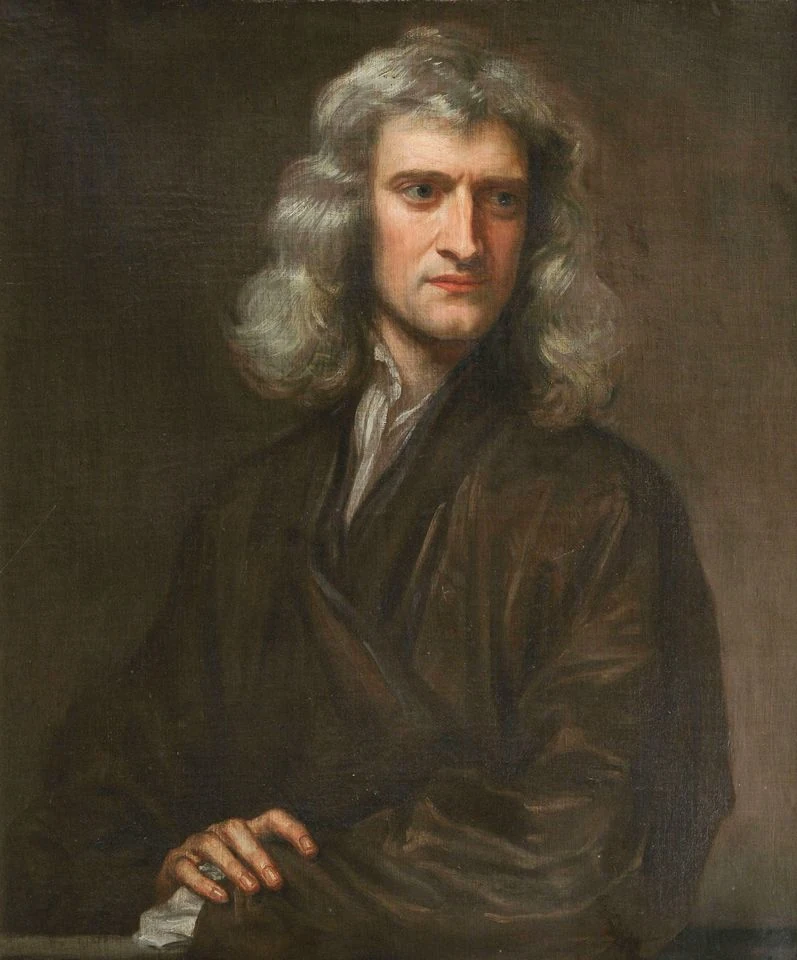
Isaac Newton II: Continuing a Legacy of Discovery
When one hears the name Isaac Newton, it conjures images of falling apples and the foundational laws of motion and gravitation. However, the name also lends itself to a modern scientific pioneer — Isaac Newton II. This contemporary Newton has carved out his own distinct niche within the world of science, building upon the formidable legacy of his famed predecessor.
Early Life and Education
Born into a family that held high expectations due to their illustrious lineage, Isaac Newton II was destined for scientific greatness. From a young age, he demonstrated an inquisitive nature and an extraordinary aptitude for mathematics and physics. He pursued his education at the University of Cambridge, just like his namesake, where he quickly distinguished himself as a prodigious talent in the field of fluid dynamics.
Achievements and Breakthroughs
Newton II's most significant contributions lie in his groundbreaking work on turbulent flow patterns. This area of study holds immense importance in various engineering applications, including aerodynamics, hydrodynamics, and even climate modelling.
-
Turbulent Flow Patterns: Turbulence remains one of the most complex phenomena in classical physics. Newton II's innovative approach involved the use of advanced mathematical models and computational simulations to better understand and predict the chaotic behaviour of turbulent flows. His research has paved the way for more accurate predictions and control methods in engineering applications, significantly improving the design of aircraft, ships, and even renewable energy systems like wind turbines.
-
Newton Number in Fluid Dynamics: Honouring both his lineage and contributions, a dimensionless number related to fluid flow was named after him — the Newton Number II. This parameter provides invaluable insights into the relationship between flow velocity, fluid viscosity, and characteristic length scales, proving essential in various industrial processes.
-
Collaborative Research and Mentorship: Newton II has been a stalwart advocate for collaborative research, understanding that significant scientific advancements often come from the pooling of diverse expertise. Throughout his career, he has mentored countless young scientists, ensuring that his innovative approaches to fluid dynamics continue to inspire future generations.
Recognition and Awards
Newton II's remarkable contributions have not gone unnoticed. He has received numerous accolades, including the prestigious Royal Medal from the Royal Society, of which he is a distinguished fellow. His work has been published in many high-impact scientific journals, ensuring that his contributions to fluid dynamics are well-regarded within the global scientific community.
Legacy and Impact
Isaac Newton II stands as a testament to the enduring spirit of inquiry that has defined British scientific achievement for centuries. His work in fluid dynamics not only honours the legacy of his namesake but also pushes the boundaries of what we know about turbulent flow patterns. By enhancing our understanding in this critical area, he has made a lasting impact on various engineering disciplines, helping to solve complex problems and improve the efficiency of numerous technologies.
In summary, Isaac Newton II exemplifies how a distinguished lineage can inspire and drive forward contemporary scientific discovery. His contributions to fluid dynamics are a vital part of the rich tapestry of British scientific heritage, ensuring that the name Newton continues to be synonymous with exceptional innovation and intellectual achievement.