Jackie Stewart’s Formula One record tells only part of his story. He won three drivers’ championships between 1969 and 1973, but his career also became a campaign to make motor racing less dangerous. After a 1966 crash at Spa-Francorchamps left him trapped in his car without adequate help nearby, Stewart argued for better medical provision, safer barriers and improved circuits. He built a reputation both for speed and for saying plainly what he believed the sport needed to change.
From Milton to the racing circuits
Born John Young Stewart on 11 June 1939 in Milton, Scotland, Stewart grew up in a family involved in the motor trade. His father had been an amateur motorcycle racer, while his older brother Jimmy competed as a racing driver. Stewart attended Hartfield primary school and Dumbarton Academy. Undiagnosed dyslexia made school difficult: he was regularly treated as though he were unintelligent, and left secondary education at 16 to work as an apprentice mechanic in his father’s garage. He was diagnosed with dyslexia in 1980, after his son Mark was assessed for the condition.
Before racing became his profession, Stewart excelled at clay pigeon shooting. He won British, Irish, Welsh and Scottish skeet championships and twice won the European Coupe de Nations. He competed for a place in the British trap-shooting team for the 1960 Olympics, finishing third in the selection competition. His route into car racing began through Barry Filer, a customer of the family business, who invited him to test cars at Oulton Park. In 1961, Stewart won four races in a Marcos provided by Filer; he went on to race an E-type Jaguar and cars entered by Ecurie Ecosse.
Ken Tyrrell offered him a place in his Formula Three team after a test at Goodwood in 1964. Stewart made a striking debut at Snetterton in wet conditions, taking the lead and winning by 44 seconds. He won the Formula Three championship and declined an early opportunity to move into Formula One, preferring to gain more experience. In 1965, he joined BRM alongside Graham Hill. On his world championship debut in South Africa he finished sixth; later that year, he won the Italian Grand Prix at Monza, his first victory in a championship race.
Three championships and a record-setting career
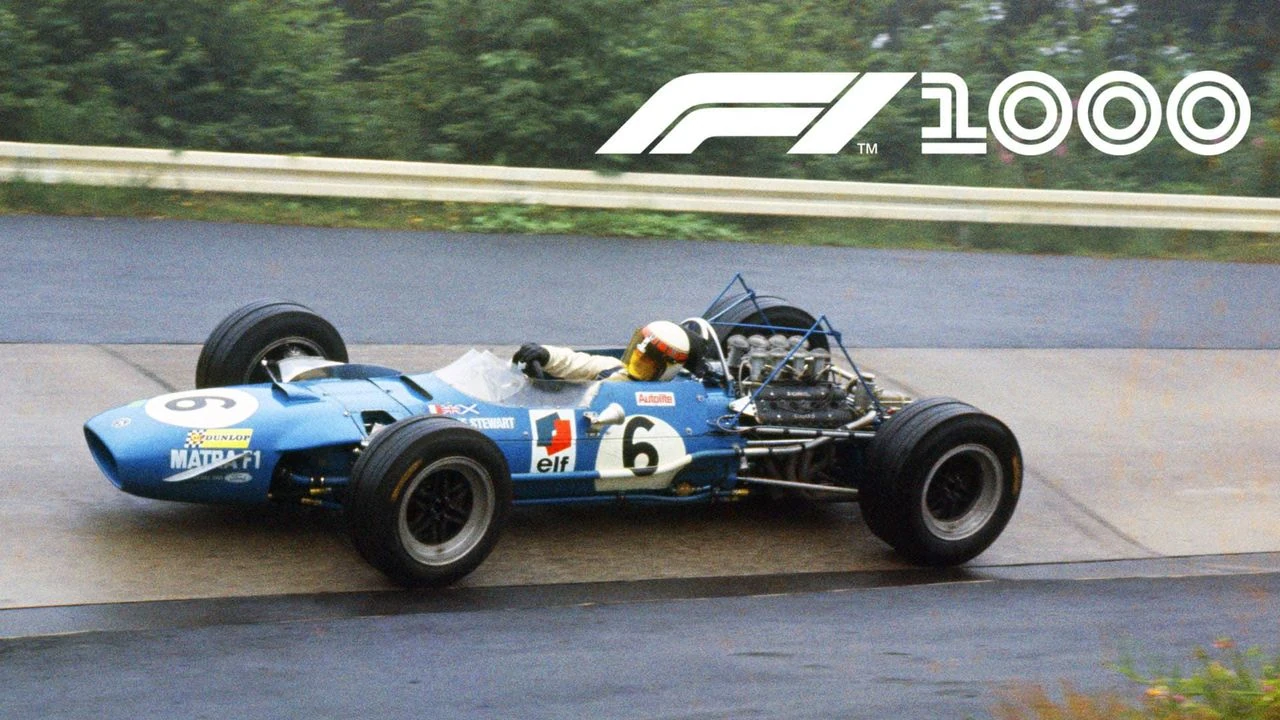
Stewart’s early seasons at BRM were interrupted by unreliable cars, although he won the Monaco Grand Prix in 1966 and had success in other series. In 1968 he joined Matra International, the team run by Tyrrell, and won three championship races. He finished second in the standings that year. Driving the Matra MS80 in 1969, he won six races and secured his first world title. His wins included races in South Africa, Spain, the Netherlands, France, Britain and Italy.
In 1970, when Matra’s engine plans conflicted with Tyrrell’s and Stewart’s preference for Ford power, Tyrrell set about building its own car. Stewart won two races in a March chassis before the Tyrrell 001 appeared. The following season, driving the Tyrrell 003, he won six grands prix and took his second championship. He also competed in the Can-Am series, finishing third in its 1971 standings.
Stewart won four grands prix in 1972 and finished second in the championship. He returned to the top in 1973, taking five victories and his third title. His 27th and final win came at the Nürburgring, then a record for a Formula One driver. Stewart had already decided to retire at the end of the season. After team-mate François Cevert was killed during practice for the United States Grand Prix at Watkins Glen, Stewart withdrew from the final race, missing what would have been his 100th Grand Prix. At retirement he held the records for most wins and podium finishes in Formula One.
Making safety part of the argument
Stewart’s safety campaigning began after his crash at Spa-Francorchamps in 1966. In heavy rain, his car left the circuit and struck a telephone pole and a shed before coming to rest in a building. The steering column pinned his leg and fuel spilled into the cockpit. There were no track crews or suitable tools to free him; fellow drivers Graham Hill and Bob Bondurant helped with his rescue. Stewart was taken to a first-aid centre and then transported to hospital, with the ambulance driver losing the route. The experience brought the shortcomings of emergency arrangements into immediate focus.
He became an outspoken advocate for better medical facilities and safer circuits, working with BRM director Louis Stanley on emergency provision and barriers. Stewart pressed for seat-belt use and full-face helmets, and challenged circuit owners to improve run-off areas, fire services and medical facilities. He supported driver boycotts when he believed tracks remained too dangerous: Spa in 1969, the Nürburgring in 1970 and Zandvoort in 1972. Those disputes brought him into conflict with people who considered safety changes bad for the sport or too costly. Stewart persisted, arguing that a racing driver should not have to accept preventable danger as the price of competition.
Beyond the driver’s seat
After retiring, Stewart became a familiar television commentator. From 1971 to 1986 he covered motor racing for ABC, including Formula One, NASCAR and the Indianapolis 500, and also called events at the 1976 Winter and Summer Olympics. His Scottish accent, quick delivery and technical insight became part of his broadcasting style. He occasionally appeared as a co-commentator on BBC Formula One coverage, including the British Grands Prix of 1979 and 1993.
He returned to Formula One in 1997 as a team owner, working with his son Paul to establish Stewart Grand Prix. The team’s first season included a second place for Rubens Barrichello at the rain-affected Monaco Grand Prix. In 1999, Johnny Herbert won the European Grand Prix for Stewart Grand Prix and Barrichello added three third places. Ford bought the team, which became Jaguar Racing in 2000.
Stewart’s honours reflect both his racing and public work. He received the OBE in 1971 and was knighted in 2001 for services to motor racing. His awards included the BBC’s Sports Personality of the Year in 1973, and he was inducted into the International Motorsports Hall of Fame in 1990. He also received honorary degrees, including from Heriot-Watt University, Cranfield University and the University of St Andrews.
Why Jackie Stewart deserves a place in British Legacy
Jackie Stewart’s place in British sporting history rests on two achievements that are closely connected. He was one of Formula One’s leading drivers, winning three championships and 27 races during a career that helped establish a standard for sustained competitive success. His precise driving and ability to win across different seasons and teams made him a central figure in the sport. Those results are not simply a tally: they mark a Scottish driver’s contribution to a distinctly international competition at a time when Formula One’s dangers were still treated by some as inevitable.
Stewart’s response to those dangers gives his legacy a wider public value. The Spa crash showed him how readily a racing accident could be made worse by inadequate rescue arrangements. He used his standing to press for better medical facilities, safer track layouts, barriers, fire crews and protective equipment, and backed his arguments with calls to boycott circuits he considered unsafe. As a broadcaster and later a team owner, he remained involved in motor racing beyond his own driving years. His story belongs in British Legacy not as a general claim about national excellence, but because a Scottish champion used hard-won sporting influence to challenge the conditions of his profession and to make safety a continuing subject of debate.
Sources
Jackie Stewart — Wikipedia revision 1374902048
Adapted in part from Jackie Stewart by Wikipedia contributors, under CC BY-SA 4.0. Text has been edited and combined with the existing article; this adapted text is shared under the same licence. Contributor history.