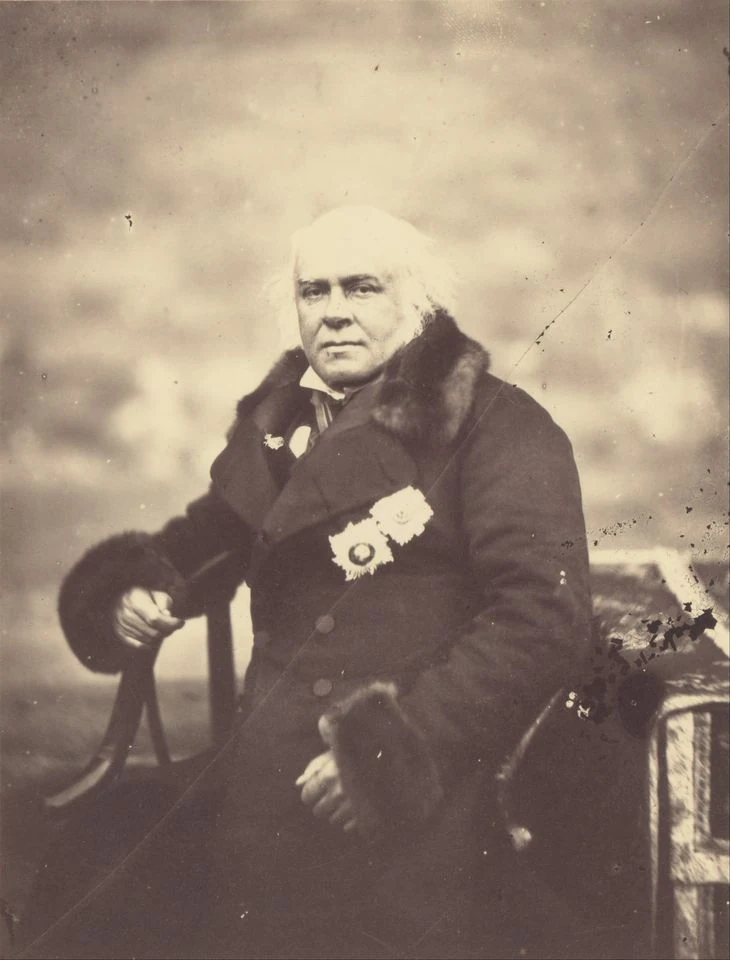
James Bruce, 8th Earl of Elgin, held senior British colonial posts in Jamaica, Canada, China and India. His career included a consequential decision about representative government in Canada and a notorious act of destruction in China: the burning of the Old Summer Palace in Beijing. Those episodes sit uneasily together, but both show the reach and the limits of his authority as an imperial administrator.
Education and early appointments
Bruce was born in London on 20 July 1811, the son of the 7th Earl of Elgin and Elizabeth Oswald. He was educated at Eton and Christ Church, Oxford, where he graduated with a first in Classics in 1832 and became friends with William Ewart Gladstone. His father’s finances had been badly affected by the cost of acquiring and transporting the sculptures later known as the Elgin Marbles; he sold them to the British government at a substantial loss.
Bruce succeeded his father as the 8th Earl in November 1841. The following year he became Governor of Jamaica, a post he held until 1846. His administration was described as winning respect, improving the condition of Afro-Caribbean workers and conciliating white planters by working through them. In 1847, he was appointed Governor General of the Province of Canada, beginning the role for which he is most often associated with the development of responsible government.
Responsible government in Canada
In Canada, Bruce became the first Governor General to distance himself from the legislature’s political affairs. The shift helped establish a pattern in which the Governor General’s role in day-to-day politics was largely symbolic. It did not mean that the office was free of controversy. In 1849, the Baldwin–LaFontaine government passed the Rebellion Losses Bill, which provided compensation to French Canadians for losses suffered during the rebellions of 1837. Bruce granted royal assent despite fierce Tory opposition and his own concern about the response in England.
An English-speaking mob burned the Parliament buildings in Montreal, and Bruce was assaulted. He withdrew his family to their country residence and left civil authorities to restore order rather than calling in the military. His decision to give assent put the authority of elected ministers ahead of his own political preference. It was a defining test of responsible government: the Governor General accepted that a government with legislative support should be able to carry its bill, even when opponents reacted violently.
Other parts of his Canadian tenure involved practical questions of trade and administration. Immigration and its costs were subjects of ongoing debate. In 1854, Bruce negotiated a reciprocity treaty with the United States intended to stimulate the Canadian economy. That year he also assented to legislation abolishing the seigneurial system in Quebec, then resigned as Governor General. His handling of relations with the United States, support for the colony’s self-government and defence, and settlement of trade and fishery questions contributed to his elevation to the peerage as Baron Elgin in 1849.
China, Japan and the Old Summer Palace
After returning to England in 1854, Bruce declined an offer of a Cabinet seat as Chancellor of the Duchy of Lancaster. In 1857 he was appointed High Commissioner and Plenipotentiary in China and the Far East, with a brief to assist in opening China and Japan to Western trade. During the Second Opium War, he led the bombardment of Canton, now Guangzhou. He also oversaw the end of the conflict by signing the Treaty of Tientsin in June 1858.
Bruce visited Japan during this period and signed the Treaty of Amity and Commerce in August 1858. In 1860, after renewed fighting and the torture and execution of almost twenty European and Indian prisoners, he returned to China as ambassador extraordinary. On 18 October, he ordered the destruction of the Old Summer Palace, a complex of palaces and gardens outside Beijing, as retaliation. Anglo-French troops set it alight and looted imperial collections. The destruction inflicted a lasting loss of Chinese cultural heritage. Bruce subsequently signed the Convention of Peking, which required the Qing dynasty to cede part of the Kowloon Peninsula to Britain in perpetuity.
His record was not simply one of confidence in imperial policy. The article notes historian Olive Checkland’s account that Bruce was ambivalent about forcing trade on China and Japan. In a letter to his wife concerning the bombardment of Canton, he wrote, “I never felt so ashamed of myself in my life.” That private response does not undo his decisions or their consequences; it does, however, belong to the record of a man who served an expansionist policy while expressing misgivings about it.
India and his final years
Bruce became Viceroy and Governor-General of India in 1862, not 1861. He was the first viceroy directly appointed by the Crown and remained in office until his death. His activities included an attempt to hold the Dutch in Sumatra in check and a march to the Peshawar border to enforce earlier treaties. He was also the first viceroy to use Peterhoff at Shimla as his official residence.
In 1863, while travelling from Shimla towards Sialkot, Bruce undertook an arduous journey at high elevation. He died of a heart attack on 20 November, aged 52, while crossing a swinging bridge made of rope and wood over the Chadly river, on the route between Kullu and Lahul. He was buried in the churchyard of St John in the Wilderness at Dharamshala.
Bruce married Elizabeth Mary Cumming-Bruce in 1841; she died in Jamaica in 1843, shortly after the birth of their second daughter. In 1846 he married Lady Mary Louisa Lambton, daughter of the Earl of Durham. Their children included Victor Bruce, who succeeded him as the 9th Earl of Elgin. These family details frame the movement of an aristocratic administrator through successive imperial appointments, but the political consequences of those appointments remain the central part of his public record.
Why James Bruce, 8th Earl of Elgin, deserves a place in British Legacy
James Bruce deserves a place in British Legacy because his career makes the workings of British power visible in several different settings. In Canada, he accepted the principle that an elected government should be able to enact legislation, even when granting royal assent brought personal danger and political hostility. His approach helped establish the Governor General’s distance from ordinary legislative politics. His Canadian service also involved trade negotiations with the United States and legislation ending the seigneurial system in Quebec, giving his record a practical as well as constitutional dimension.
That legacy must be read alongside his actions in China. As High Commissioner during the Second Opium War, Bruce helped enforce the opening of China to Western trade, signed treaties and ordered the destruction of the Old Summer Palace. The loss of the palace’s buildings and collections was not an abstract consequence of diplomacy; it was a deliberate act of retaliation carried out by British and French forces under his authority. Remembering both Canada and China avoids reducing him either to a champion of self-government or to a list of imperial offices. His life offers a specific account of how British administrators could endorse political restraint in one context while using force to advance imperial interests in another.
Sources
James Bruce, 8th Earl of Elgin — revision 1378141075
Adapted in part from James Bruce, 8th Earl of Elgin by Wikipedia contributors, under CC BY-SA 4.0. Text has been edited and combined with the existing article; this adapted text is shared under the same licence. Contributor history.