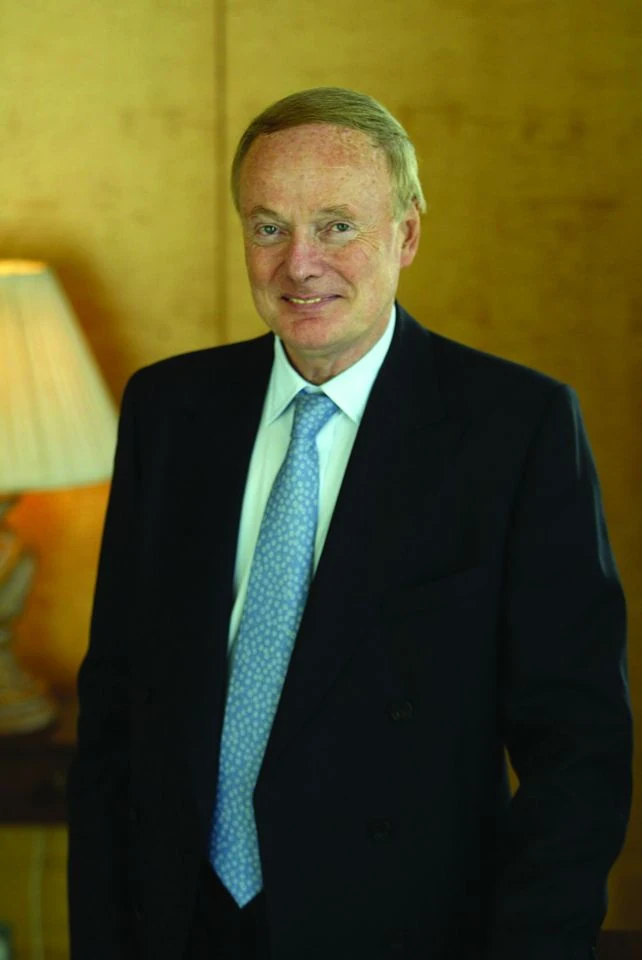
Sir Robin Renwick’s diplomatic career brought him to two posts at moments of considerable international change. As British ambassador to South Africa from 1987 to 1991, he worked amid the final years of apartheid and the negotiations that preceded Nelson Mandela’s release. From 1991 to 1995, he represented Britain in the United States as the Cold War ended. The available account also records a career in the Diplomatic Service, study at Cambridge and books reflecting on diplomacy and political relationships.
Education and entry into diplomacy
Renwick studied modern history at Peterhouse, Cambridge, before joining the British Diplomatic Service in 1963. His early assignments preceded the ambassadorial appointments for which he became best known. The record gives no further detail about those first postings, but the sequence establishes the foundation of a career spent representing Britain abroad and dealing with international political relationships.
That work placed him between governments and political figures at times when the conduct of diplomacy mattered to the wider course of events. His subsequent service in South Africa and the United States gave him distinct settings in which to undertake that role: one shaped by the struggle to end apartheid, the other by changes in the transatlantic and global landscape after the Cold War.
South Africa during the end of apartheid
Renwick served as British ambassador to South Africa from 1987 to 1991. Apartheid remained in force during the early part of his tenure, while pressure for change and international attention focused on the country’s political future. His post placed him in contact with the British government, then led by Margaret Thatcher, and with South African figures during a period of negotiation.
Nelson Mandela was released in 1990, while Renwick was ambassador. The existing account describes Renwick as a channel of communication between the British government and South African figures, and credits his diplomatic work with contributing to dialogue. That places his role within a much wider political process: the end of apartheid was not the work of a single diplomat, but Renwick’s ambassadorship coincided with a decisive phase in the transition.
Washington and the transatlantic relationship
In 1991 Renwick became British ambassador to the United States, a post he held until 1995. His years in Washington overlapped with the end of the Cold War and the start of Bill Clinton’s presidency. George H. W. Bush was president when Renwick took up the appointment; Clinton succeeded him during Renwick’s tenure. The change in administration and the shifting international context formed the backdrop to his work representing Britain.
The relationship between Britain and the United States encompasses political and diplomatic ties, as well as cooperation in areas including defence and trade. Renwick’s role was to maintain those connections and engage with American political figures as circumstances changed. The account describes his tenure as strengthening cooperation, but provides no specific examples of particular agreements or policy outcomes. His contribution is therefore best understood through the responsibilities and timing of the ambassadorship rather than unsupported claims of singular influence.
Writing, honours and perspective
Renwick also wrote about diplomacy and political affairs. His books include A Journey with Margaret Thatcher and Fighting with Allies, titles that reflect his experience of government and international relationships. They extend his public record beyond ambassadorial service: diplomacy is conducted through official meetings, but it is also examined and explained through accounts of political events and alliances.
He was appointed a Knight Commander of the Order of St Michael and St George (KCMG), an honour associated with distinguished service. His career, as described here, connects work in the Diplomatic Service with posts in two countries central to Britain’s international relationships. It also links official representation to later writing about the political pressures and partnerships that shape diplomacy.
Why Sir Robin Renwick deserves a place in British Legacy
Renwick’s place in British Legacy rests on a career spent representing Britain through periods of substantial international change. His ambassadorship in South Africa coincided with the final years of apartheid and Mandela’s release. The record presents him as a diplomatic intermediary between the British government and South African figures, contributing to dialogue at a consequential moment. That is a specific contribution, not a claim that one ambassador brought apartheid to an end: the political transition was larger than any single individual.
His subsequent service in Washington shows another dimension of the same work. Between 1991 and 1995, he represented Britain through the end of the Cold War and a change of US president, maintaining relationships that mattered to British diplomacy. His books, including A Journey with Margaret Thatcher and Fighting with Allies, further connect his experience to public reflection on politics and international affairs. Together, these posts and writings make his British legacy one of diplomatic representation and engagement: work conducted through relationships, negotiation and a sustained attention to how Britain operates among other nations.