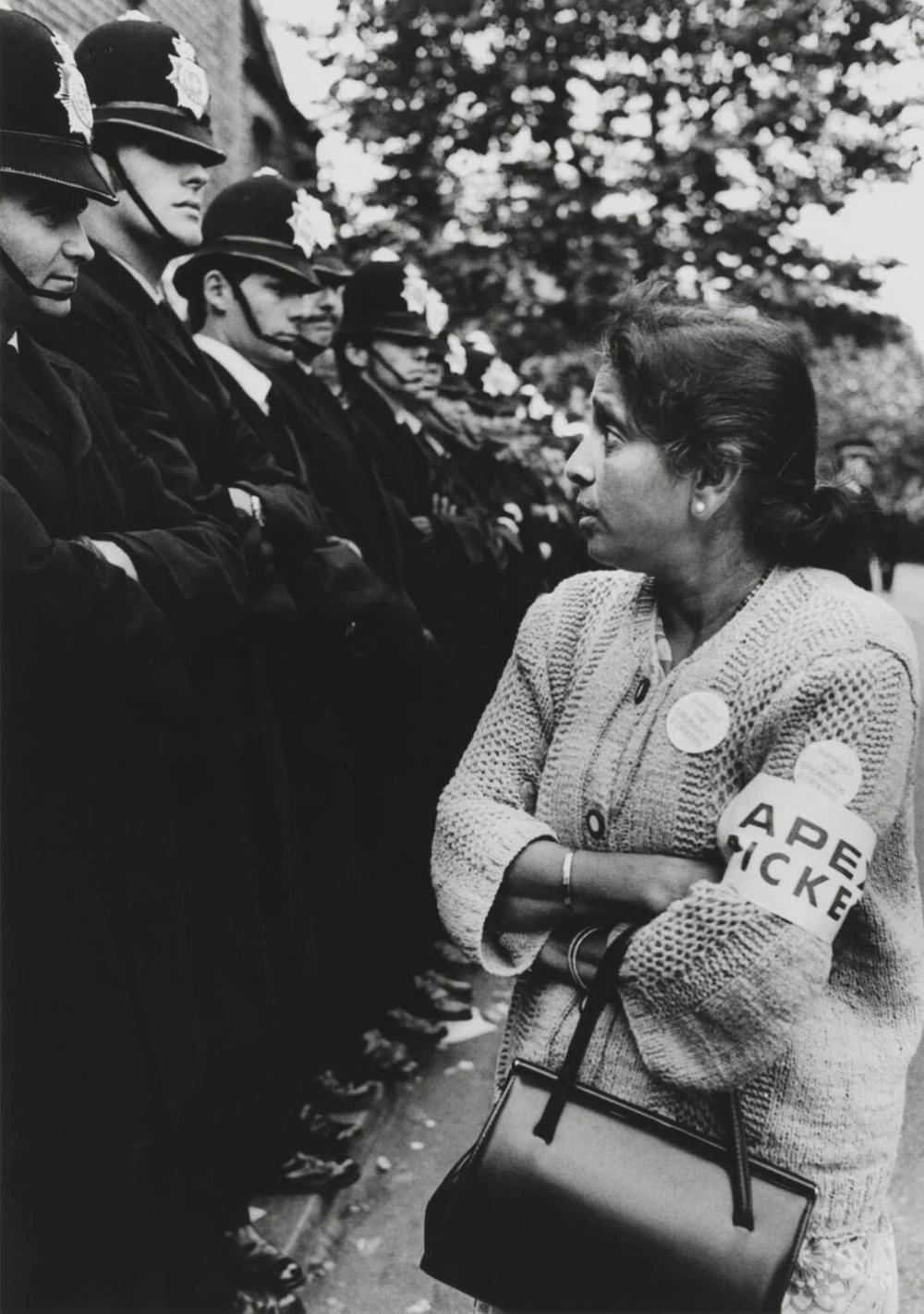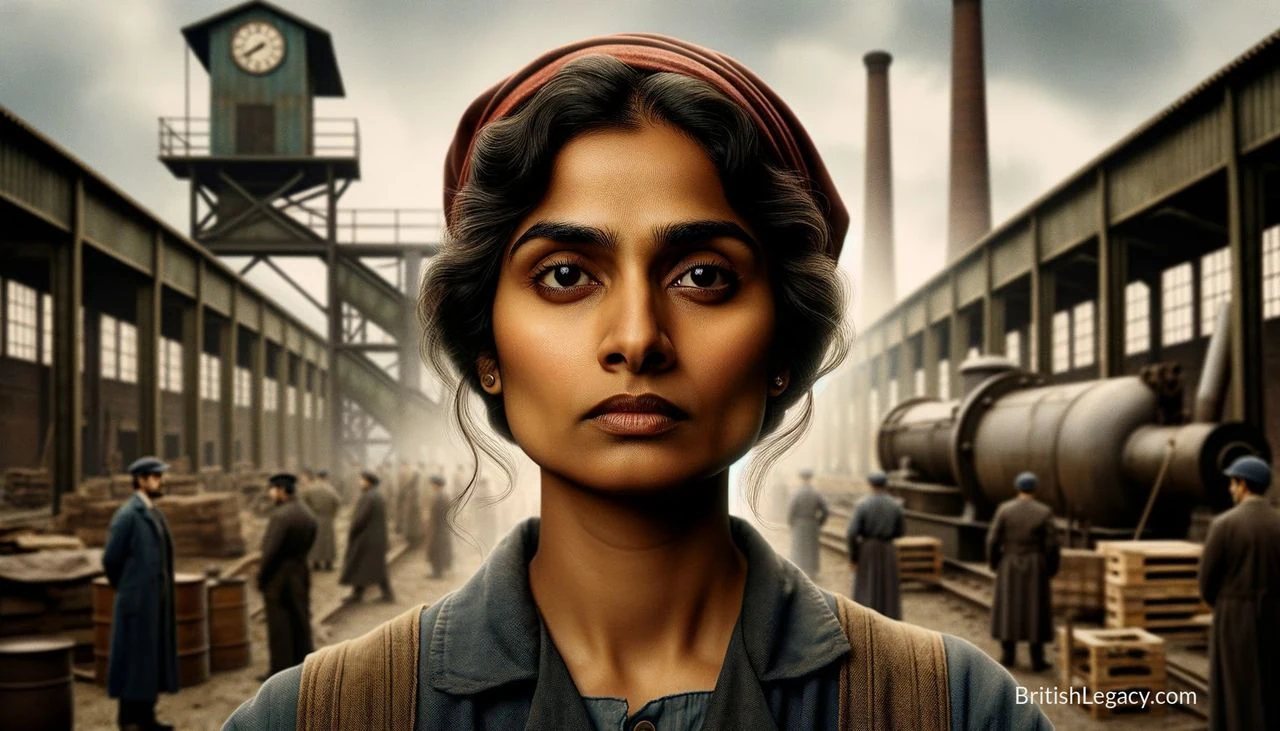
In 1976, Jayaben Desai walked out of the Grunwick film-processing factory in north-west London after being told to work overtime at short notice. What began as a workplace grievance became a two-year dispute, bringing trade unionists, politicians and campaigners to the factory gates. Desai became its most recognisable leader, and the largely Asian and female workforce at its centre became part of a national argument about working conditions, union recognition, race and gender. The strikers did not win the settlement they sought. Their action nevertheless made it harder to overlook the workers who processed Britain’s photographs, or the conditions in which they did it.
From Gujarat to north-west London
Jayaben Desai was born on 2 April 1933 in Dharmaj, Gujarat, India. In 1956 she moved to Tanzania, then in East Africa. At 22, she married Suryakant, a factory owner; the couple came from middle-class mercantile backgrounds. They moved to Britain in 1967, before the Commonwealth Immigrants Act 1968 made it harder for many British passport holders from former colonies to enter the country. Her route from Gujarat to Tanzania and then Britain forms part of the history of migration and resettlement that shaped post-war Britain. It also helps make the terms of her story clear: Desai was Indian-born, and her work and public activism took shape in Britain.
In Britain she found low-paid work, first as a sewing machinist and then processing film at Grunwick. The contrast between the couple’s earlier circumstances and Desai’s experience of industrial work is striking, but her story is not simply one of individual change in status. She worked alongside colleagues whose concerns included pay, conditions and the absence of union recognition. Her leadership gave those concerns a wider hearing, while the collective action of the workers made the dispute more than the story of one determined woman.
Work behind the family photographs
Grunwick processed photographs: snapshots of birthdays, weddings and holidays, the everyday images through which families recorded their lives. The work behind those pictures was organised in a factory where workers objected to low pay and long hours. Accounts of the dispute described aggressive supervision and restrictive treatment. Short-notice overtime was a particular pressure in a seasonal business, where demand could rise sharply in summer. Women were asked why they needed to go to the toilet, and Desai counselled her colleagues not to be intimidated by such questioning.
The immediate trigger came as Desai was preparing to leave and was told to work overtime. She refused and walked out. More than 100 workers eventually joined the action. The dispute brought together grievances about conditions and the treatment of workers with a demand for union recognition. It also challenged an expectation that migrant women in light industry would remain quiet and outside the public discussion of trade unionism. At Grunwick, women who were often treated as a workforce to be managed became organisers and speakers in a national industrial struggle.
The workforce was mainly Asian and female. Its presence on the picket line made visible people whose experiences were not always represented in familiar accounts of industrial conflict. Workers were not only the subjects of arguments about labour; they were making demands, explaining them and insisting that their own voices be heard. The dispute drew attention to the way workplace power could be experienced through everyday instructions and restrictions as well as through pay and formal recognition.
A voice on the picket line
Desai’s words to a manager when she resigned became the best-known quotation associated with the strike: “What you are running here is not a factory, it is a zoo. In a zoo, there are many types of animals, some are monkeys who dance on your fingertips, others are lions who can bite your head off. We are those lions, Mr Manager.” The image was vivid, but the point was direct: the workers would not accept being treated as obedient or powerless. Her words gave the dispute a memorable public voice, and her role was more than a symbol attached to the strike after the event.
The strike was backed by the Association of Professional, Executive, Clerical and Computer Staff, known as APEX, which produced a strike bulletin. The local branch of the Union of Post Office Workers refused to deliver Grunwick’s mail. That position was challenged with the support of the Conservative Party, then in opposition. The picket line attracted trade unionists, politicians and campaigners from beyond Brent, with thousands attending at different points. Their presence widened the dispute’s reach, but the workers themselves remained its central participants.
Desai could be a forceful critic of the labour movement as well as a speaker for the strikers. She objected to what she considered inadequate support from the Trades Union Congress, describing trade union support as “like honey on the elbow – you can smell it, you can feel it, but you cannot taste it”. The line was a pointed distinction between expressions of sympathy and practical help. In November 1977, she joined fellow strikers Vipin Magdani, Johnny Patel and Yasu Patel in a hunger strike. These details prevent the story from becoming an easy account of solidarity: support mattered, but Desai and her colleagues did not consider it sufficient merely because it had been promised.
A defeat at the factory, a lasting argument
Prime Minister Jim Callaghan appointed Lord Justice Scarman to investigate the dispute. Desai gave evidence at length. Scarman recommended that the union should be recognised and dismissed workers reinstated, but the factory owner did not accept the recommendation. The unions eventually withdrew, and the Grunwick strike committee announced that the dispute was over on 14 July 1978. The workers did not secure the outcome they had sought. That immediate defeat belongs in any account of the strike: its subsequent importance should not be mistaken for a victory at the factory.
Yet Grunwick altered the terms of the discussion about British trade unionism. It showed that migrant workers, and especially Asian women workers, were not peripheral to the labour movement. The dispute made it harder to treat workers’ rights as separate from questions of race and gender. Pay and union recognition were central, but so were supervision, dignity and the right to speak for oneself at work. Desai’s public role brought those issues together on the picket line, where abstract principles met the daily experience of factory workers.
The conflict also exposed the limits of public and institutional support. The strikers received backing from outside Grunwick, but Desai’s criticism of the TUC and the eventual withdrawal of the unions show that solidarity was contested and could falter. Keeping that tension in view gives the dispute its proper complexity. It was a struggle led by workers, joined at different times by supporters, and marked by disagreement over what meaningful support required. Its significance does not depend on pretending that its participants agreed or that its outcome was straightforward.
Life after the strike and its remembrance
After the dispute, Desai returned to the sewing industry and later taught at Harrow College. At 60 she passed her driving test and encouraged other women to do the same, a practical step towards greater freedom of movement. That part of her life extends the story beyond the factory gates. The evidence supplied here does not make her later years an uninterrupted continuation of industrial activism; it does show a woman who remained interested in the independence available to other women.
Desai also left a record of her recollections. In an interview with Brent Museum, she remembered the emotion of seeing people come to support the strikers, even as police charged them on horseback: “It was amazing, let me tell you, it was amazing.” She recalled tears in her eyes as she watched people being hurt and still standing strong. The account gives her voice a place in the history of the dispute, alongside the famous words she addressed to management. It preserves a perspective shaped by witnessing both confrontation and collective support.
Desai died on 23 December 2010. Her ashes were scattered near the sources of the Indus and Ganges rivers and in Rotherhithe on the Thames. Public recognition continued after her death. In 2016, BBC Radio 4’s Woman’s Hour named her among seven women on its Power List. The National Portrait Gallery acquired David Mansell’s portrait of her in 2017. That year, Townsend Theatre Productions performed Neil Gore’s play We Are The Lions Mr Manager, about Desai and the strikers. A comic strip about her was also created by Dr Sundari Anitha and Professor Ruth Pearson. These forms of remembrance place her in cultural accounts of women’s lives and activism as well as in the history of an industrial dispute.
Why Jayaben Desai deserves a place in British Legacy
Jayaben Desai deserves a place in British Legacy because her life and leadership widen the account of who shaped British labour history. The Grunwick dispute began in a film-processing factory, after an instruction to work overtime at short notice, but it brought the experience of migrant women workers into a national argument about conditions, union recognition and workplace authority. Desai’s contribution was concrete: she walked out, helped lead the strikers, spoke to management and challenged the labour movement when she felt its support fell short. The strike ended without the settlement its leaders wanted. Its history still shows that workers left out of familiar accounts of trade unionism could organise, speak publicly and make their demands matter.
Her British legacy is also specific to the questions Grunwick brought together. The dispute made it harder to discuss workers’ rights without confronting race and gender, or to tell the story of British trade unionism as if it belonged only to familiar industries and familiar faces. Desai’s return to sewing, her later teaching at Harrow College and her encouragement of women to learn to drive add dimensions to the life remembered beyond the picket line. Her oral history, the National Portrait Gallery portrait and the play about the strikers help keep her and her colleagues in public view. Together, these details explain why her place in British Legacy is earned: she helped make the claims of migrant women workers audible in Britain and enlarged the range of people recognised as having shaped its public life.
Sources
Adapted in part from Jayaben Desai by Wikipedia contributors, under CC BY-SA 4.0. Text has been edited and combined with the existing article; this adapted text is shared under the same licence. Contributor history.