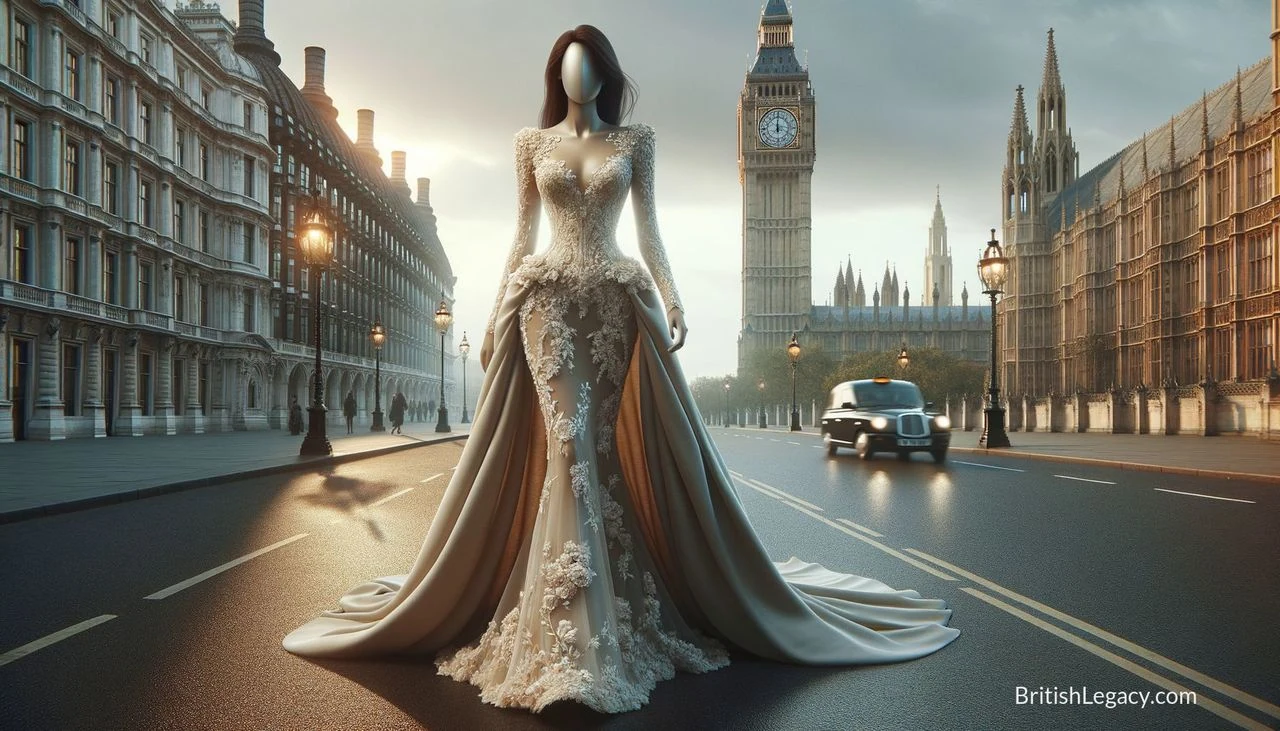
Jenny Packham launched her eponymous fashion label in 1988. Her work spans bridal and evening wear, bringing together detailed embellishment and polished silhouettes. The gowns have appeared at weddings, red-carpet events and public engagements, giving her designs a profile beyond the bridal market.
A label built around occasion wear
Packham’s early work established a balance between contemporary styling and more traditional forms of elegance. Bridal design became one of the label’s defining strands. Its gowns are described for their intricate detailing, luxurious fabrics and delicate embellishments, with silhouettes that draw on established bridal conventions while introducing modern touches. That combination has helped make the collection recognisable within a field shaped by ceremony and tradition.
Bridal fashion is bought for a highly personal occasion. A designer’s task is both practical and expressive: to create a garment that works as clothing while carrying the hopes and significance attached to a wedding. Packham’s bridal collections have been presented as meeting that demand through romantic styling and careful detail. The supplied account identifies bridal wear as a central part of her work, although its broader claims about the collections’ influence on other designers are not supported with examples.
Packham also developed evening wear, extending the label’s reach from weddings to red carpets and gala events. The designs described in the supplied material use sequins, beads and silk, and are associated with a formal, glamorous look. This range has given her work visibility in settings where clothing is photographed and discussed as part of a public appearance, rather than seen only by a bride and her guests. Bridal and evening collections thus serve different occasions while sharing an emphasis on decorative detail and refined silhouettes.
Designs in the public eye
The supplied article names Kate Winslet and Emily Blunt among those who have worn Packham’s designs, and also mentions the Duchess of Cambridge, who wore them on multiple occasions. Such appearances connect the label with recognisable public figures and introduce its evening and occasion wear to a broad audience. They offer examples of the designs’ public profile, rather than proof of the source’s more sweeping claims about universal acclaim.
Packham’s work is often described in terms of glamour and refinement. Those qualities are most clearly supported here by the garments and settings the source identifies: embellished gowns, formal events and bridal collections. The original article also credits her with combining classic and contemporary influences. Together, these details point to a design identity centred on occasion wear that retains familiar forms while using decoration and modern styling to make them distinctive.
The supplied text portrays Packham as a role model for aspiring designers, particularly women, and says her influence extends beyond her collections. It also refers to philanthropic collaborations and engagements, but gives no names, dates or examples. Those claims cannot be developed further from the available material. The account’s concrete focus is her work as a designer, the range of her occasion wear and the public visibility of her bridal and evening creations.
Why Jenny Packham deserves a place in British Legacy
Jenny Packham merits a place in British Legacy for the sustained identity of her fashion label and its contribution to British occasion wear. Since its launch in 1988, the label has built a presence across two distinct but related fields: bridal gowns and evening clothing. The supplied account describes specific design features—embellishment, luxurious fabrics and carefully shaped silhouettes—and shows how these translate from wedding ceremonies to red carpets and formal events. Her designs have also been worn by named performers and public figures, including Kate Winslet, Emily Blunt and the Duchess of Cambridge. These examples make the label’s public reach tangible without relying on unsupported claims that it transformed fashion.
The British connection in the supplied material is Packham’s place in British fashion and the development of her label. It does not establish where her garments are made or support broad claims about British manufacturing and hand-finishing, so those are not presented as facts. What it does show is a designer whose occasion wear has carried a recognisable aesthetic into public view. Packham’s career adds a specific strand to the story of British fashion: clothing designed for significant personal occasions as well as for highly visible appearances. Her bridal and evening collections provide the basis for that contribution, while the available account also makes clear where claims about influence and philanthropy lack supporting detail.