
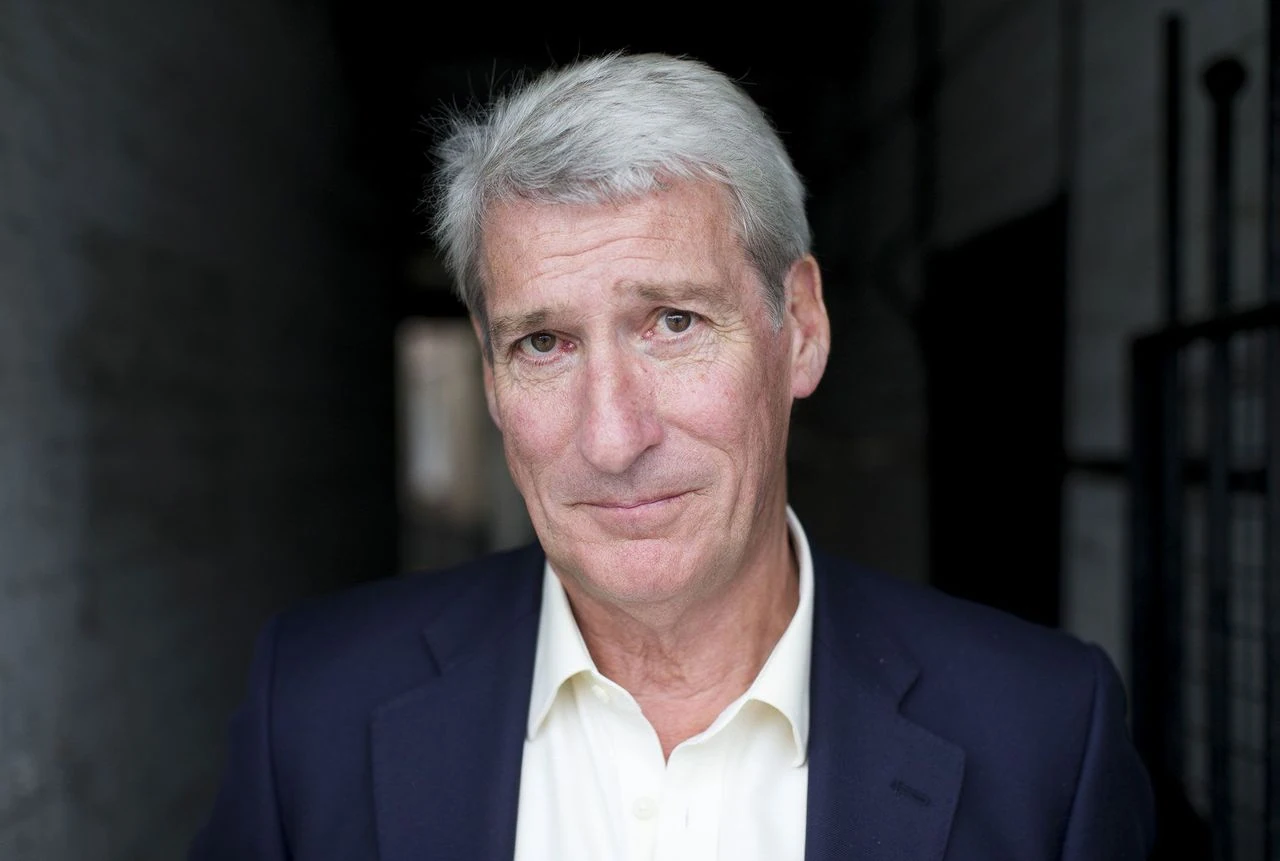
Jeremy Paxman made political interviews a television event. On BBC Two’s Newsnight, his brisk, persistent questioning could expose a politician’s evasions; it could also provoke criticism that his manner was aggressive or condescending. The tension between those responses became part of his public identity. Across a career that began in local radio, Paxman worked as a reporter, presenter and author, bringing the same appetite for argument to subjects ranging from Westminster politics to British history.
From Leeds to the BBC newsroom
Paxman was born in Leeds on 11 May 1950 and grew up in Hampshire, Bromsgrove and Peopleton in Worcestershire. He attended Malvern College before studying English at St Catharine’s College, Cambridge, where he edited the student newspaper Varsity. He joined the BBC’s graduate trainee programme in 1972, beginning at BBC Radio Brighton. After reporting in Belfast, including on the Troubles, he moved to London in 1977.
His early work took him through several kinds of news broadcasting. He moved from Tonight to Panorama, reporting from places including Beirut, Uganda and Central America. He then spent two years reading the BBC Six O’Clock News before joining BBC1’s Breakfast Time. These jobs gave him experience both in reporting stories and in presenting them to a national audience.
The Newsnight years
Paxman became a presenter of Newsnight in 1989, staying for 25 years. His interviews were known for their directness and refusal to let a non-answer pass without challenge. The best-known example came on 13 May 1997, when he questioned Michael Howard, then a former Home Secretary, about a meeting with Derek Lewis, head of the Prison Service. Paxman asked, “Did you threaten to overrule him?” twelve times in succession.
The exchange later acquired an additional explanation. In 2000, during a 20th-anniversary edition of Newsnight, Paxman told Howard that he had initially been trying to prolong the interview because the next item was not ready. He said it had become clear Howard would not answer, and that he could think of nothing else to ask. The account complicates the image of a perfectly planned interrogation: an improvised moment became one of the most memorable encounters in British political broadcasting.
His style was not universally welcomed. In 2003, the Broadcasting Standards Commission criticised his questioning of Liberal Democrat leader Charles Kennedy about his drinking, judging it too intrusive in nature and tone. During the 2005 general election, viewers complained about his treatment of party leaders. In the same period, his questioning of George Galloway about the defeat of Oona King was criticised; King later said she did not want to be defined by her ethnicity or religious background. Such moments show that persistent scrutiny can itself become a subject of scrutiny.
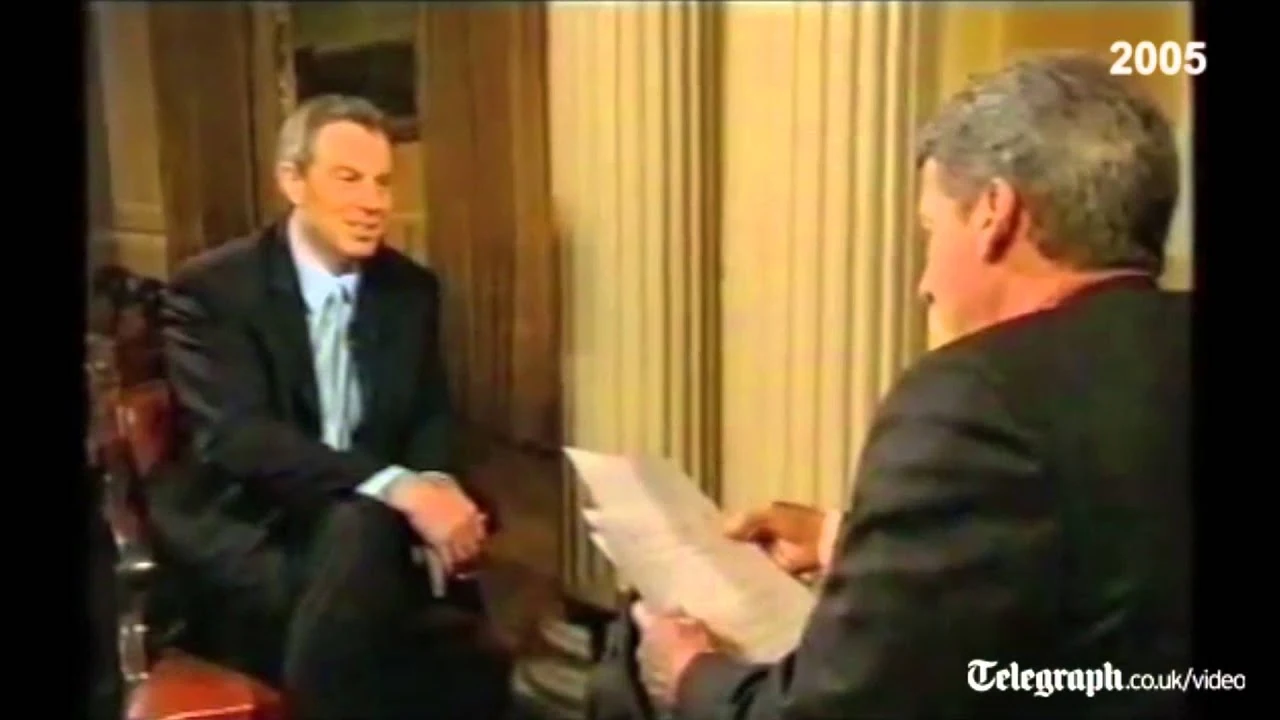
Other interviews became part of the programme’s public memory for different reasons. In 2003, Paxman questioned Prime Minister Tony Blair about the planned invasion of Iraq in a programme with questions from a studio audience. After Paxman asked whether Blair and US President George W Bush prayed together, Blair replied that they did not. Paxman’s follow-up, “But why not?”, distilled his instinct to press beyond a prepared answer. He also interviewed Russell Brand in 2012 about political disengagement, an exchange that attracted wide attention.
Paxman announced his departure in 2014 and presented his final Newsnight on 18 June. The programme included interviews with Peter Mandelson and London Mayor Boris Johnson, who rode a tandem bicycle, and a brief return to his 1997 exchange with Howard: this time, Paxman asked simply, “Did you?” He had agreed to remain for an extra year after the programme was damaged by the Savile and Lord McAlpine scandals. In explaining his departure, he said that after 25 years he would rather like to go to bed at much the same time as most people.
More than political interviews
Alongside his news work, Paxman presented University Challenge from its revival in 1994 until 2023. He also hosted its Christmas spin-off from 2011 to 2022. His manner suited the quiz’s brisk format, but the role was distinct from his political interviewing: here, his place was to question contestants and keep the competition moving. He stepped down after revealing in 2022 that he had been diagnosed with Parkinson’s disease; his final recorded episode aired in 2023.
His television work included the BBC One documentaries The Victorians, on Victorian art and culture, and Empire, about the history and legacy of the British Empire. He presented Britain’s Great War in 2014, and later co-presented general-election programmes for Channel 4. In 2019, he took part in a documentary about the Queen’s children. His range also extended to BBC Radio 4, where he presented Start the Week from 1998 to 2002.
Books gave him room to pursue subjects at greater length. His first, A Higher Form of Killing (1982), was written with BBC colleague Robert Harris and grew out of a Panorama programme about biological and chemical warfare. Other works considered Central America, the people and institutions of England, political life, royalty and the Victorian period. Great Britain’s Great War accompanied his 2014 television series; Black Gold: The History of How Coal Made Britain, published in 2021, turned to coal’s role in the country’s history. His memoir, A Life in Questions, appeared in 2016.
Public service, recognition and Parkinson’s
Paxman’s record includes both professional honours and public criticism. He received the BAFTA Richard Dimbleby Award in 1996 and again in 2000. The Royal Television Society named him Interviewer of the Year for the Howard interview in 1998; he won five RTS awards in total. Universities including Leeds, Bradford, the Open University and Exeter awarded him honorary degrees.
In 2021, Paxman said he was receiving treatment for Parkinson’s disease and described his symptoms as mild. The condition was also the subject of the 2022 ITV documentary Paxman: Putting Up With Parkinson’s. In 2023, he joined the podcast Movers and Shakers, in which presenters discuss living with the condition. The following year he delivered a petition to 10 Downing Street with recommendations concerning NHS treatment for people with Parkinson’s.
Why Jeremy Paxman deserves a place in British Legacy
Jeremy Paxman’s place in British Legacy rests first on the way he helped define a particular kind of British television interview. His 25 years on Newsnight made the interview more than a platform for a politician’s prepared message: a question could be repeated, a premise challenged or an answer pursued in front of a national audience. The Howard exchange remains a vivid instance of that approach, while the complaints and formal criticism his work sometimes attracted are a necessary part of the record. His legacy is not that every confrontation was beyond reproach, but that the conduct and limits of public questioning became visible and debated.
His contribution also reached well beyond a single programme. Reporting, presenting, documentary-making, radio and books allowed him to examine politics, history and national identity in different forms. From The English and The Victorians to Black Gold, he brought subjects rooted in Britain’s past into public discussion. His long association with University Challenge connected him with a different kind of national television tradition, while his later work on Parkinson’s helped bring attention to the experience of living with the condition and to treatment recommendations. Taken together, these achievements make his career a substantial part of Britain’s modern broadcasting history: influential, recognisable and open to argument.
Sources
Jeremy Paxman — Wikipedia revision 1375927219 · Jeremy Paxman — Wikipedia
Adapted in part from Jeremy Paxman by Wikipedia contributors, under CC BY-SA 4.0. Text has been edited and combined with the existing article; this adapted text is shared under the same licence. Contributor history.
.jpg)