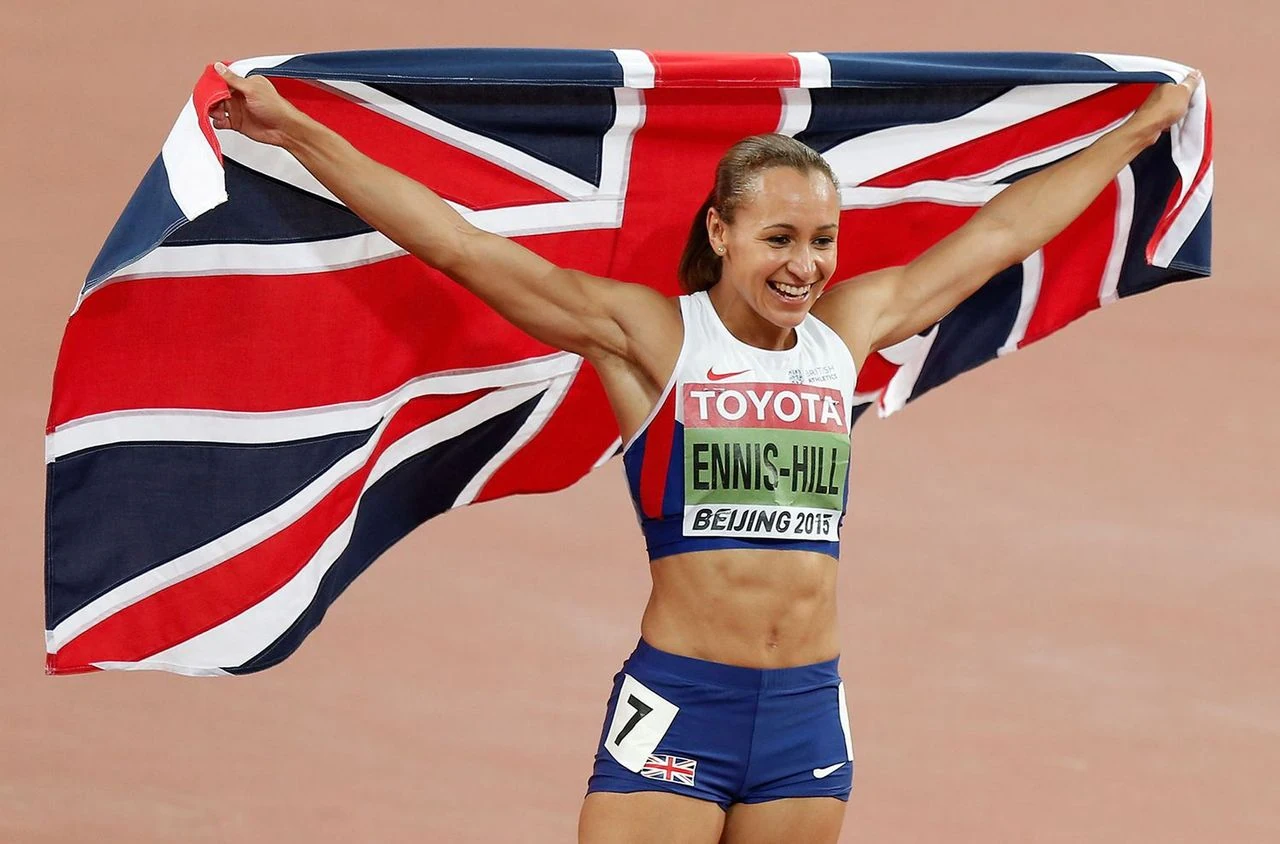
When Jessica Ennis-Hill won the heptathlon at the London 2012 Olympic Games, she scored 6,955 points, setting a British and Commonwealth record. The home crowd witnessed the high point of a career built over years of training across seven events, and after a serious foot injury had kept her out of the Beijing Olympics. She went on to win a second Olympic medal, three world heptathlon titles and a place among the defining British athletes of her generation.
Learning seven events in Sheffield
Born Jessica Ennis in Sheffield on 28 January 1986, she was introduced to athletics by her parents at a Start:Track event at Don Valley Stadium during the 1996 school summer holidays. Her first athletics prize was a pair of trainers. At the event she met Toni Minichiello, who became her coach; the following year, aged 11, she joined City of Sheffield and Dearne Athletic Club.
Ennis attended Sharrow Primary School and King Ecgbert School, then studied psychology at the University of Sheffield, graduating in 2007. She developed through junior competitions, first in events including the high jump and pentathlon. In 2003 she finished fifth in the heptathlon at the World Youth Championships. In 2005, she won the heptathlon at the European Junior Championships in Kaunas with a British junior record score of 5,891 points. That year she also took heptathlon bronze at the Universiade in İzmir, her first senior international medal.
The heptathlon tests an athlete in the 100 metres hurdles, high jump, shot put, 200 metres, long jump, javelin and 800 metres. It requires speed, jumping ability, throwing technique and the stamina to compete across two days. Ennis also competed in the indoor pentathlon and the 100 metres hurdles as an individual event. Her ability to perform across disciplines, rather than relying on one speciality, became the basis of her career.
At the 2006 Commonwealth Games in Melbourne, representing England, she won bronze with a personal best of 6,269 points. She later improved her total at the European Championships, finishing eighth in Gothenburg. In 2007, she won the European Cup Combined Events competition in Szczecin and placed fourth at the World Championships in Osaka. The next season brought a setback just as she was approaching the sport’s highest honours.
Injury, comeback and world titles
Ennis withdrew from the heptathlon at the 2008 Hypo-Meeting in Götzis after feeling pain in her right foot. Scans revealed stress fractures in the navicular and a metatarsal. The injury ruled her out of the Beijing Olympics and the rest of the season. After a year away, she returned to competition in 2009 and won the World Championships in Berlin with a personal best of 6,731 points.
In 2010 she added two major titles. At the World Indoor Championships in Doha, she won the pentathlon with a British, Commonwealth and championship record of 4,937 points. Later that year, she took heptathlon gold at the European Championships in Barcelona, setting a personal best and championship record of 6,823 points. She became the first British woman to win world titles both indoors and outdoors.
Her second world heptathlon title came in 2011, though it was not immediately awarded to her. Ennis initially finished second at the World Championships in Daegu behind Tatyana Chernova. After retrospective anti-doping action, Chernova was stripped of the title, and the Court of Arbitration for Sport awarded the gold to Ennis in 2016. She would win a third world heptathlon title in 2015.
In 2012, Ennis raised her heptathlon best to 6,906 points at the Hypo-Meeting, breaking Denise Lewis’s British record. At the London Olympics she went further, winning with 6,955 points. Her first day included personal bests in the 100 metres hurdles and 200 metres; she also set a personal best in the javelin. Her heptathlon hurdles time of 12.54 seconds was a British record and the fastest ever recorded in that event within a heptathlon. The final score set British and Commonwealth records and made the Sheffield athlete an Olympic champion on home soil.
Return to competition and a second Olympic medal
Injuries interrupted Ennis-Hill’s progress after London. An ankle problem curtailed much of her 2013 season, and pregnancy meant she did not compete in 2014. She returned to full-time training that autumn and came back to competition in 2015. At the World Championships in Beijing, she won the heptathlon with 6,669 points, ahead of Brianne Theisen-Eaton and Laura Ikauniece-Admidina. The title made her a three-time world champion.
An Achilles tendon injury affected her preparation for the 2016 season. She returned to competition and won a heptathlon in Ratingen before travelling to Rio de Janeiro to defend her Olympic title. Ennis-Hill took silver behind Belgium’s Nafissatou Thiam, finishing her Olympic career with a gold and a silver. On 13 October 2016, she announced her retirement from athletics.
Her honours marked her services to athletics: she was appointed MBE in 2011, CBE in 2013 and Dame Commander of the Order of the British Empire in 2017. Sheffield’s recognition of her London victory included a public welcome and the naming of a stand at Bramall Lane in her honour. The stand was later renamed after a sponsor.
Work beyond elite competition
After retiring, Ennis-Hill moved into broadcasting and other projects. She has appeared as an athletics commentator and studio analyst for the BBC, including coverage of major international championships and Olympic Games. She also co-wrote the children’s series Eve’s Magic Bracelet with author Elen Caldecott. Its first book, The Silver Unicorn, was published in 2017.
In 2019, she launched Jennis, an app-based training programme, with her agent and co-founder Jane Cowmeadow. A later product, CycleMapping, helps women relate training to their menstrual cycle. The work extends her involvement in sport beyond competition, towards training and women’s health. Her return to athletics after pregnancy also placed the demands of motherhood alongside elite sport in the account of her career.
Why Jessica Ennis-Hill deserves a place in British Legacy
Ennis-Hill’s place in British sporting history rests on both achievement and setting. Her Olympic gold was won in London before a home crowd, with a British and Commonwealth record score. It followed a season lost to stress fractures and came after she had already become world champion in Berlin. She later won the European title, an indoor world pentathlon title and three world heptathlon championships; the 2011 gold was awarded retrospectively after the original result was overturned. The range of those accomplishments reflects the particular demands of the heptathlon: success depends on sustained performance in seven very different events, not a single standout result.
Her connection to Sheffield is equally concrete. She joined a local athletics club as a child, was coached by Toni Minichiello from the start of her club career, and became one of the city’s most celebrated athletes. The public recognition after London included a civic welcome and a stand bearing her name. After retiring, she continued to contribute to athletics through BBC coverage and the development of Jennis, including a programme focused on women’s training and menstrual cycles. These strands give her legacy more substance than a list of medals: a record-setting athlete, a lasting association with the city where she began, and work that connects sport with audiences and participants beyond competition. Together, they make her career a distinctive chapter in British athletics.
Sources
Adapted in part from Jessica Ennis-Hill by Wikipedia contributors, under CC BY-SA 4.0. Text has been edited and combined with the existing article; this adapted text is shared under the same licence. Contributor history.