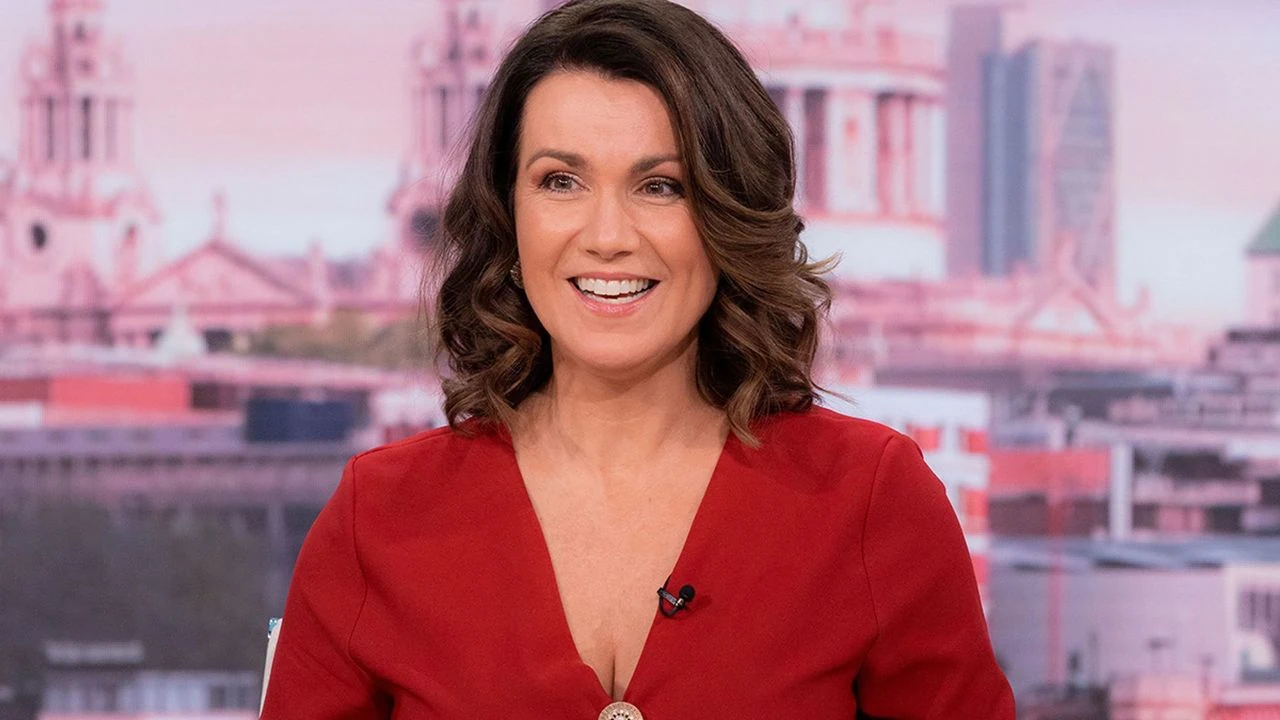
Susanna Reid’s career, as described in the supplied account, has taken her from BBC Radio Bristol to BBC Breakfast and then to ITV’s Good Morning Britain. The article portrays her as a presenter whose work combines political interviews with coverage of social and cultural subjects. It describes her style as warm and direct; those assessments are the source’s characterisations, rather than independently established measures of her influence.
Study, radio and BBC Breakfast
The supplied article says Reid studied politics and philosophy at the University of Bristol before training at Cardiff School of Journalism, Media and Cultural Studies. It places BBC Radio Bristol among her early roles, followed by other work at the BBC. The account gives no dates for her studies or first broadcasting jobs, but its outline records a route from university and journalism training into radio and television.
It says Reid presented BBC Breakfast from 2003 to 2014. The article characterises her interviewing during those years as warm yet incisive, and says she built a loyal following. It does not provide audience figures or specific examples from the programme, so those claims are best understood as the source’s assessment. The dates and presenting role, however, give the supplied career outline its central chronology: more than a decade on BBC Breakfast before her move to ITV.
A new morning programme at ITV
According to the article, Reid joined ITV in 2014 as a founding co-presenter of Good Morning Britain. It describes the programme’s interviews as spanning politicians, celebrities and members of the public, and presents Reid’s approach as a balance of empathy and rigorous enquiry. The material does not identify particular broadcasts for most of these categories, so it supports a broad account of the range of guests rather than a detailed assessment of individual interviews.
The article names Boris Johnson, Jeremy Corbyn and Nicola Sturgeon among Reid’s political interview subjects. It singles out a 2021 interview with Johnson about the government’s handling of the COVID-19 pandemic, describing her questioning as incisive and its reception as resonant with viewers. No transcript, broadcast record or audience evidence accompanies that description; the reported reception should therefore remain an attributed judgement, not a quantified result.
Politics is not the only subject area the account associates with Reid’s work. It also lists mental health, social justice and environmental concerns, saying she addressed them through interviews and discussions on a mainstream programme. The source does not name particular segments or establish their impact. These topics nevertheless indicate the breadth of coverage it attributes to her alongside political questioning.
Recognition and public-facing journalism
The supplied article reports that Reid received a Royal Television Society award for Best Regional Presenter early in her career. It gives neither the year nor the award citation. It also describes Good Morning Britain as achieving high ratings and critical praise, but supplies no figures or examples to substantiate those judgements. The award claim and programme assessments are retained as reported, without presenting the missing details as established.
More broadly, the source portrays Reid as a presenter who engages guests while asking demanding questions, and connects that style with journalism’s public-service role. It calls her a role model for aspiring journalists, but offers no examples of mentoring or evidence of influence on other reporters. The article’s substantiated outline is therefore more useful than its general praise: it identifies programmes, a career transition, named interview subjects and a range of topics, while leaving claims about wider influence as evaluations.
Why Susanna Reid deserves a place in British Legacy
The supplied account places Reid within British broadcasting through a clear sequence of named roles: BBC Radio Bristol, BBC Breakfast and ITV’s Good Morning Britain. It says she presented BBC Breakfast from 2003 to 2014 and became a founding co-presenter of the ITV programme in 2014. That move between two national broadcasters provides a specific connection to the development of British morning television, rather than a general claim about national identity.
The article also records a form of journalism grounded in daily public-facing work: interviewing political figures including Boris Johnson, Jeremy Corbyn and Nicola Sturgeon, while giving attention to subjects such as mental health, social justice and the environment. Its descriptions of Reid’s manner and influence remain assessments, and the supplied material does not demonstrate lasting effects on audiences or other journalists. Even with those limits, the career outline merits preservation: it documents a presenter’s movement across major British broadcasters and the mix of political and social topics the source associates with her work. That is a concrete contribution to a record of the people who present and question the news seen by morning television audiences.