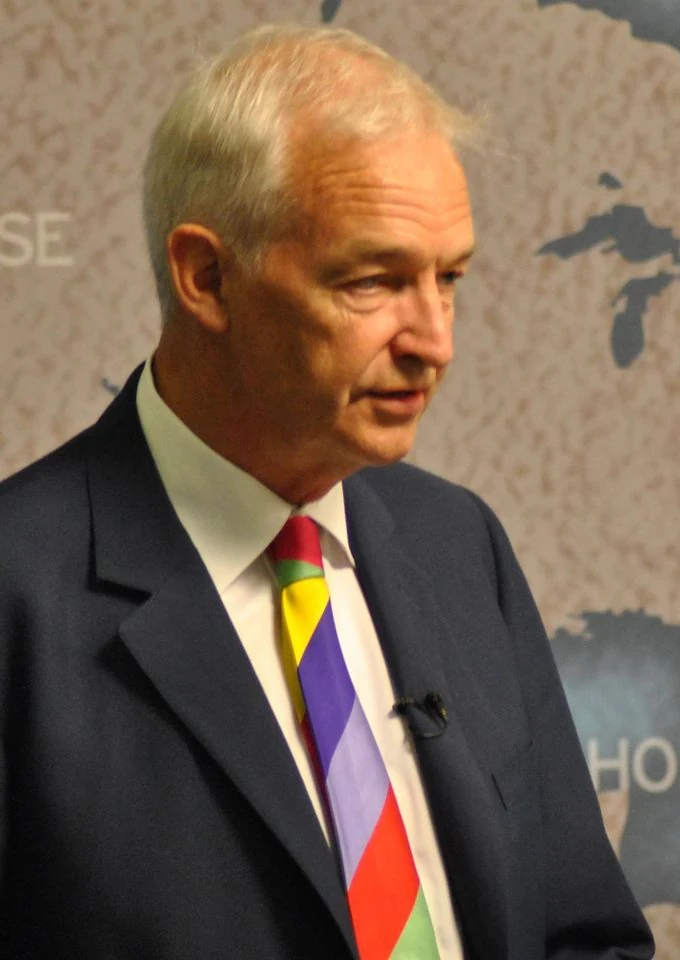
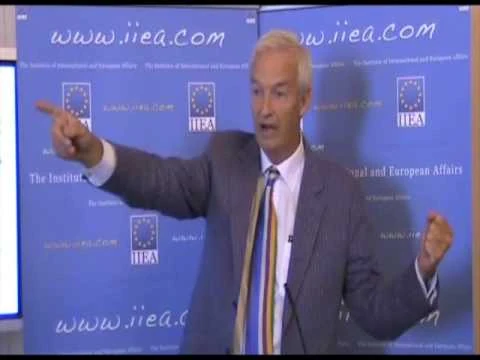
Jon Snow’s broadcasting career began before Channel 4 News existed. He worked in radio, reported from conflict zones and served as ITN’s Washington correspondent and diplomatic editor before becoming the programme’s main presenter in 1989. He remained its longest-running presenter until his final broadcast in December 2021. That path—from early reporting assignments to a familiar place in British television news—gives his career a wider shape than the anchor’s chair alone.
Education, activism and an early start in broadcasting
Born Jonathan George Snow in Ardingly, Sussex, on 28 September 1947, Snow was the son of George D’Oyly Snow, a bishop, and Joan, a pianist. He grew up at Ardingly College, where his father was headmaster. After winning a choral scholarship at Winchester Cathedral, he attended the Pilgrims’ School and later St Edward’s School in Oxford. At 18 he spent a year in Uganda as a Voluntary Service Overseas volunteer, teaching before returning to Britain to continue his education.
Snow studied at the Yorkshire Coast College in Scarborough after an unsuccessful first attempt at his A-levels. He then gained the qualifications needed to read law at the University of Liverpool, but did not graduate. In 1970 he was expelled after taking part in an anti-apartheid socialist student protest. He later called the episode a watershed in his life. After leaving university, he worked for Lord Longford, directing the New Horizon Youth Centre, a day centre for homeless young people in central London. He maintained his association with the organisation and later became its chairman.
In 1973 Snow became a presenter at LBC, then a new commercial radio station. By 1977 he was reporting for ITN, covering the conflict between Somalia and Ethiopia. The sequence brought him from radio into television journalism, and from domestic broadcasting towards the international reporting that would occupy much of his early career.
Reporting abroad and at home
In November 1978, ITN sent Snow to Vietnam to report on the plight of the boat people. He later became the network’s Washington correspondent, serving from 1983 to 1986, and its diplomatic editor from 1986 to 1989. These roles preceded his appointment as the main presenter of Channel 4 News. In 1980, during the early stages of the Iran–Iraq War, he helped rescue a British ship trapped in Iranian waters.
Snow’s work also took him into difficult and politically charged situations. While reporting in Uganda, he flew with President Idi Amin in the presidential jet. He later recounted that, while Amin appeared to be asleep, he considered taking the president’s revolver and shooting him, but worried about the consequences of firing a loose round inside an aircraft. In 1976, he reportedly refused an approach by British intelligence services to spy on colleagues in television. These episodes sit alongside his reporting record as reminders that journalism can involve risks and pressures beyond the work visible on screen.
The supplied account identifies Snow’s reporting on the Ethiopian famine of 1984–85, the Iran-Contra affair in 1986 and the Grenfell Tower fire in 2017 as notable examples of his coverage. It describes his famine reporting as bringing the crisis to British audiences and helping prompt fundraising, and characterises his Iran-Contra work as groundbreaking. It also says that his Grenfell reporting foregrounded residents and families and sustained attention to failures. Those are consequential assessments of the reporting and its effects; the supplied material does not provide reports or other evidence with which to test them, so they should be understood as claims made by that account rather than independently established conclusions.
Three decades as the face of Channel 4 News
Snow became the main presenter of Channel 4 News in 1989. The programme was produced by ITN, but Snow was employed directly by Channel 4. He held the presenting role until 2021, making him the programme’s longest-running presenter. On 29 April that year he announced his retirement from the role; his final programme aired on 23 December.
His work was not confined to the nightly bulletin. In 1992 he was the main anchor of ITN’s election-night programme on ITV, presenting alongside Robin Day, Alastair Stewart and Julia Somerville. In 2002 he returned to radio with Jon Snow Reports, a weekly programme and podcast on Oneword Radio. He also wrote for the Channel 4 News website and produced Snowmail, a daily email newsletter previewing the evening programme’s main stories.
Some of his on-air encounters became part of the public record. In 2003, during the controversy over the government’s Iraq dossier, Alastair Campbell entered the studio to rebut BBC statements; Snow questioned him without notes or preparation. In 2009 Snow interviewed Lieutenant-Colonel Yvonne Bradley, the military counsel for Binyam Mohamed, a British resident held at Guantánamo Bay. Bradley said Mohamed had been tortured; Mohamed was released and returned to Britain later that month.
Snow also presented Callum Macrae’s documentary Sri Lanka’s Killing Fields in 2011, about alleged war crimes in the final days of the Sri Lankan conflict in 2009. A second programme, Sri Lanka’s Killing Fields: War Crimes Unpunished, followed in 2012. In 2010 he reported from Haiti during a cholera outbreak. After leaving the Channel 4 News anchor role, he continued to work with the broadcaster: in 2023 he presented a two-part documentary, How to Live to 100, following research in Greece, Japan and California.
Judgement, impartiality and recognition
Snow’s public role also brought scrutiny of his political remarks. In 2017, after he was reported to have shouted an obscenity about the Conservatives at Glastonbury, Channel 4 said he had been spoken to and reminded of his responsibilities concerning due impartiality. In 2019, while reporting at a pro-Brexit protest, he remarked that he had never seen so many white people in one place. Ofcom received 2,644 complaints. The regulator investigated whether the comment breached its rules on offensive content and cleared him in August. These episodes form part of the record of a presenter whose public comments, as well as his journalism, attracted attention.
Snow received the BAFTA Fellowship, the organisation’s highest honour, in 2015. His Royal Television Society awards included recognition for reports from El Salvador, coverage of the Kegworth air disaster, and work on Afghanistan, Iran and the Middle East; he was named TV Journalist of the Year in 1980 and Best Male Presenter in 1995. He also received honorary degrees from the universities of Liverpool, Sussex, Keele and Aberdeen. Snow declined an OBE, saying that working journalists should not accept honours from those about whom they report.
Beyond broadcasting, Snow served as chancellor of Oxford Brookes University from 2001 to 2008 and as president of CTC Cycling UK from 2007 until around 2020. His autobiography, Shooting History, published in 2004, covers his life through the 2003 invasion of Iraq. His career combined reporting, presentation and public service, while his decision to decline an honour expressed a view about the distance journalists should keep from the people they scrutinise.
Why Jon Snow deserves a place in British Legacy
Snow’s place in British Legacy rests first on the breadth and duration of his work in British broadcasting. He moved from LBC radio to ITN, reported from Vietnam, Washington and diplomatic postings, and became the principal presenter of Channel 4 News in 1989. He held that role until his final programme in December 2021. For more than three decades, his work brought domestic and international news to audiences through one of Britain’s established television news programmes. His election-night presentation, radio reporting and later documentaries show a career that extended beyond a single studio or format.
His record also gives this legacy a practical dimension. Snow’s assignments included reporting on conflict and displacement, while later work covered the Haiti cholera outbreak and the Sri Lankan conflict. The supplied article additionally highlights his reporting on famine, Iran-Contra and Grenfell, although its claims about the impact of that coverage are not independently substantiated in the supplied material. The distinction matters: a credible account of journalism should preserve notable work without overstating what the evidence establishes. Snow’s honours—including the BAFTA Fellowship and recognition from the Royal Television Society—mark professional achievement; his refusal of an OBE, on the grounds that journalists report on those who confer honours, expresses a principle about independence. Together, his sustained broadcasting service, international reporting and stated concern for journalistic distance make his career a significant part of Britain’s recent media history.
Sources
Jon Snow (journalist), revision 1377505608 · Jon Snow (journalist)
Adapted in part from Jon Snow (journalist) by Wikipedia contributors, under CC BY-SA 4.0. Text has been edited and combined with the existing article; this adapted text is shared under the same licence. Contributor history.