
With 26 seconds left in extra time of the 2003 Rugby World Cup final, Jonny Wilkinson received the ball and kicked a drop goal. England beat Australia 20–17 in Sydney, becoming the first English side to win the tournament. The kick fixed Wilkinson in the public imagination, but it was the culmination of a career built through club success, international setbacks and an exacting command of the game’s smallest margins.
From Farnham to the England team
Born Jonathan Peter Wilkinson in Frimley, Surrey, on 25 May 1979, he grew up in Farnham. He attended Pierrepont School in Frensham and Lord Wandsworth College, near Hook in Hampshire, and played youth rugby for Farnham. In 1997 he gave up a place at the University of Durham to become a professional with Newcastle Falcons. He began as an inside centre, but soon took over at fly-half and as the team’s goal-kicker.
Wilkinson made his England debut in 1998, aged 18, coming on against Ireland. He was part of Newcastle’s side that won the 1997–98 Premiership, and became a regular for England the following season. His early international career included the 1999 World Cup, where he scored 32 points in England’s opening win over Italy. England exited in the quarter-finals, a reminder that individual scoring records do not guarantee team success.
He established himself as one of the leading fly-halves in the game through his kicking and ability to direct play. England won the Six Nations in 2000 and 2001, and Newcastle added the Powergen Cup in 2001. Wilkinson also toured Australia with the British & Irish Lions that year, earning six Lions caps across two tours in 2001 and 2005. In 2002, England beat New Zealand, Australia and South Africa in consecutive autumn Tests, with Wilkinson central to the series of performances.
The road to the 2003 final
England entered the 2003 World Cup after winning the Six Nations Grand Slam. Wilkinson had helped secure that campaign, scoring 18 points in the victory over France and playing in the decisive win over Ireland. On the southern-hemisphere tour in June, he scored all 15 points in England’s 15–13 win over New Zealand in Wellington. England then beat Australia on Australian soil for the first time.
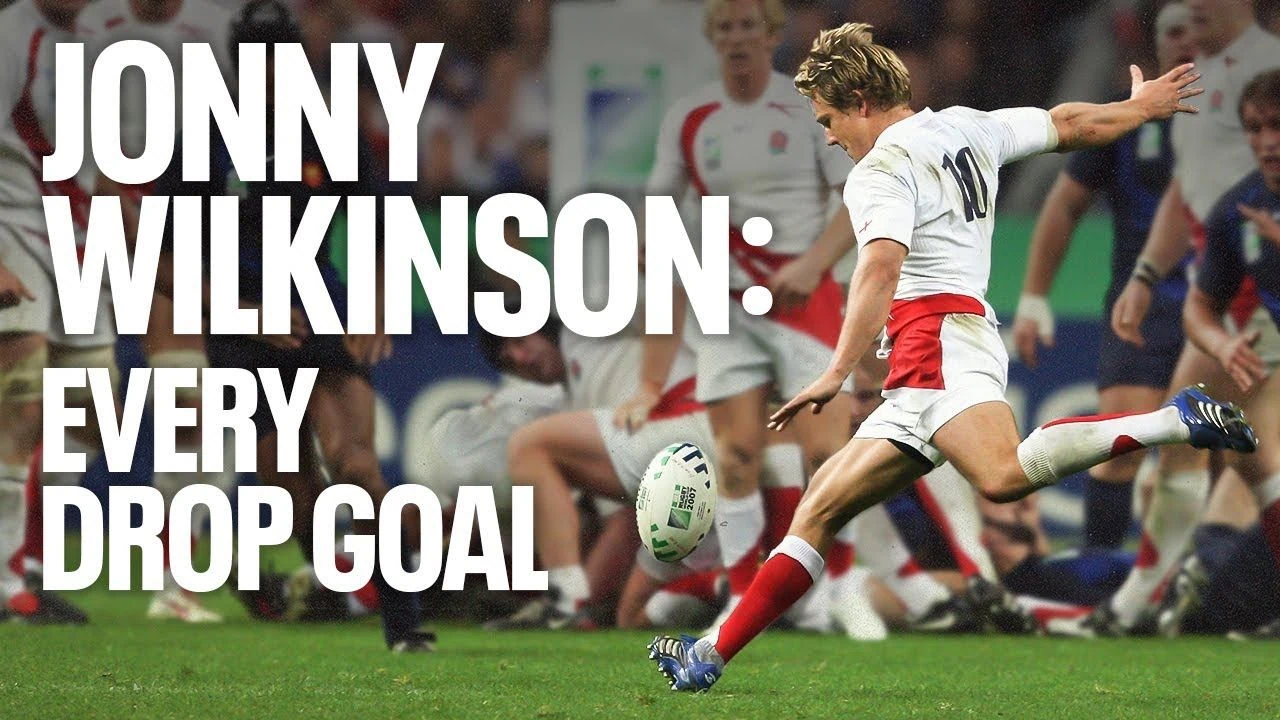
At the World Cup, Wilkinson was England’s leading scorer. He made 20 of the team’s 25 points against South Africa in the pool stage, scored 23 in the quarter-final against Wales and kicked all of England’s points in the semi-final win over France. The final was more than a one-man contest: England and Australia were level at 17–17 when Wilkinson’s right-footed drop goal, in the closing seconds of extra time, put England ahead. Australia had no time to reply. Wilkinson finished the tournament with 113 points and was named its leading points-scorer. He was also voted BBC Sports Personality of the Year and the International Rugby Board’s International Player of the Year for 2003.
Injuries, returns and a second World Cup final
The World Cup win was followed by a succession of injuries. A shoulder injury kept Wilkinson out of the 2004 Six Nations, and further problems affected his arm and knee. He was named England captain in October 2004, but was unable to play in the autumn internationals. After an extended absence, he returned to the Lions squad in 2005 and toured New Zealand, but injuries continued to interrupt his club and international seasons.
His return to England for the 2007 Six Nations was emphatic. Against Scotland, he scored 27 points in a 42–20 win, setting an individual record for the Calcutta Cup. Later that year, he helped England reach another World Cup final. He scored all 12 points in the quarter-final victory over Australia and kicked nine in the semi-final against France. South Africa won the final 15–6; Wilkinson’s second World Cup final ended without a repeat of the 2003 result.
Further injuries and competition for the fly-half position complicated his later England career. He scored 50 points in the 2008 Six Nations, then moved from Newcastle to Toulon in 2009 after 12 years with the Falcons. He announced his retirement from Test rugby in December 2011, having won 91 England caps and scored 1,179 points. He retired from all rugby at the end of the 2013–14 season.
Toulon and life after playing
Wilkinson’s move to France gave him a new club challenge and a final run of major success. Toulon won the Heineken Cup in 2013, beating Clermont Auvergne 16–15 in the final, with Wilkinson contributing 11 points. He was named European Player of the Year for the tournament. Toulon retained the Heineken Cup in 2014, defeating Saracens 23–6, then won the Top 14 final against Castres a week later. Wilkinson scored 15 points in that 18–10 victory; it was the final match of his playing career.
After retirement, Wilkinson became a studio pundit for ITV Sport, covering the Six Nations, World Cup and other rugby events. He was inducted into the World Rugby Hall of Fame in 2016. His honours also reflect a long record of service to the sport: he was appointed an MBE in 2002, promoted to OBE in 2004 and to CBE in 2015. The University of Surrey awarded him an honorary doctorate in 2009.
Why Jonny Wilkinson deserves a place in British Legacy
Wilkinson’s place in British sporting history is anchored in a specific, consequential achievement. His drop goal won England the 2003 Rugby World Cup final, giving the country its first tournament victory and ending the Southern Hemisphere’s hold on the competition. The kick was the most visible point of a campaign in which he repeatedly supplied the points that carried England through: against South Africa in the pool, Wales in the quarter-final and France in the semi-final. His 113-point tournament total shows the sustained contribution behind the final image.
His career also extends beyond that single afternoon. Wilkinson earned 91 England caps, toured twice with the British & Irish Lions and returned from repeated injuries to help England reach another World Cup final in 2007. His later achievements with Toulon, including two European Cups and a Top 14 title, show that his influence continued in a different rugby culture and setting. After playing, he remained connected to the sport as a broadcaster, while his place in the World Rugby Hall of Fame formally recognises his standing in the game. For British Legacy, Wilkinson’s story is not simply a celebrated kick: it is the record of a player whose precision, longevity and success shaped English rugby across club, international and European competition.
Sources
Jonny Wilkinson — revision 1376371657 · Jonny Wilkinson
Adapted in part from Jonny Wilkinson by Wikipedia contributors, under CC BY-SA 4.0. Text has been edited and combined with the existing article; this adapted text is shared under the same licence. Contributor history.

.jpg)