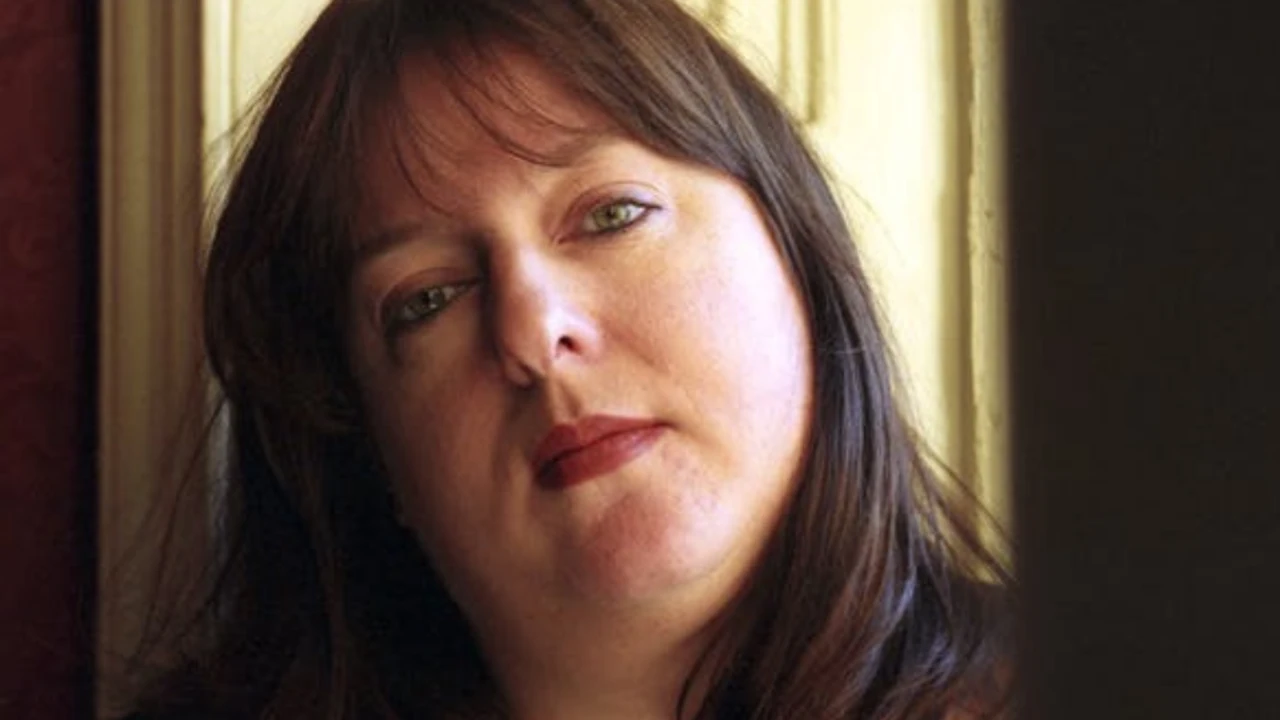
Julie Burchill began writing about punk as a teenager and went on to build a career across newspapers, magazines, books and television. Her work has ranged from pop and fashion to politics, class, religion and social identity. It has also drawn sharp criticism and, on occasion, legal consequences. The history of her journalism is therefore not simply a story of a distinctive voice: it is a record of how that voice has changed publications, provoked readers and tested the limits of acceptable argument.
A young writer at the NME
Born in Bristol on 3 July 1959, Burchill was educated at Brislington Comprehensive School. Her father worked in a distillery and was a Communist union activist; her mother worked in a cardboard-box factory. She left the A-levels she had recently started to take up writing at the New Musical Express (NME), rather than going to university.
In 1976, aged 17, she joined the paper after answering an advert seeking young writers to cover the emerging punk movement. She secured the job with a piece about Patti Smith’s album Horses. The NME gave her an early platform, but she later said she had not initially liked punk records. She left the staff at 20 and began freelancing, widening her subject matter beyond pop music.
Her first book, The Boy Looked at Johnny, was written with fellow NME journalist Tony Parsons and published in 1978. The book’s reception was contentious: John Lydon later criticised its account of his music and the suggestion that drug use explained his talent. That dispute foreshadowed a career in which Burchill’s claims and judgments were often as prominent as the subjects she covered.
Columns, politics and changing platforms
After the NME, Burchill wrote for The Face and The Sunday Times, covering politics, pop, fashion and society. She was the Sunday paper’s film critic from 1984 to 1986. Her arguments did not fit neatly within one political position: during the Falklands War she opposed the Argentine military dictatorship, and she wrote favourably about Margaret Thatcher. In 1987, while writing for the Mail on Sunday, she urged readers to vote Labour, against the paper’s usual political line.
In 1991, Burchill, Cosmo Landesman and Toby Young founded Modern Review, which used the slogan “Low culture for high brows”. It published cultural criticism and gave her another outlet beyond the daily and Sunday press. The magazine ended in 1995 and was briefly revived in 1997. Its much-publicised “Fax war” with writer Camille Paglia in 1993 was one example of the arguments the publication carried beyond its pages.
Burchill wrote a weekly column for The Guardian for five years, until 2003. Her positions included support for the Iraq War, while her departure from the paper was acrimonious: she said she left in protest at what she saw as its antisemitism. In 2005 she moved to The Times, after the newspaper agreed to her demands, but the arrangement ended in 2007. She later wrote for The Independent from 2010 until 2011. These moves chart a career sustained across competing editorial homes rather than a long attachment to a single newspaper.
Class, books and broadcasting
Class was a recurring subject in Burchill’s journalism. She criticised the use of “chav” as a term of contempt and, in 2005, presented Sky One’s documentary In Defence of Chavs. Her argument was that mockery directed at people who were worse off was a form of bullying, not harmless humour. Whatever the response to her writing elsewhere, this intervention placed her on the side of a group she believed was routinely disparaged by the media.
Her books moved between journalism, polemic and fiction. Titles include Damaged Gods: Cults and Heroes Reappraised (1987), Ambition (1989), the novel Sugar Rush (2004), and Made in Brighton (2007), written with her husband Daniel Raven. Sugar Rush became a Channel 4 television drama; Burchill also wrote the sequel novel Sweet (2007). Her work for television included documentaries, among them a BBC Four programme about her father’s death from asbestosis.
Religion and Jewish identity became prominent themes in her later writing. After saying she had found God in 1999, she became a Lutheran and later described herself as a Christian Zionist. She subsequently attended Brighton and Hove Progressive Synagogue and considered converting to Judaism. Her book Unchosen: The Memoirs of a Philo-Semite was published in 2014, not 2007 as stated in the supplied article. Reviews quoted in the supplied Wikipedia account differed sharply in their assessments of the book and its arguments.
Controversy, accountability and public argument
Burchill’s career has included disputes that cannot be reduced to a simple reputation for being provocative. In 1996, actor and theatre director Steven Berkoff won a libel action over a Sunday Times article containing comments about his appearance. In 2002, she narrowly avoided prosecution after a Guardian column about Ireland prompted complaints. The supplied account records both the controversy and the consequences; it does not make those episodes evidence that every provocative statement was defensible.
In 2013, an article she wrote for The Observer about transgender people prompted widespread objections. The paper removed it from its website and its editor apologised, saying the piece should not have been published in that form. In 2020, Burchill made defamatory statements about journalist Ash Sarkar on social media. In March 2021, after legal action for libel and harassment, she retracted the statements, apologised and agreed to pay substantial damages and legal costs. These events are part of the public record of her career, as are the disputes around her books and columns; they also show that public argument can carry responsibilities beyond the response it generates.
Why Julie Burchill deserves a place in British Legacy
Julie Burchill belongs in British Legacy because her career captures several important changes in British journalism: the rise of punk writing into mainstream cultural commentary, the movement of writers between specialist magazines and national newspapers, and the increasing reach of the columnist whose views become news in their own right. Starting at the NME at 17, she moved from music criticism into writing about politics, class, fashion and religion. Her work on Modern Review and her defence of people labelled “chavs” show that her contribution was not confined to newspaper rows: she also helped put questions of cultural value and class contempt into public debate.
That legacy requires more than repeating praise of her audacity. Burchill’s record includes writing that was criticised, an article withdrawn after an editorial apology, a libel judgment and a later retraction and apology following legal action. Those facts are integral to assessing what her style achieved and where it caused harm. Her books and the television adaptation of Sugar Rush also demonstrate a career that crossed forms, reaching audiences beyond the column page. For British Legacy, the value of her story lies in this full, complicated picture: a writer who made provocation central to her public voice, helped shape arguments about class and culture, and whose career also illustrates the consequences that can follow when polemic crosses into defamation or needless offence.
Sources
Julie Burchill — Wikipedia revision 1375697971
Adapted in part from Julie Burchill by Wikipedia contributors, under CC BY-SA 4.0. Text has been edited and combined with the existing article; this adapted text is shared under the same licence. Contributor history.