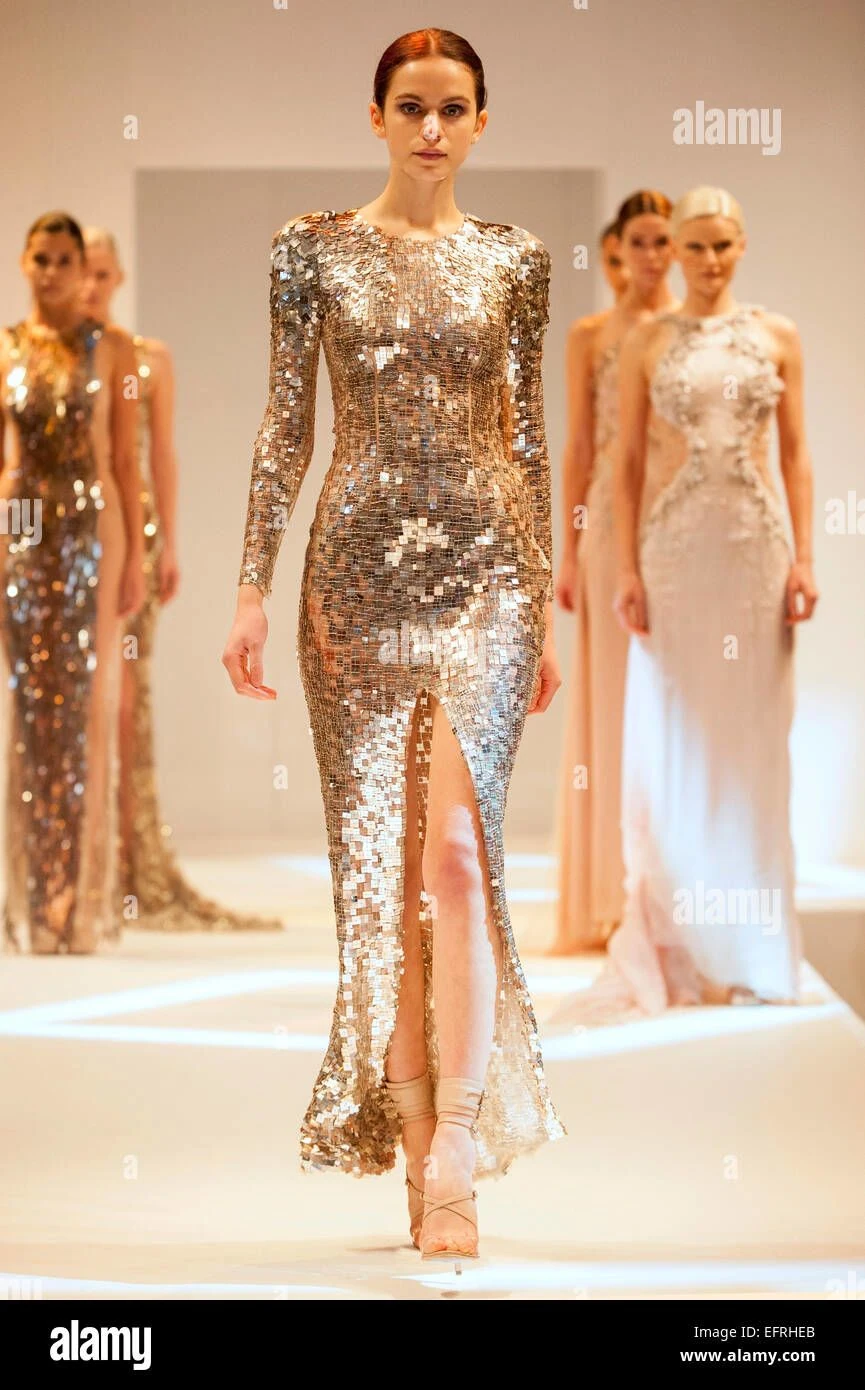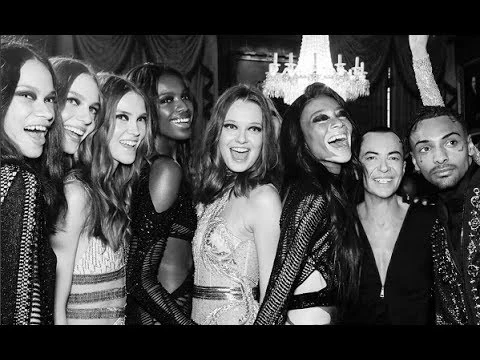
Julien Macdonald’s career has taken a designer born in Merthyr Tydfil to the Paris couture house Givenchy and the runways of London Fashion Week. Best known for ornate eveningwear, he has also designed British Airways cabin crew uniforms and costumes for Girls Aloud, and reached television audiences as both a fashion judge and a contestant. His story links textile training with the public spectacle of fashion, performance and celebrity.
Learning to make and design
Macdonald was born in Merthyr Tydfil on 19 March 1971 and attended Cyfarthfa High School. After leaving school, he studied art at the College Merthyr Tydfil, where lecturer Martyn Jones helped him develop his design skills. His mother taught him to knit, an early practical introduction to a technique that would become part of his professional identity. He considered a career as a dancer, but went on to study textiles at the Faculty of Arts and Architecture in Brighton before taking a place at the Royal College of Art in London, where he gained a master’s degree.
The original account describes his Royal College qualification as a master’s degree in knitwear design. The supplied reference confirms the master’s degree but does not specify the subject. His interest in knitting and study of textiles nevertheless form part of the documented background to his work. That combination of making and design provided a foundation for a career that would move between specialist fashion houses and projects for wider audiences.
From Chanel to Givenchy
Soon after graduating, Macdonald was recruited by Karl Lagerfeld to work for Chanel. He also created knitwear for Alexander McQueen. These early professional roles connected his textile skills with established names in fashion.
In 2001, Macdonald was appointed chief designer at Givenchy, succeeding McQueen, and was named British Fashion Designer of the Year. The appointment brought a designer from Wales into a senior role at a Paris couture house. The original article describes him as creative director of the women’s ready-to-wear and haute couture lines from 2001 to 2004. The supplied reference gives his title as chief designer but does not specify those lines or an end date; this feature therefore uses the title and timing supported by that reference.
His work extended beyond couture and evening dresses. In 2001, British Airways selected him to redesign its cabin crew uniforms, applying his design practice to clothing with a highly visible public function. In 2014, he launched an eyewear range in collaboration with Vision Express. These projects show a career that encompassed accessories and uniforms as well as runway fashion.
Red carpets, performance and television
Macdonald’s label became particularly associated with detailed gowns for high-profile occasions. His dresses have been worn by celebrities including Kylie Minogue, Beyoncé and Jennifer Lopez. The original account also names Heidi Klum, but the supplied reference does not list her among the clients it mentions. In 2009, Macdonald was chief designer for the costumes worn by Girls Aloud on their Out of Control tour, bringing his work into the visual world of pop performance.
Television offered another route to a broad audience. Macdonald appeared as a judge on Project Catwalk, the British version of Project Runway, and joined Britain’s Next Top Model as a judge in 2010. In 2013, he competed on Strictly Come Dancing, partnered by professional dancer Janette Manrara. They were eliminated in the fourth week after losing the dance-off to Rachel Riley.
These appearances put Macdonald in different roles: as a designer, a judge assessing other people’s work and a contestant learning a performance skill in public. The earlier account describes him as a champion of runway diversity and inclusivity, but supplies no specific examples to substantiate that claim. It is not repeated here as an established achievement.
Public debate and the label’s fortunes
Macdonald’s use of fur attracted criticism. In 2006, he said that fur provided the majority of his revenue and that his label would collapse without it. In 2017, he apologised for his previous use of fur, telling Reuters: “You do not need to kill animals to wear nice clothes.” The change in his public position is part of the record of a designer whose work attracted debate as well as attention.
In July 2023, Julien Macdonald Limited, the fashion label fronted by Macdonald, entered creditors’ voluntary liquidation. The supplied reference says the business faced financial difficulties following the loss of revenue during the COVID-19 pandemic and the collapse of key retail partners, including Debenhams. This marked a difficult point in the commercial history of the label, distinct from the design work associated with Macdonald’s name.
In February 2026, Macdonald returned to London Fashion Week, presenting his autumn/winter 2026 collection at The Shard. The supplied material establishes the presentation, but not the precise business arrangements behind it. It is therefore a return to the event, rather than evidence about the status of the company.
Why Julien Macdonald deserves a place in British Legacy
Julien Macdonald’s place in British Legacy rests on a distinctive journey between Welsh origins and international fashion institutions. Born and educated in Merthyr Tydfil, he developed his skills through local art study, textile education in Brighton and postgraduate training at the Royal College of Art in London. His appointment as chief designer at Givenchy in 2001, and his British Fashion Designer of the Year award that year, connected that British training and background with a major Paris fashion house. His British Airways uniform project demonstrates a different application of design: clothing intended not only for the runway or a red carpet, but for a visible public-facing role.
His work has also reached audiences through popular culture. Dresses worn by performers, costumes for Girls Aloud, fashion television and his own appearance on Strictly Come Dancing brought elements of the fashion world to viewers beyond the audience for a couture show. Those examples support a grounded account of his public reach without requiring broader claims about universal influence or inclusivity. His return to London Fashion Week in 2026 brought his work back to a major British fashion platform. Together, his Welsh background, education in Britain, international appointment and work across fashion, performance and television make a specific case for his place in the country’s creative history.
Sources
Julien Macdonald — Wikipedia revision 1342743470
Adapted in part from Julien Macdonald by Wikipedia contributors, under CC BY-SA 4.0. Text has been edited and combined with the existing article; this adapted text is shared under the same licence. Contributor history.