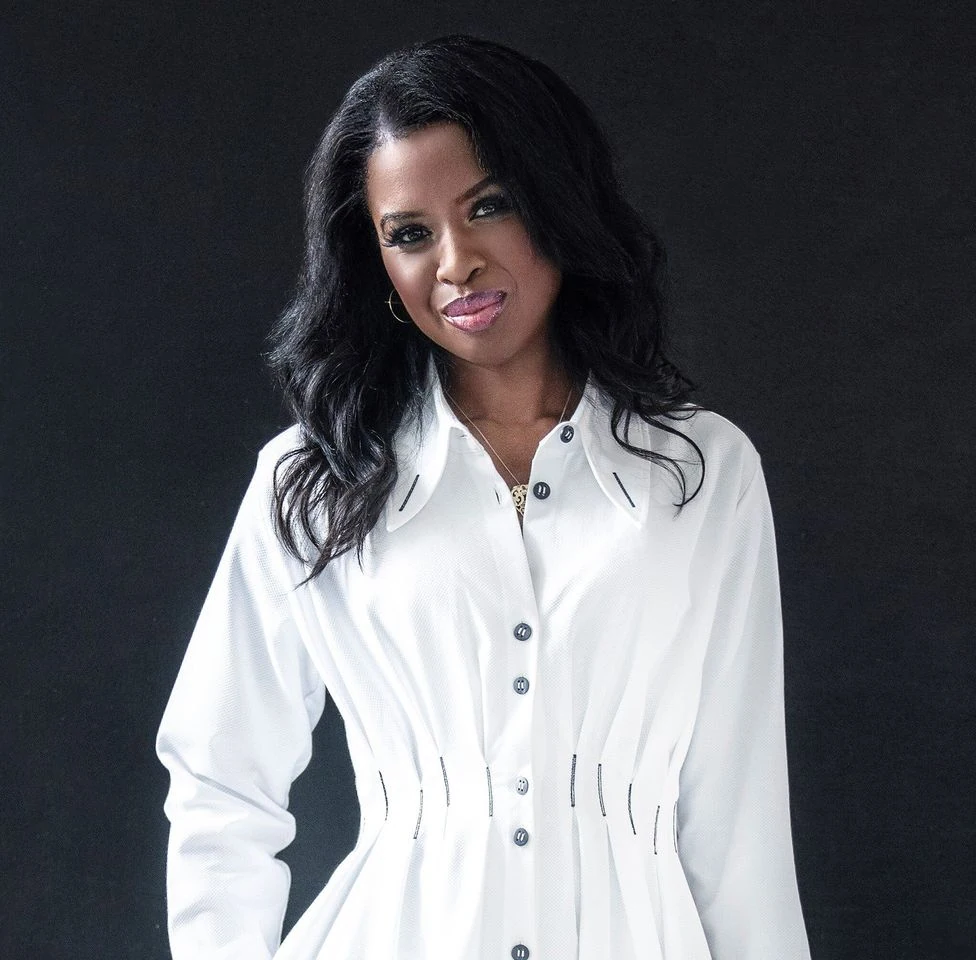
June Sarpong’s career has taken her from radio and youth television to publishing, institutional leadership and the House of Lords. She first became widely known as a presenter on Channel 4’s T4; later, as the BBC’s first Director of Creative Diversity, she worked on making representation part of the broadcaster’s commissioning practice. Her route through popular culture and public service gives her story its particular shape: she has repeatedly brought questions about who is seen, heard and included into institutions with the power to reach large audiences.
From east London to national television
Sarpong was born in Newham, London, on 31 May 1977, to Ghanaian parents. She was educated at Connaught School for Girls in Leytonstone and Sir George Monoux College in Walthamstow. Her early career took shape in broadcasting: she worked as a DJ and presenter at Kiss 100 and later presented for MTV UK and Ireland. These roles placed her in the quick-moving world of music and youth media before she became a familiar face to Channel 4 viewers.
For nine years, Sarpong was one of the presenters on T4, Channel 4’s youth-aimed strand. The work made her a mainstream presence and gave her experience across entertainment and live conversation. In January 2005, she interviewed Prime Minister Tony Blair for a T4 special, When Tony Met June. The interview stands as a clear example of how her broadcasting career could move between popular programming and political subjects.
Her television work was not confined to T4. She appeared on programmes including Loose Women, where she became a regular panellist in 2015, and The Pledge on Sky News. She also presented Your Face or Mine?, co-hosted with Jimmy Carr, and Playing It Straight for Channel 4. Other appearances included Question Time, 8 Out of 10 Cats and Have I Got News for You. That variety matters to the story: Sarpong’s public profile was built across formats, from entertainment and discussion to interviews and current affairs.
In 2007, she left her presenting role on T4 after nine years; her final programme was broadcast in December. By then she had already become an established television figure. For a Black British woman from east London, that visibility on a mainstream youth strand formed part of a broader shift in who audiences could see at the centre of British broadcasting. The record establishes her prominence; its wider significance lies in how familiar that presence could become to viewers.
Using a public profile beyond presenting
Sarpong’s work developed beyond television presenting into advocacy, writing and organisational activity. She helped build Women: Inspiration & Enterprise, known as WIE, a platform focused on women’s empowerment. The supplied original article describes its work in terms of mentoring and support, while a biographical account identifies its aim as supporting female excellence and empowerment. Alongside her broadcasting, this work widened the settings in which she addressed opportunity and representation.
Her career did not simply leave entertainment behind for a separate world of activism. The experience of working in mass media gave her a practical connection to questions about who receives attention and whose experiences are represented. That is relevant to her later focus on inclusion: the work concerns not only public statements about fairness, but also the choices that influence what audiences encounter and which voices gain reach.
Sarpong also established Lipgloss Productions. The supplied biographical record says projects in development included a sitcom and a programme about climate change; it does not establish that either project was completed or broadcast. Her public work also included political engagement. In 2014 she was among public figures who signed a letter expressing support for Scotland remaining in the United Kingdom. The following year she joined the board of Britain Stronger in Europe, which campaigned for the UK to remain in the European Union. These activities show a wider public career, though the central thread of her work has been representation and participation in cultural and public life.
Making inclusion an institutional question
In November 2019, the BBC appointed Sarpong as its first Director of Creative Diversity. The appointment placed her within a major public-service broadcaster and gave her a role connected to how diversity was addressed in its work. The BBC’s 2019/20 annual report, as described in the supplied article, paired the appointment with a commitment to direct £100 million of existing commissioning budget over three years towards diverse and inclusive programming. The sum was not a separate personal budget for Sarpong; it was a commitment within the BBC’s commissioning arrangements.
The distinction between a general aspiration and a commissioning commitment is important. Decisions about what gets made, and whose lives appear in programmes, can shape how a country sees itself. The BBC’s 2020 Creative Diversity Report set out the organisation’s public-service case for representation. Its Diversity Commissioning Code of Practice aimed to ensure that television, radio and online content accurately represented and authentically portrayed the diverse communities of the United Kingdom.
That aim reaches beyond counting people on screen. Accuracy and authenticity depend on the stories commissioned, the perspectives involved in making them, and the way people are portrayed. The supplied account of the BBC’s progress report presents the code as a practical framework for those editorial decisions. Sarpong’s role therefore connected her public argument about representation with the everyday structures of a large broadcaster: commissioning expectations, internal practice and commitments that could be assessed.
The article’s account argues that Sarpong helped move a national conversation about inclusion from general principles towards commissioning rules, internal culture and measurable commitments. That is an interpretation of the significance of her BBC work, not a claim that the transformation was complete. The available material describes the broadcaster’s aims and commitments; it does not establish that every aim was achieved. What it does show is the attempt to make inclusion part of institutional practice rather than leaving it solely to individual goodwill.
Books that bring the argument to readers
Sarpong’s books extended her work on representation beyond broadcast institutions. Diversify: Six Degrees of Integration, published in 2017, explores prejudice, social expectations and limited opportunity. The supplied description says it uses six stories and practical steps to consider a less divided society. Its approach places the subject before a general readership rather than treating diversity as only a matter for managers or policy-makers.
In 2018, she published The Power of Women, followed by The Power of Privilege: How White People Can Challenge Racism in 2020. The books address related questions from different angles: how society responds to difference, women’s power, and how people who are not routinely treated as outsiders can recognise their position and act as allies. The titles and descriptions do not make complex social questions simple, but they do show Sarpong’s attempt to give readers an accessible vocabulary for discussing them.
Writing and broadcasting serve different purposes, but in Sarpong’s work they meet around public understanding. A television programme can make a person or subject visible to a large audience; a book can give readers time to follow an argument and consider its implications. Her publishing therefore complements, rather than replaces, her work in media and institutional leadership. Her original article also presents inclusion as a practical benefit to organisations and society; that broad claim is best understood as the case made by her advocacy, rather than as a separately demonstrated outcome.
Honours and a place in the Lords
Recognition of Sarpong’s broadcasting and charitable work came early. She was appointed an MBE in the 2007 New Year Honours for services to broadcasting and charity. In the 2020 New Year Honours she was appointed an OBE for services to broadcasting. These honours mark different points in a career that had expanded from presenting into advocacy and work on representation.
In July 2026, the Prime Minister announced that Sarpong was to receive a life peerage, describing her as a broadcaster, charity campaigner and social equity advocate. Parliament’s membership record lists her as Baroness Sarpong, a Labour member of the House of Lords, from 21 August 2026. Her entry into the Lords places her within another national institution where public questions are debated. It is a significant development in her public career, but it does not erase the broadcasting work that made her known.
Her media career continued alongside these wider roles. Sarpong has appeared as a panellist on Loose Women and The Pledge, and her record includes work across youth entertainment, interviews and discussion programmes. The sequence is not a simple progression away from television towards politics. Instead, it shows several forms of public work gathering around a consistent interest in whose voices are heard and how institutions respond to the people they serve.
Why June Sarpong deserves a place in British Legacy
June Sarpong deserves a place in British Legacy because her career connects popular broadcasting with sustained work on representation. She became familiar to viewers through T4, then carried her public profile into writing, advocacy and organisational leadership. Her broadcasting mattered in its own right: she worked across youth television, entertainment, interviews and discussion, and interviewed a serving prime minister in a special programme. For audiences, seeing a Black British woman become a recognised presence on mainstream television was part of a wider change in who could appear as an ordinary, authoritative voice in national media.
Her contribution also has an institutional dimension. As the BBC’s first Director of Creative Diversity, Sarpong held a senior role during a period when the broadcaster set out commissioning commitments and a code aimed at more accurate and authentic representation. Her books, including Diversify and The Power of Privilege, brought related questions to readers, while her work with Women: Inspiration & Enterprise addressed women’s empowerment. The life peerage created in 2026 marked another form of public recognition. Taken together, these achievements show how one career can carry a question from television screens into publishing, organisational practice and political life. Her British legacy is not a claim that representation has been settled; it is the documented effort to make inclusion a subject of public debate and institutional decision, and to widen who can take part in both.
Sources
June Sarpong — Wikipedia, revision 1374386896
Adapted in part from June Sarpong by Wikipedia contributors, under CC BY-SA 4.0. Text has been edited and combined with the existing article; this adapted text is shared under the same licence. Contributor history.