
Kevin Keegan’s route to the top of football began not at a major club but at Scunthorpe United, where he won a professional contract after being spotted in local Sunday-league football. He went on to score in a European Cup final for Liverpool, win the Ballon d’Or twice with Hamburg and become one of the most recognisable managers of the Premier League era. His career connected clubs across England and Europe, but its most enduring stories were made at Liverpool and Newcastle United.
From Armthorpe to Scunthorpe
Joseph Kevin Keegan was born in Armthorpe, near Doncaster, on 14 February 1951. His father, Joe, had moved there from the north-east to work in a colliery; Keegan grew up supporting Doncaster Rovers, while his father and uncle followed Newcastle United. At school he played several sports, captained the cricket team and boxed locally. He left school with O-levels in History and Art.
At 15, Keegan began work at Pegler Brass Works, where his duties were closer to messenger and tea boy than office clerk. He played for local youth and Sunday-league sides alongside his job. In 1966, an opponent who had been marking him recommended him for a trial at Scunthorpe United. Manager Ron Ashman offered him his first professional contract, and Keegan made his league debut in 1968, aged 17.
Scunthorpe were a small Fourth Division club with limited resources. Keegan became a regular, making 124 league appearances and scoring 18 goals. He also played in the side that reached the fifth round of the FA Cup in 1969–70, beating First Division Sheffield Wednesday on the way. Liverpool’s chief scout, Geoff Twentyman, noticed him, and Bill Shankly’s club signed him in 1971 for a fee of £33,000.
Liverpool and a European breakthrough
Liverpool initially signed Keegan as a midfielder, but Shankly moved him forward to partner John Toshack. He scored on his debut against Nottingham Forest in August 1971. Their combination helped Liverpool win the First Division and UEFA Cup in 1972–73: in the two-legged European final against Borussia Mönchengladbach, Keegan scored twice in the first leg, and Liverpool won 3–2 on aggregate.
Keegan added an FA Cup medal in 1974, scoring twice in the 3–0 final victory over Newcastle United. Liverpool then won the league and UEFA Cup in 1975–76; Keegan scored in both legs of the UEFA Cup final against Club Brugge. In his final Liverpool season, 1976–77, the club won the league and its first European Cup. Keegan did not score in the final against Mönchengladbach, but his run into the penalty area led to the penalty from which Phil Neal secured a 3–1 win.
He left Liverpool that summer after 323 appearances and 100 goals in all competitions. His departure marked the end of a six-year spell in which he had helped the club win three league titles, two UEFA Cups, an FA Cup and the European Cup. He had also become a leading figure in a side that was establishing itself among Europe’s strongest clubs.
Hamburg, Southampton and Newcastle
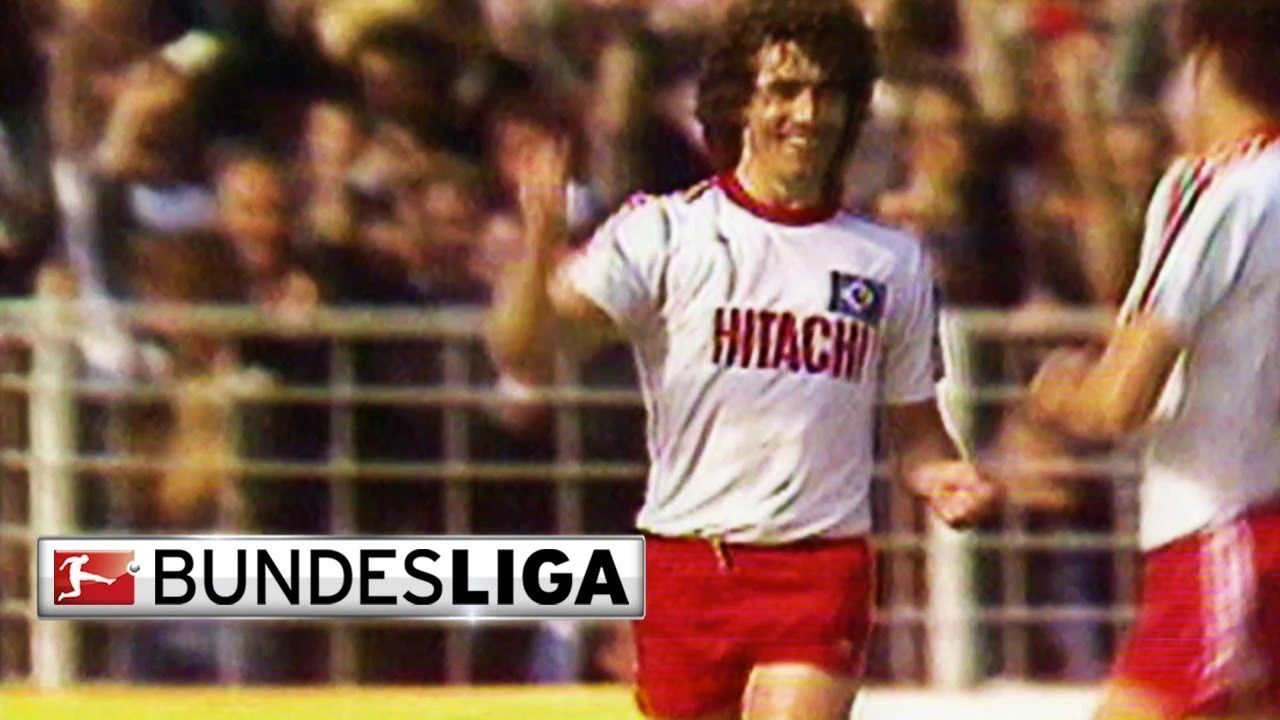
Keegan joined Hamburger SV in 1977. His first months in Germany were difficult: he felt isolated in the dressing room and had to adjust to a new language and football culture. After a disciplinary incident during a friendly, he resolved to learn German and integrate more fully with the team. Hamburg finished tenth in his first league season, but Keegan’s performances brought him the European Footballer of the Year award in 1978.
The following season brought both the Bundesliga title, Hamburg’s first in 19 years, and Keegan’s second successive award, now known as the Ballon d’Or. Hamburg reached the 1980 European Cup final, losing 1–0 to Nottingham Forest. Keegan left that summer for Southampton, where he scored 37 league goals in 68 appearances. In 1981–82 he scored 26 league goals, was named PFA Players’ Player of the Year and received the OBE for services to association football.
In 1982, he joined Newcastle United in the Second Division. The signing drew a huge welcome from supporters; Keegan later described playing in the club’s black and white shirt as a homecoming. He scored 48 league goals in 78 appearances and helped Newcastle win promotion in 1984. He announced his retirement as a player that year, although he briefly returned for two matches with Australia’s Blacktown City in 1985.
Keegan also played 63 times for England, scoring 21 goals. He captained the national side 31 times, including at the 1980 European Championship. England won the British Home Championship during his international career, but did not progress beyond the group stage at Euro 1980. He appeared as a substitute at the 1982 World Cup, his only appearance in the tournament, and retired from international football later that year.
Manager of Newcastle’s attacking sides
Keegan returned to Newcastle as manager in February 1992, when the club were near the bottom of the Second Division and in danger of dropping into the third tier. He steadied the side and rebuilt the squad. Newcastle began the following season with 11 successive wins, finished as First Division champions and secured promotion to the newly formed Premier League.
His team became known for its forward play. Newcastle finished third in 1993–94 and qualified for European competition. Two seasons later, they led the Premier League for much of the campaign before Manchester United overtook them. Keegan’s visible frustration during the title run-in became part of the public story of the season, but the football was just as memorable: Newcastle scored freely and turned the race into one of the defining contests of the league’s early years. He resigned in January 1997.
After managing Fulham, Keegan took charge of England in 1999. He guided the team through a qualifying play-off to reach Euro 2000, where it was eliminated in the group stage. He resigned in October that year after England lost to Germany in a World Cup qualifier at Wembley.
Keegan joined Manchester City in 2001, after the club’s relegation from the Premier League. City won the First Division title in his first season, scoring 108 league goals. They stayed in the Premier League for the next three seasons, with Keegan’s side producing a notable 4–3 FA Cup comeback against Tottenham in 2004 after trailing by three goals at half-time and having a player sent off. He left in March 2005.
He returned to Newcastle for a second spell in January 2008. The club finished 12th that season, but Keegan resigned in September after a dispute over his authority in player recruitment. A Premier League arbitration panel later ruled that Newcastle had constructively dismissed him by insisting on a signing he did not want. The ruling gave a precise context to his public argument that a manager must have the right to manage.
Recognition and remembrance
Keegan’s playing honours included three English league titles with Liverpool, a Bundesliga title with Hamburg, and two Ballon d’Or awards. He was appointed an Officer of the Order of the British Empire in 1982 and entered the inaugural English Football Hall of Fame in 2002. His managerial record included First Division title wins with Newcastle, Fulham and Manchester City.
He remained a prominent figure in football after leaving management, working as a pundit and appearing in television coverage of the sport. Keegan died from stomach cancer on 20 July 2026, aged 75. Tributes followed from the clubs he had represented and managed, as well as from former team-mates and players. His career had given each of those clubs a different version of him: a goalscorer at Liverpool, a celebrated signing at Newcastle, and a manager whose teams were expected to attack.
Why Kevin Keegan deserves a place in British Legacy
Keegan’s place in British football history rests on a rare combination of achievement and influence. As a player, he rose from Scunthorpe United to Liverpool, where he helped win the club’s first European Cup, then carried his success into Germany. Winning the Ballon d’Or in consecutive years made him an international star, while his later seasons at Southampton and Newcastle showed that his impact was not confined to one club or one period of his career. His England record—63 caps, 21 goals and 31 matches as captain—also made him a sustained presence in the national side.
As a manager, Keegan gave supporters a clear idea of how he wanted his teams to play: with ambition and an emphasis on scoring. Newcastle’s promotion in 1993 and title challenge in 1995–96 remain central chapters in the club’s modern story; his later promotion success at Manchester City helped return the club to the Premier League. His dispute with Newcastle over recruitment also brought an important question about a manager’s responsibility and authority into public view. Keegan’s legacy is therefore more than a list of medals. It includes the players and supporters drawn into his teams’ attacking football, the clubs whose fortunes he helped change, and a career that carried English football into a wider European conversation.
Sources
Kevin Keegan — Wikipedia, revision 1378967908
Adapted in part from Kevin Keegan by Wikipedia contributors, under CC BY-SA 4.0. Text has been edited and combined with the existing article; this adapted text is shared under the same licence. Contributor history.
.jpg)