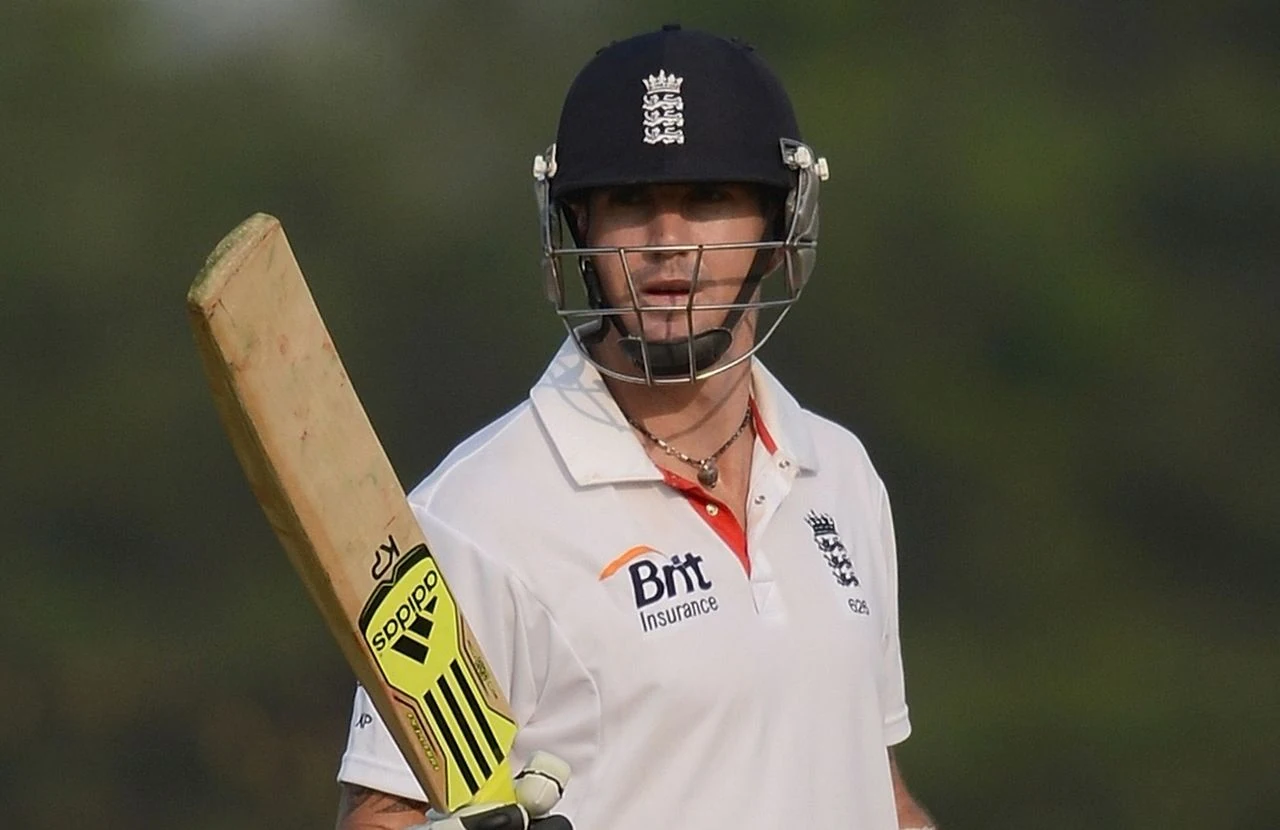
Kevin Pietersen’s England career was built on a tension: he was born in South Africa, but became one of England’s defining batters. His forceful strokeplay, appetite for risk and invention at the crease made him a match-winner and a distinctive figure in the modern game. In the 2010 World Twenty20, he helped England secure its first ICC trophy; in the 2005 Ashes, his century at The Oval helped complete a landmark series victory. His career also brought public disputes and a short, difficult spell as captain. The achievements and the friction belong to the same story.
A move that changed his cricketing path
Pietersen was born in Pietermaritzburg, South Africa, on 27 June 1980, to an English mother and an Afrikaner father. He attended Maritzburg College and made his first-class debut for Natal’s B team in 1997, aged 17. Initially regarded as an off-spinner and hard-hitting lower-order batter, he developed into a top-order player. A five-month spell with Cannock Cricket Club in England in 2000 preceded his move to Nottinghamshire, after coach Clive Rice invited him to join the county.
Pietersen had already voiced his unhappiness with South African cricket’s racial quota system, which he believed had cost him a place in the Natal side. His criticism of the system was part of his explanation for leaving his country of birth; it is a view attributed to him, rather than an uncontested account of why he moved. Under the rules governing his eligibility, his English ancestry and four years in county cricket made him available for England.
At Nottinghamshire, his first-class form quickly made an impression. He scored 1,275 runs in his first season at an average of 57.95, including an unbeaten 218. In 2003 he made 1,546 first-class runs, then scored 523 on the ECB National Academy’s tour of India. He debuted for England in one-day internationals against Zimbabwe in November 2004, almost as soon as his county qualifying period was complete. His early English career therefore involved two distinct achievements: establishing himself in county cricket and turning that success into an international place.
The Ashes century and a new batting language
Pietersen made his Test debut against Australia at Lord’s in July 2005. He scored half-centuries in both innings, despite England losing the match, and contributed throughout a tightly fought Ashes series. At The Oval, with the contest finely balanced, he made 158 in England’s second innings. He had been dropped several times before reaching his century, but went on to finish as the series’ leading run-scorer, with 473 runs. England drew the final Test and won the series, regaining the Ashes for the first time in 18 years.
The innings announced a batter who could take on a high-pressure occasion with power and invention. His range included the switch-hit, in which he changed from a right-handed to a left-handed stance while the bowler was approaching. The shot provoked debate about fairness and cricket’s laws. The Marylebone Cricket Club considered it and judged it legal under the existing laws. Pietersen’s stroke was not just a crowd-pleasing flourish: it prompted discussion about how the rules applied to a batter who could change stance so dramatically.
His record reflected both sustained output and rapid progress. He finished his Test career with 8,181 runs and 23 centuries, and made 4,440 runs in one-day internationals. He was one of the fastest players to 1,000 ODI runs and remains the record-holder for reaching 2,000 in that format. In Test cricket, he was the fastest by elapsed time to reach 4,000, 5,000 and 7,000 runs. He also became the first English batter since Graham Gooch in 1990 to make centuries in three successive Test innings on home soil, a sequence completed in 2006.
England captaincy, conflict and a return
In August 2008, after Michael Vaughan stepped down, Pietersen became England’s Test and ODI captain. He scored a century in his first Test as captain and England beat South Africa 4–0 in the one-day series. The appointment was short-lived. Disagreements with coach Peter Moores became public, and in January 2009 Moores was removed as coach while Pietersen resigned as captain. Pietersen later said he had not intended to resign and had been told that he was doing so. His account and the public dispute became part of a strained relationship with the England and Wales Cricket Board.
In 2012, another breakdown in relations followed a dispute over his international schedule and messages said to have been sent to members of the South African team. Pietersen announced his retirement from limited-overs internationals, then reversed that decision; England dropped him for the final Test against South Africa. He was subsequently reintegrated into the side and returned for the tour of India. There, he scored 338 runs in four Tests, including a century. The comeback showed that, even after conflict had put his place in doubt, his batting could still change a series.
His international career ended after the 2013–14 Ashes in Australia. England lost 5–0, although Pietersen finished as his side’s leading run-scorer in the series, with 294 runs. In February 2014, the ECB announced that he would not be selected for the forthcoming Caribbean tour. He had played for England in all three international formats between 2004 and 2014.
A defining tournament, and cricket beyond England
Pietersen’s most important team success after the Ashes came at the 2010 World Twenty20 in the West Indies. He scored 73 not out against Pakistan and 53 against South Africa in the Super Eights, then made 42 not out in the semi-final against Sri Lanka and 47 in the final against Australia. England won the final by seven wickets, securing the country’s first major ICC tournament victory. Pietersen was named Player of the Series, having scored 248 runs at an average of 62. His contribution was central to a team achievement, not a substitute for it.
County cricket remained part of his career. After Nottinghamshire, he joined Hampshire in 2004, then moved to Surrey, first on loan in 2010 and permanently from 2011. In 2015, he scored an unbeaten 355 for Surrey against Leicestershire, his highest first-class score. He returned to the club for the 2017 T20 Blast and announced that he would donate his earnings from that spell to rhino conservation. He also played franchise cricket in several countries, including for Royal Challengers Bangalore, Delhi Daredevils and the Melbourne Stars.
After his international playing career, Pietersen wrote about it in KP: The Autobiography, published in 2014. He later became involved in conservation work. He established Saving Our Rhinos Africa & India, a social enterprise supporting rhinoceros conservation, and opened Umganu Lodge near Kruger National Park in 2018. These activities extend his public life beyond cricket, while his playing record remains the clearest measure of his impact on England’s teams.
Why Kevin Pietersen deserves a place in British Legacy
Pietersen’s place in British sporting history rests on specific contributions to England cricket, not on a claim that he was born in Britain: he was born in South Africa and came to English county cricket before qualifying to represent England. For England, he made 104 Test appearances and scored more than 8,000 runs. His 158 at The Oval in 2005 was a defining innings in an Ashes victory, while his performances in the 2010 World Twenty20 helped England win its first major ICC tournament. Those achievements gave supporters two landmark moments in different formats and made his career part of the story of the national side.
His influence also showed in how batting could be played. The switch-hit brought a new, conspicuous option into top-level cricket and prompted the MCC to consider how the laws applied to a batter changing stance. His record-setting speed to significant ODI and Test milestones, alongside his success in county and international cricket, gives substance to the description of him as an exceptional batter. His career was not an uncomplicated model of leadership: his captaincy ended amid a dispute, and disagreements later brought his England career to a close. Including that difficulty makes his British legacy more complete. Pietersen’s story connects England’s county system, international success and debates about innovation, selection and authority within the game.
Sources
Kevin Pietersen — revision 1375670177
Adapted in part from Kevin Pietersen by Wikipedia contributors, under CC BY-SA 4.0. Text has been edited and combined with the existing article; this adapted text is shared under the same licence. Contributor history.