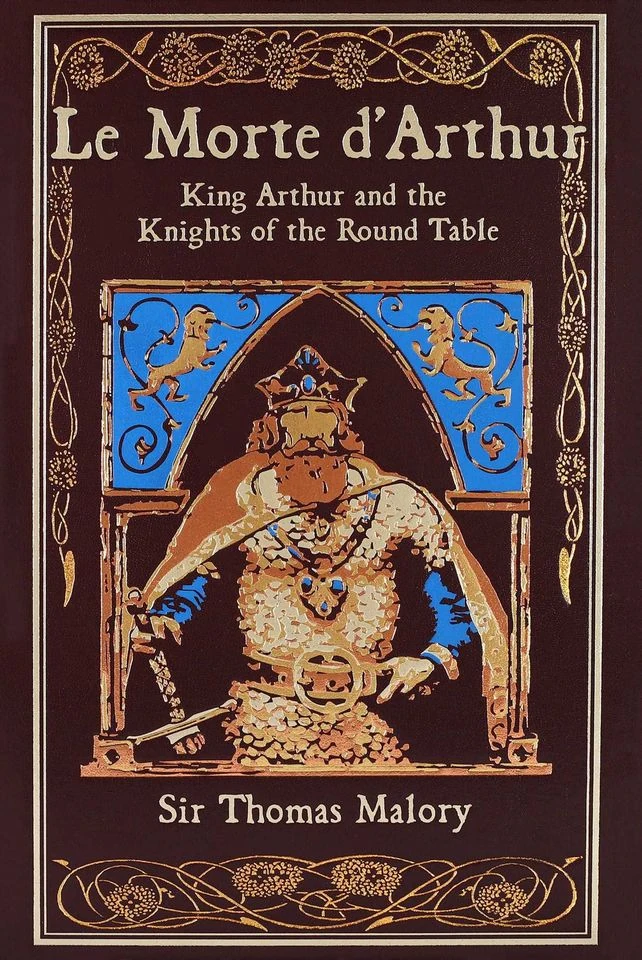
Le Morte d'Arthur by Sir Thomas Malory: A Pillar of British Literary Heritage
"Le Morte d'Arthur," penned by Sir Thomas Malory, stands as a monumental work in the realm of British literature. It is a timeless compilation that continues to enchant readers with its vivid tales of chivalry, heroism, and the enduring ideals of nobility and honour. As the definitive source for the legends of King Arthur, Merlin, and the Knights of the Round Table, this invaluable text has influenced countless generations and remains a cornerstone of British cultural heritage.
An Overview of "Le Morte d'Arthur"
"Le Morte d'Arthur," often translated as "The Death of Arthur," intricately weaves together the varied and disparate Arthurian legends into a cohesive narrative. Comprising twenty-one books, the work spans across the birth and rise of King Arthur, his establishment of the Knights of the Round Table, the romantic and tragic liaisons of Lancelot and Guinevere, the quest for the Holy Grail, and the eventual downfall of Arthur with his climactic battle against Mordred.
Malory's compilation does not shy away from exploring the darker themes of betrayal, jealousy, and the inevitable mortality of its characters, making it a rich tapestry of human emotions and experiences, set against the backdrop of medieval chivalry and mythical grandeur.
The Genesis of Malory's Masterpiece
"Le Morte d'Arthur" was written by Sir Thomas Malory during the 15th century. Malory, believed to have been a knight, compiled these tales while he was imprisoned. His sources included earlier French and English Arthurian romances, but Malory's unique vision and narrative skill stitched them together into an epic that claimed its own place in literary history. The work was first published posthumously in 1485 by William Caxton, the first English printer, who not only printed the book but also edited and provided a preface that further solidified its importance.
Enduring Success and Cultural Contribution
The success of "Le Morte d'Arthur" lies not only in its comprehensive retelling of the Arthurian legends but also in its profound impact on subsequent literature and arts. This work has been a wellspring of inspiration for poets, novelists, playwrights, and filmmakers. The themes of duty, love, and sacrifice it explores are universal and timeless, resonating deeply within the British ethos and beyond.
Malory's narrative afforded later writers like T.H. White (author of "The Once and Future King") a foundational text upon which to build and reinterpret these classic tales. The ideals enshrined in "Le Morte d'Arthur" helped mould the Victorian conception of chivalry, courtesy, and gallantry, further entrenching these archetypal stories in the collective consciousness.
Conclusion: A Timeless Legacy
"Le Morte d'Arthur" is much more than an anthology of medieval myths; it is a narrative that encapsulates the quintessence of British literary and moral tradition. Its enduring popularity and profound influence on both British and global culture affirm its place as a seminal work of literature. For anyone keen to delve into the legendary past and explore the rich tapestries of British heritage, this book is an indispensable read.
For those interested in purchasing a copy of "Le Morte d'Arthur," it is readily available on Amazon.
In celebrating Malory's magnum opus, we honour a legacy that has shaped and continues to inspire the moral and imaginative landscape of humanity.