
Lemn Sissay’s life as a writer began with a question of identity. Separated from his Ethiopian mother as a baby, he was given another name and grew up without the family history that should have been his. When he left care, a birth certificate and a letter from his mother helped him recover his name and begin a search for his family. The experience became material for poems, plays and memoir, but it did not define the limits of his work. Sissay has also written for public occasions, made radio programmes and helped create opportunities for other writers. His career connects a personal history with British cultural institutions, from a Manchester publishing co-operative to the London Olympics and the University of Manchester.[1]
A name recovered
Sissay was born on 21 May 1967 at Billinge Hospital in Wigan. His mother, Yemarshet Sissay, had come to Britain from Ethiopia in 1966. She was sent from Bracknell to a home for unmarried mothers in Lancashire to give birth, and a social worker arranged foster care for her son while she returned to complete her studies. The social worker named him Norman. His foster parents later wanted him to take the name Mark and their surname, Greenwood.
When Sissay was twelve, his foster parents placed him in a children’s home. Between the ages of twelve and seventeen he lived in four homes. On leaving care, he was given his birth certificate, which established that his legal name was Lemn Sissay and identified his mother. He also received a letter from 1968 in which she had asked for her son to be returned. The documents supplied facts that had been withheld from him and began his search for his family. He met his mother when he was twenty-one; she was then working for the United Nations in the Gambia.
That history gives context to the recurring concerns of Sissay’s writing: names, belonging, family and the power institutions hold over children’s lives. His work does not reduce those subjects to autobiography. Instead, personal testimony becomes a means of examining how care is experienced and remembered. In his 2005 drama Something Dark, he returned to the search for his family. He later adapted the work for BBC Radio 3; the radio version won the Commission for Racial Equality’s Race in the Media Award.
At seventeen, before he had a conventional route into publishing, Sissay used money from unemployment benefit to self-publish a poetry pamphlet, Perceptions of the Pen. He sold copies to striking miners in Lancashire. It was an early example of the way he would bring poetry to audiences beyond literary institutions: not simply as a private expression, but as a form of communication offered in a public setting.
Building a writing life in Manchester
Sissay moved from Atherton to Manchester at eighteen. At nineteen he worked as a literature development worker at Commonword, a community publishing co-operative, and established its Cultureword strand for Black and Asian writers. The work placed him in a city’s literary life at the same time as he was developing his own. It also gave his early career a collective dimension: he was helping to build a platform for writers as well as pursuing publication for himself.
His first book of poetry appeared in 1988, when he was twenty-one. It was followed by collections including Rebel Without Applause and Morning Breaks in the Elevator. Since the age of twenty-four, he has worked as a full-time writer and performed internationally. His writing has also crossed between forms. Alongside poetry, he has written plays and radio work, adapted Benjamin Zephaniah’s novel Refugee Boy for the stage and written Why I Don’t Hate White People. Later work includes Metamorphosis, created with Frantic Assembly.
His first dramatic work, Something Dark, shows how he has approached difficult material through form and performance. The play examines his search for family; its radio adaptation brought the story to a wider audience and received the Race in the Media Award. Sissay also made the BBC documentary Internal Flight about his life in 1995. These works share a concern with experience that can be obscured by official accounts. They do not offer a simple account of what happened; they make room for a person’s voice, memory and interpretation.
His writing for the stage has extended beyond his own story. The adaptation of Refugee Boy brought Zephaniah’s novel into theatre, while works such as Chaos by Design, Storm and Metamorphosis demonstrate a career that has not settled into one medium. The point is not that every work addresses the same subject. Rather, Sissay has repeatedly used performance to put ideas into a shared space, where an audience can encounter them together.
Poetry beyond the page
Sissay’s public work has taken poetry into places where it is encountered as part of everyday life. His poems have appeared in public settings in Britain and beyond, including London, Manchester, Huddersfield and Addis Ababa. In 2007 he became artist-in-residence at London’s Southbank Centre. He was the official poet of the 2012 London Olympics, a role that placed a working poet within a major public event and brought his writing to an audience beyond the usual readership for poetry collections.
That public presence has not been confined to ceremonial commissions. Sissay has worked with the British Council, and his writing has featured at the Royal Academy and the British Film Institute. He has appeared on television, including The South Bank Show and the BBC series Grumpy Old Men. He was also a patron of the Letterbox Club, which supports children in care, and became patron of Manchester community radio station ALL FM 96.9 in 2015. These connections show how his work has moved through arts organisations, broadcasting and community settings rather than staying within a single literary sphere.
Broadcasting has given Sissay another way to bring stories and ideas to listeners. He has made BBC radio documentaries about W. H. Auden, J. B. Priestley, Bob Marley, the Last Poets and Gil Scott-Heron. He has been a regular contributor to BBC Radio 4’s Saturday Live and has contributed to the BBC’s Book Panel. In 2015 he was the castaway on Desert Island Discs. The range of those programmes makes clear that his radio work is not limited to recounting his own history: it also reflects an interest in writers, musicians and the cultural forces that shape public life.
His writing and broadcasting have often joined a personal account to a wider question, but they are not interchangeable with campaigning. Sissay’s contribution comes through the craft of making a story, a poem or a performance work for an audience. His work can be direct without being a slogan, and it can examine difficult experience without treating suffering as the only thing worth hearing. The difference matters: the artistic form gives complexity, tone and room for response to subjects that can otherwise be flattened into debate.
Memoir, institutions and public responsibility
In 2019, Sissay published My Name Is Why, a memoir of his early life and an account of the British care system. Its title makes a question central: why was a child separated from his mother, renamed and left to discover the truth about his origins after leaving care? The book brings the personal record into public discussion without separating the individual experience from the institutions that shaped it. It adds to the work of Something Dark, but memoir gives readers a different form of access: sustained prose in which a life can be set out and considered in detail.
Sissay’s relationship with the University of Manchester brought another kind of public role. Elected chancellor in 2015, he held the post from 1 August that year until 31 July 2022. As chancellor, he used the role to launch a bursary in 2017 intended to increase the number of Black men entering careers in law and criminal justice. The initiative formed part of the university’s Black Lawyers Matter project. After his term ended, the university appointed him a Creative Manchester ambassador and Honorary Professor of Creative Writing.
He has also had a sustained connection with the Foundling Museum, becoming a Fellow in 2014 and joining its board of trustees in 2017. The museum’s focus on the history of children in care has a clear connection to the subjects of his writing. These appointments place Sissay within institutions, but their significance rests not only on titles. They show his experience and literary standing brought into settings where questions of education, opportunity and childhood are part of public responsibility.
His work has sometimes addressed his own treatment directly. In 2017 he staged The Report, based on a psychologist’s report concerning his early life and its effects. He brought a case against Wigan Council, which was settled in 2018 with a six-figure payment and a formal apology for the treatment he had suffered in care. That outcome belongs to the account of his life, but it should not obscure the wider shape of his career: he has made poems, plays, broadcasts and public work alongside his testimony.
Recognition and continuing work
In 2009, Sissay received an Honorary Doctor of Letters from the University of Huddersfield. He was appointed Member of the Order of the British Empire in the 2010 New Year Honours and Officer of the Order of the British Empire in the 2021 Birthday Honours, in both cases for services to literature and charity. In 2019 he won the PEN Pinter Prize, awarded to writers who take an unflinching view of the world. He was elected a Fellow of the Royal Society of Literature in 2022.
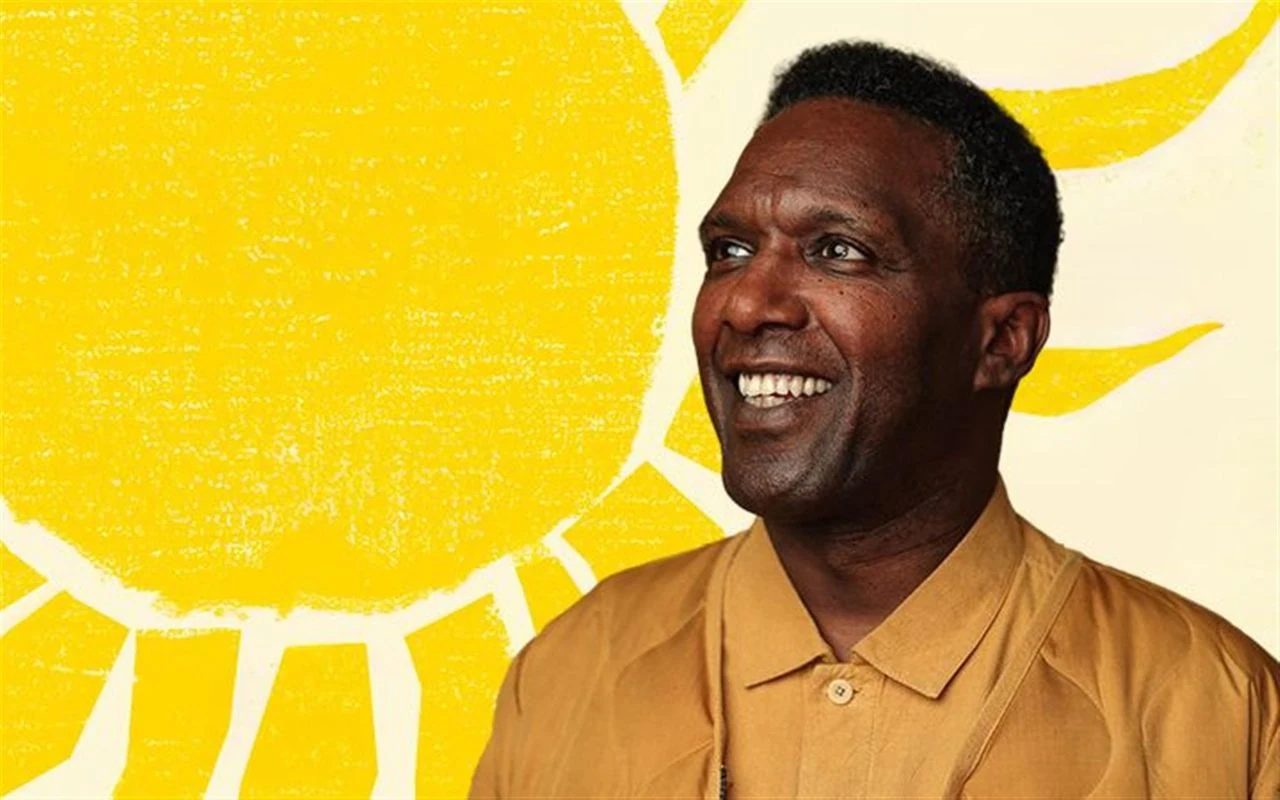
In 2023, he published Let the Light Pour In, a collection of short poems associated with a decade-long practice of writing at dawn. The collection offers a different measure of his range from the childhood memoir and family search. Its brief poems show that his work is not confined to testimony or public argument. Attention to ordinary moments and the act of returning to the page are also part of his writing life.
The honours and appointments record recognition across literature, broadcasting and public service, but the work itself remains the stronger measure. Sissay has published poetry since the 1980s, made work for radio and theatre, and continued to write across decades in which his public roles changed. His connection with Manchester has likewise extended from community publishing to the chancellorship of its university, while his Southbank and Olympic roles placed his work within national cultural events.
Why Lemn Sissay deserves a place in British Legacy
Lemn Sissay deserves a place in British Legacy because his writing has made questions of care, identity and belonging part of Britain’s literary and public conversation. His account of being separated from his mother, renamed and moved through children’s homes is specific to his life, yet his poems, plays and memoir give readers ways to consider what happens when institutions make decisions about children’s identities and futures. My Name Is Why and Something Dark do not merely recount a difficult history; they turn testimony into literature that can be read, heard and discussed. That achievement matters in a country whose care system is both a public responsibility and a lived reality for children and families.
His contribution is also practical and cultural. In Manchester, he helped establish Cultureword to support Black and Asian writers; in public life, he carried poetry to civic spaces and served as the official poet of the London Olympics. His work for the University of Manchester included launching a bursary intended to widen access to law and criminal justice careers, and his connection with the Foundling Museum has linked his experience to the history of children in care. These are distinct achievements, but together they show an artist working across the page, the stage and institutions. Sissay’s British legacy lies not simply in turning personal experience into art, but in using artistic skill to make public life more attentive to people whose stories have too often been recorded by others.
Sources
Adapted in part from Lemn Sissay by Wikipedia contributors, under CC BY-SA 4.0. Text has been edited and combined with the existing article; this adapted text is shared under the same licence. Contributor history.
.jpg)