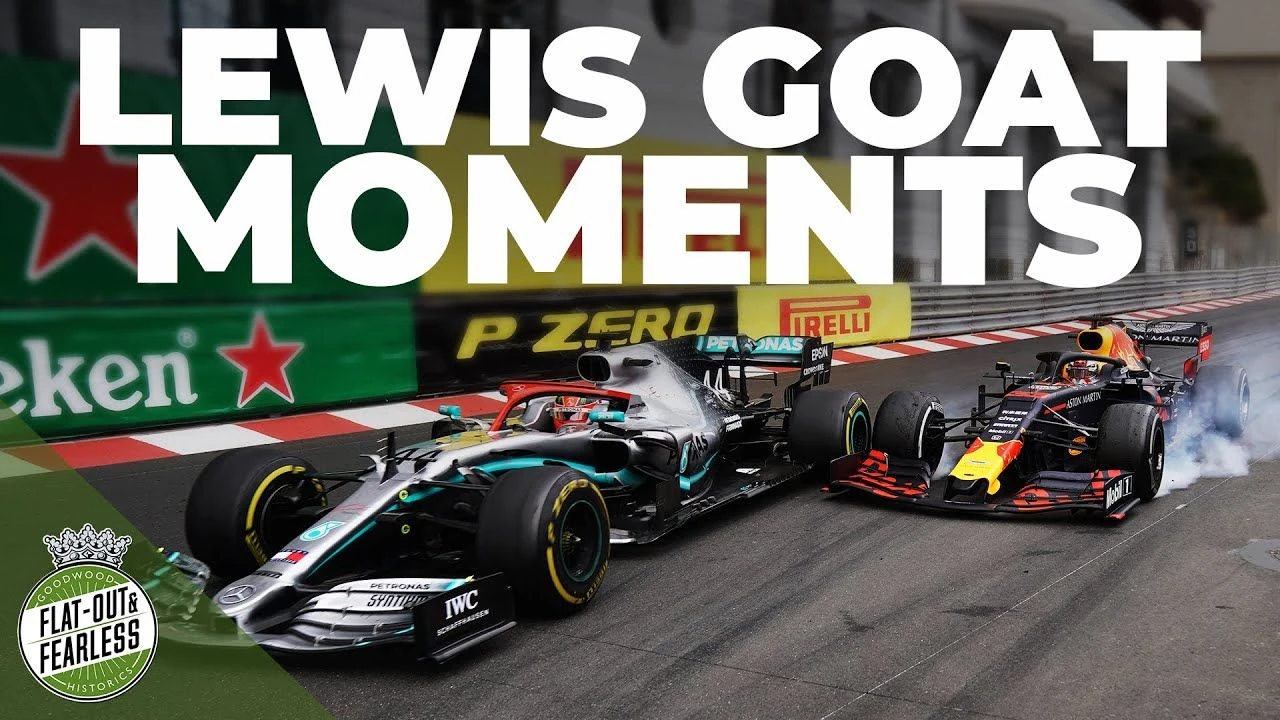
Lewis Hamilton’s Formula One career began with a striking debut: third place in the 2007 Australian Grand Prix, his first race for McLaren. He finished that season runner-up by a single point, then won the world title in 2008. The results made him one of the sport’s leading drivers; his subsequent work on diversity and racial justice has given his influence a reach beyond the circuit.
Stevenage, karting and an early McLaren connection
Born in Stevenage, Hertfordshire, on 7 January 1985, Hamilton began karting at six. His father, Anthony, worked multiple jobs to help fund his son’s racing and became his manager. Hamilton attended The John Henry Newman School in Stevenage and later studied at Cambridge Arts and Sciences, a sixth-form college.
At ten, after winning the British cadet karting championship, Hamilton approached McLaren team principal Ron Dennis for an autograph and said he wanted to race the team’s cars. Dennis kept his details. In 1998, following further karting successes, Hamilton joined the McLaren-Mercedes Young Driver Programme. He won the European karting championship in 2000, then moved through junior single-seater racing. His progression included the British Formula Renault title in 2003, the Formula 3 Euro Series championship in 2005 and the GP2 title in 2006.
That record earned him a place on McLaren’s Formula One team for 2007. He arrived alongside reigning champion Fernando Alonso and made an immediate impression. Four wins and a run of nine consecutive podiums from his debut helped him lead the championship during his first season. He and Alonso finished level on points, with Hamilton second and Kimi Räikkönen taking the title by one point.
McLaren: first title, then a new challenge
Hamilton secured his first world championship in 2008. At the final race in Brazil, he passed Timo Glock on the last lap to claim the fifth place he needed, beating Felipe Massa to the title by one point. At 23, he became the youngest champion at the time and the first British driver to win the championship since Damon Hill in 1996.
His next years with McLaren brought more wins but no further titles. In 2010, Hamilton was part of a four-driver championship contest, finishing fourth; he finished fifth in 2011 and fourth in 2012. He announced that he would leave McLaren for Mercedes at the end of that year, bringing a 15-year association with the team to a close. It was a consequential move: Mercedes had yet to establish itself as the dominant force it would become.
Mercedes and a record-equalling seven titles
Hamilton joined Mercedes in 2013, reuniting with former karting team-mate Nico Rosberg. He won the Hungarian Grand Prix in his first season with the team. New engine regulations in 2014 coincided with Mercedes’s rise, and Hamilton and Rosberg became fierce rivals as they shared the team’s success. Hamilton won his second title in 2014 and his third in 2015; Rosberg took the 2016 championship after a season-long contest.
After Rosberg retired, Valtteri Bottas became Hamilton’s team-mate. Hamilton won four consecutive championships from 2017 to 2020, overcoming title challenges from Ferrari’s Sebastian Vettel in 2017 and 2018. His seventh title, in 2020, equalled Michael Schumacher’s record. Hamilton also became the first Formula One driver to pass 100 race wins and 100 pole positions, milestones reached in 2021.
Hamilton’s Mercedes years included difficult campaigns as well as championships. In 2021, he lost the title to Max Verstappen after a disputed final race in Abu Dhabi. Mercedes struggled with its car under the regulations introduced in 2022, and Hamilton went without a win that season or in 2023. In 2024, he won the British Grand Prix for a record ninth time, ending a lengthy winless run. Before that season began, he had announced he would leave Mercedes for Ferrari in 2025.
Influence beyond the circuit
Hamilton has spoken about racism and the lack of diversity in Formula One, a sport in which he became the first Black driver to compete. He has described facing racist abuse, including as a young kart racer. In 2020, amid protests for racial justice, he took the knee before Grands Prix and criticised silence within the sport after the murder of George Floyd.
In June 2020, Hamilton established The Hamilton Commission with the Royal Academy of Engineering. Its purpose was to examine how motorsport could engage more Black people with science, technology, engineering and mathematics, and increase their opportunities in motorsport and engineering. In 2021, he founded Mission 44, a charity intended to support young people from under-represented backgrounds. He also launched Ignite with Mercedes, focused on widening access to education and opportunity in motorsport.
His public work has included other causes. Hamilton has supported UNICEF and Save the Children, and has spoken about environmental concerns and animal welfare. He adopted a vegan diet and, in 2020, said he aimed to become carbon neutral, citing changes to his household and office and the sale of his private jet. His interests have also extended into business, including the plant-based restaurant chain Neat Burger, which closed in 2025, and the Extreme E team X44, which he founded in 2020.
Recognition and a continuing career
Hamilton received an MBE in 2009 and was knighted in the 2021 New Year Honours for services to motorsport. Other recognition has included the BBC Sports Personality of the Year award in 2014 and 2020, and an honorary fellowship of the Royal Academy of Engineering in 2019. These honours sit alongside an unusually visible public profile for a racing driver, shaped by his achievements on track and his campaigning away from it.
His route from junior karting to the highest level of motor racing depended on both ability and sustained support. Hamilton’s father’s work helped him compete; McLaren’s young driver programme gave him a path into the sport; and the move to Mercedes placed him in a team capable of winning championships. His career also records the changing conditions of Formula One: periods of dominance, seasons in which the car was less competitive, and the pressure of fighting for a title against team-mates and rivals.
Why Lewis Hamilton deserves a place in British Legacy
Hamilton’s British story begins in Stevenage and runs through the country’s racing ladder: karting, junior formulae, a British Formula Renault championship and a place on a British-based team. His seven world titles, including his first in 2008 and the record-equalling seventh in 2020, place him among the most successful drivers in Formula One history. He has also set marks for race wins, pole positions and podiums. These are not simply numbers on a results sheet: they reflect a career sustained across different teams, regulations and competitive cycles.
His significance also lies in what he has done with the prominence that success brought. As Formula One’s first Black driver, Hamilton has made representation and racial justice visible subjects within a sport that he has criticised for its lack of diversity. The Hamilton Commission connected that challenge to practical questions of access to engineering and STEM education; Mission 44 and Ignite extend the effort to young people and opportunities in motorsport. These initiatives give his legacy a British dimension beyond sporting achievement: they use a British-born champion’s platform and partnerships with British institutions to encourage broader participation. Hamilton belongs in British Legacy both for changing the record books and for asking who gets a chance to write the next chapter of the sport.
Sources
Lewis Hamilton — Wikipedia revision 1379637121
Adapted in part from Lewis Hamilton by Wikipedia contributors, under CC BY-SA 4.0. Text has been edited and combined with the existing article; this adapted text is shared under the same licence. Contributor history.