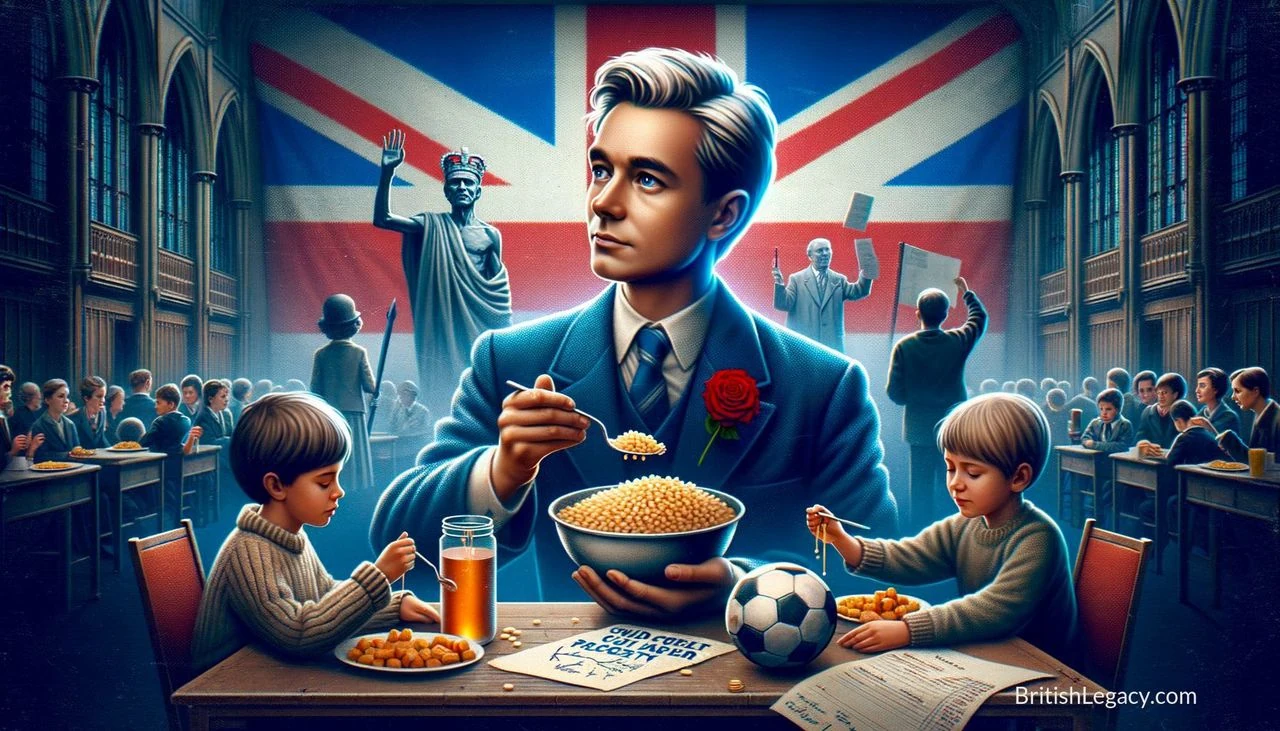
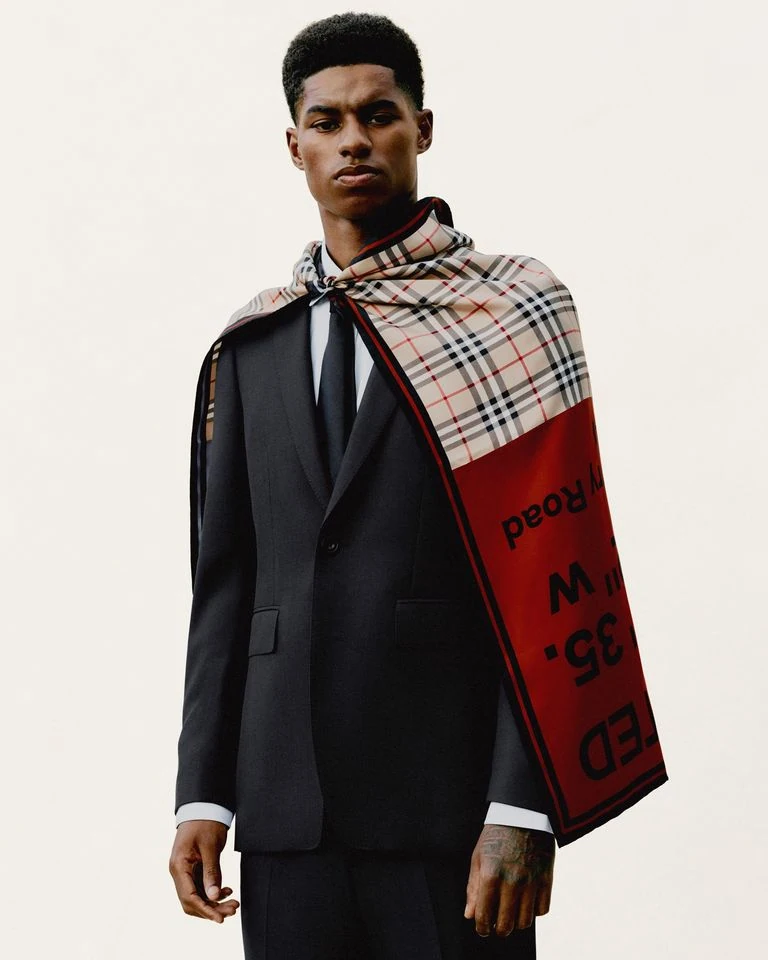
In June 2020, Marcus Rashford asked the government to keep free school meal support available during the summer holidays. He was 22, a Manchester United forward and an England international. His open letter drew on the experience of growing up in a family where his mother sometimes went without food so her children could eat. The government changed course the next day, announcing a summer food fund. Rashford had not invented the campaign against holiday hunger, but his intervention gave it a high-profile, specific demand and helped make children’s access to food a matter of national debate.
His influence rested on more than celebrity. Rashford had come through Manchester United’s youth system, made an extraordinary first-team entrance and established himself as an England player. He used that platform first to support food provision during the COVID-19 lockdown, then to press for wider action on child poverty. His work also reached beyond food, through a book club intended to put free books into children’s hands. The result is a story in which football achievement and public campaigning meet, while remaining distinct parts of his life.
A Manchester upbringing and a place in United’s academy
Marcus Rashford was born in Manchester on 31 October 1997 and grew up in Fallowfield, Withington and Wythenshawe. He came from a working-class family. His mother, Melanie Maynard, worked several jobs and sometimes skipped meals to make sure her children had enough to eat. That experience gives context to his later campaigning, though it should not be reduced to a simple origin story: food poverty was a public issue long before Rashford took it up, and he worked alongside charities and campaigners already addressing it.
He began playing football for Fletcher Moss Rangers at five, initially as a goalkeeper. Manchester United signed him to its academy when he was seven. Getting to training was not always straightforward while members of his family were at work; youth coaches helped arrange lifts. At 11, he became the youngest player selected for the club’s Schoolboy Scholars scheme, which was usually for older boys. The route from local football to a major club was not effortless, but the academy gave him a setting in which to develop.
Rashford attended Ashton-on-Mersey School and studied for a BTEC National Diploma in Sport. At United he progressed through the youth teams and was made captain of the Under-19 side. He had trained with the first team before his senior debut, and was named among the substitutes for league matches in November 2015. An injury crisis then opened a place in the senior side. When Anthony Martial was hurt in the warm-up before a Europa League match against Midtjylland on 25 February 2016, Rashford was brought into the starting line-up.
A remarkable arrival in senior football
Rashford scored twice in United’s 5–1 win over Midtjylland, making his first-team and European debut in the same match. Three days later, he scored another two goals on his Premier League debut, against Arsenal, and assisted a further goal in United’s 3–2 victory. In March he scored the only goal in a Manchester derby, becoming the youngest scorer in the Premier League era of that fixture. At the end of his first senior season, he had helped United win the FA Cup and received the club’s Jimmy Murphy Young Player of the Year award.
The early burst was not the whole of his career. Rashford became a regular in a United side that won the League Cup and Europa League in 2016–17. He developed into a forward able to play through the middle or from the left, and scored on his debuts in several competitions. His 2022–23 season brought 30 goals in all competitions; United’s supporters and players named him the Sir Matt Busby Player of the Year and Players’ Player of the Year. He also won the League Cup that season. His honours with United include two FA Cups, two League Cups, the Community Shield and the Europa League.
England called him up in 2016, and he scored on his senior debut against Australia on 27 May, aged 18. He became the youngest English player to score on a senior international debut. Days later he was included in England’s squad for the European Championship in France, becoming the youngest English player to appear at a European Championship. He went on to represent England at the 2018 World Cup and Euro 2020. In the latter tournament he came on during the final against Italy and took a penalty in the shoot-out, which England lost. For the 2022 World Cup in Qatar, he scored three times, including twice against Wales. These moments are part of the sporting record that made his public voice difficult to ignore.
From food deliveries to a government decision
During the first COVID-19 lockdown in 2020, children who had relied on school meals faced losing access to that provision while schools were closed. Rashford contacted FareShare, a food redistribution charity, initially intending to make a substantial donation. After speaking with its chief executive, Lindsay Boswell, he offered his wider support. The initiative aimed to provide food to children around the country who would otherwise have received free school meals. Rashford said in June that the effort had supplied three million meals; the reported figure rose to four million the following month.
On 15 June, Rashford published an open letter urging the government to extend free school meal support through the summer holiday. He described the effect of hardship on his family and asked decision-makers to consider the children who would otherwise go without. The following day, the government announced the Covid Summer Food Fund, which provided vouchers for eligible pupils during the six-week holiday. Rashford’s campaign was credited as a major factor in the change. Other charities, teachers and advocates had also pressed for support; the outcome belonged to a wider effort, even as Rashford’s intervention brought exceptional public attention to it.
The episode showed the force of a clear, practical demand. Rashford was not simply asking people to care about poverty. He called for a particular form of support, for a particular group of children, at a moment when the loss of school provision was immediate. That focus helped move discussion from general sympathy to a decision about policy and delivery.
In September 2020, Rashford helped establish the Child Food Poverty Task Force with the Food Foundation, charities and food businesses. Its campaign drew on recommendations associated with the National Food Strategy: expanding eligibility for free school meals, supporting holiday provision and increasing Healthy Start support. The shift from emergency food assistance to broader recommendations mattered. A summer voucher scheme could address a pressing gap, but it could not on its own settle the wider question of how families were to afford food.
Rashford also launched a parliamentary petition calling for action on child food poverty. Parliament’s archived record shows that it received more than 1.1 million signatures before closing in April 2021. Its demands included extending free school meal provision, providing food and activities in school holidays, and increasing Healthy Start vouchers. In November 2020, the government announced a package of support for families, including the national rollout of the Holiday Activities and Food programme and increased Healthy Start support. The Food Foundation later described the campaign as helping to secure a package worth almost £400 million over 12 months.
The Holiday Activities and Food programme combined meals with activities during school holidays. By 2021, the government was promoting its expansion with funding of up to £220 million. Rashford was not the sole architect of that policy, nor did one campaign remove the causes of poverty. But his work helped keep holiday food provision in public view and brought political pressure to bear on the question of what support children should receive outside term time.
Books, public recognition and the limits of a campaign
Rashford’s work also included efforts to make books more accessible. The Marcus Rashford Book Club, developed with Macmillan Children’s Books and Magic Breakfast, planned to distribute 50,000 free books through schools. The initiative was intended to reach children in more than 850 primary schools across England and Scotland. Its focus was different from food provision, but it shared an interest in widening children’s opportunities through practical support rather than relying on goodwill alone.
In 2020, Rashford was appointed a Member of the Order of the British Empire for services to vulnerable children in the UK during the COVID-19 pandemic. The University of Manchester later awarded him an honorary degree in recognition of his charity work and campaign against child poverty, with the degree conferred at a ceremony at Old Trafford in October 2021. These recognitions marked a rare crossing between sporting and civic achievement. They do not by themselves measure the effects of a campaign, but they show how institutions acknowledged his work beyond football.
There is a useful distinction between winning attention and securing lasting change. Rashford’s profile helped bring the issue into the public conversation; charities, local authorities, schools and government were also involved in delivering support. The schemes and funding described here offered forms of assistance, not a permanent answer to child poverty. Rashford’s campaigning was significant partly because it made that wider problem harder to treat as an abstract statistic, and partly because it connected public attention to specific proposals.
Why Marcus Rashford deserves a place in British Legacy
Marcus Rashford deserves a place in British Legacy for achievements that are both distinct and connected. As a footballer, he made an exceptional entrance into senior sport: two goals on his Manchester United debut, two more on his Premier League debut three days later, and a goal on his England debut. He became a key figure in United sides that won major trophies, and his 30-goal season in 2022–23 demonstrated the scale of his contribution at club level. Those accomplishments explain the reach of his public voice, but they are not the reason alone to remember him.
His campaigning gave that reach a practical use. During the pandemic, he backed FareShare’s work to provide meals to children and pressed successfully for free school meal support to continue over the summer of 2020. He then helped build pressure for broader action, including holiday provision and increased Healthy Start support. His part in those changes should be understood alongside the work of charities, teachers, businesses, campaigners and public bodies; it should not be mistaken for a claim that one person solved child poverty. The book club extended his concern for children’s opportunity into literacy, with free books intended for schools in England and Scotland.
The British connection is specific: Rashford’s story begins in Manchester, develops through one of the city’s defining football institutions, and reaches national policy debates about children’s welfare. It joins local experience to public action without suggesting that sport and government are the same. His legacy lies in showing how a high-profile athlete can use a well-defined request to help move a public issue towards decisions and resources. The meals supported, policy changes pursued and books distributed are concrete parts of that record. So is the example of a young man who used personal knowledge of hardship not as a claim to speak for every family, but as a reason to insist that their needs be taken seriously.
Sources
Marcus Rashford — revision 1375675611
Adapted in part from Marcus Rashford by Wikipedia contributors, under CC BY-SA 4.0. Text has been edited and combined with the existing article; this adapted text is shared under the same licence. Contributor history.