
Mark Cavendish’s sprinting career reached its defining moment in 2024, when he won a record-breaking 35th stage of the Tour de France. The victory put him ahead of Eddy Merckx on the race’s all-time stage-win list, a record they had shared since Cavendish’s 2021 comeback. It was the latest chapter in a career that had taken him from the Isle of Man to world titles on both the road and track, Olympic silver and victories in all three Grand Tours.
From Douglas to the Olympic Academy
Born in Douglas, Isle of Man, on 21 May 1985, Cavendish began racing BMX as a child and joined his local cycling club at nine. He later recalled asking for a mountain bike for his thirteenth birthday and beating the other riders the next day. After leaving school, he worked in a bank for two years to help fund his ambition of becoming a professional cyclist.
In 2003, he became one of the first six riders selected for British Cycling’s Olympic Academy for junior riders. His place was not automatic: coaches argued for his inclusion despite his relatively poor results in stationary-bike tests. He recorded his first senior win in 2004, in the Girvan Three Day race, where he recovered after being dropped on a climb and won the finishing sprint. He also won two gold medals at the 2003 Island Games, representing the Isle of Man.
Cavendish’s early success came on the track. Riding for Great Britain, he won the madison at the 2005 UCI Track Cycling World Championships with Rob Hayles, then repeated the title with Bradley Wiggins in 2008. He later returned to track racing after several years away, winning the madison with Wiggins again in 2016. That year he also won silver in the Olympic omnium at Rio de Janeiro: his first Olympic medal, after missing out at the 2008 Games.
A road sprinter takes shape
Cavendish turned professional in 2005 with Team Sparkasse and made an immediate impression, recording 11 wins in his first professional season. His breakthrough on the road continued with a win at the Scheldeprijs in 2007. The following year he claimed his first Grand Tour stage victories, winning twice at the Giro d’Italia and four times at the Tour de France.
In 2009 he won Milan–San Remo, one of cycling’s five Monuments, and took six Tour de France stages. His partnership with lead-out rider Mark Renshaw helped him deliver a series of fast, well-timed finishes. At the Tour, his stage wins brought his total to eight, then a British record. The following year he won five Tour stages and four at the Vuelta a España, where he also took the points classification.
His first road world title came in 2011. Racing for Great Britain in Copenhagen, Cavendish won the road race in a sprint finish, becoming the second British man to take the title after Tom Simpson. That season he also won five stages of the Tour de France and became the first British rider to win its points classification. He received the BBC Sports Personality of the Year Award and was appointed an MBE for services to British cycling.
Tour victories, setbacks and a return
In 2012 Cavendish joined Team Sky. He won the Tour de France’s final stage on the Champs-Élysées for a fourth consecutive year, but at the London Olympics the British team could not bring back a large breakaway. Cavendish finished 29th in the road race. He moved to Omega Pharma–Quick-Step for 2013, winning the Giro d’Italia points classification and the British national road race title. At the Giro, he became the fifth rider to win the points classification in all three Grand Tours.
In 2014, he crashed during the Tour de France’s opening-stage sprint in Yorkshire and withdrew with a separated shoulder. Further injuries interrupted later seasons. In 2016, he returned to the Tour with four stage wins, wore the yellow jersey for the first time and won Olympic silver in the omnium. His road world-championship result that year was silver, not a second road-race title; his second road world title had come in 2011.
Health problems, including Epstein–Barr virus, and crashes disrupted the years that followed. After missing the Tour in 2019, he rejoined Deceuninck–Quick-Step in 2021. Four stage wins that year brought him level with Merckx at 34, and he won the Tour’s points classification for a second time, a decade after his first. He had returned to the race after a difficult period and was again among its most successful sprinters.
The record, and the final seasons
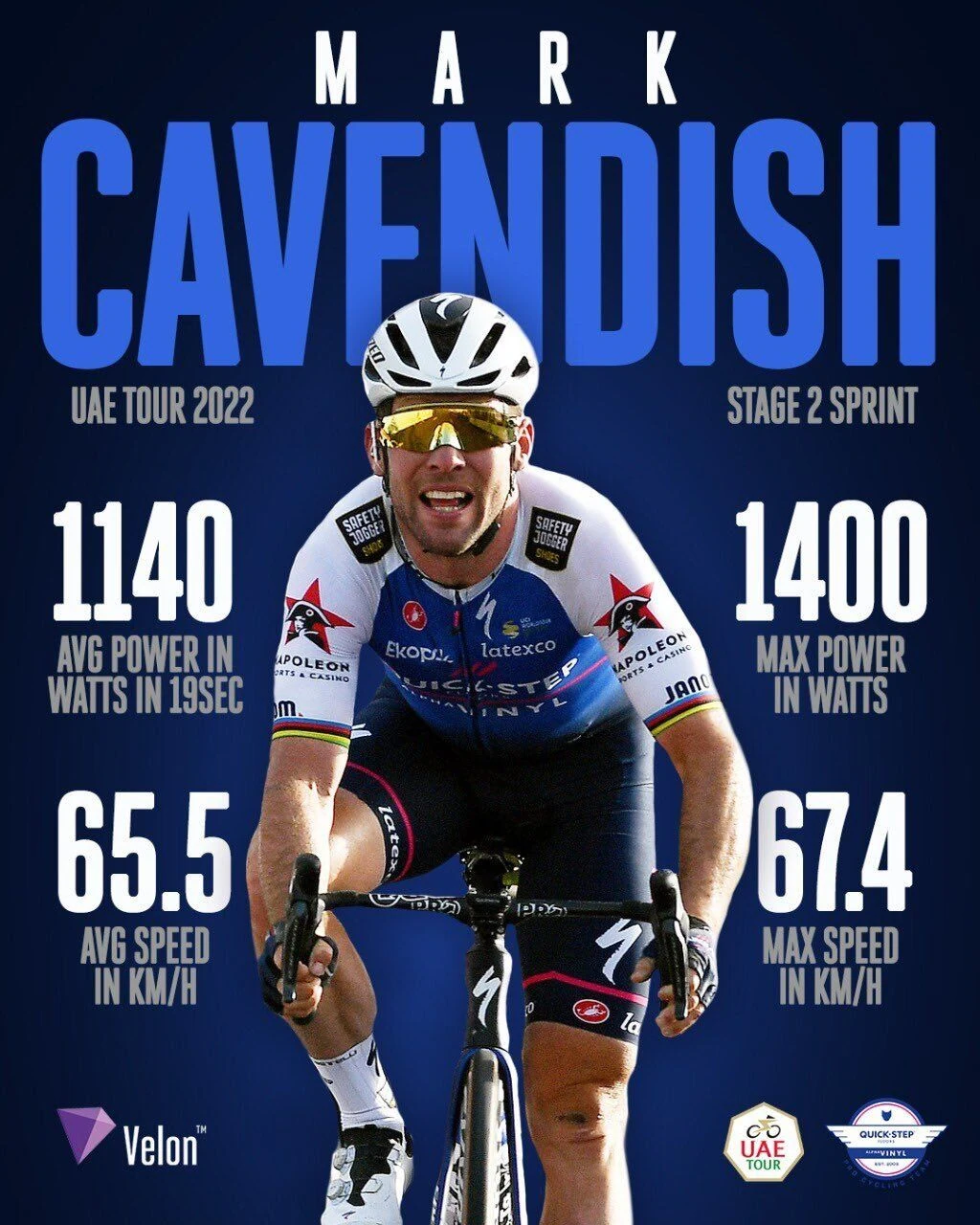
Cavendish returned to the Giro d’Italia in 2022 and won a stage, then claimed his second British national road race title. In 2023, after announcing that he planned to retire, he won the Giro’s final stage in Rome. He later changed his mind and stayed with Astana Qazaqstan Team for another season to pursue the Tour record.
At the 2024 Tour de France, he won stage five to take his 35th stage victory. The result broke the record he had shared with Merckx. Cavendish was knighted in the 2024 Birthday Honours for services to cycling and charity work, receiving the KBE at Windsor Castle in October. He finished his career with 165 professional victories and received the BBC Sports Personality of the Year Lifetime Achievement Award.
Why Mark Cavendish deserves a place in British Legacy
Cavendish’s place in British sporting history rests on achievements that can be counted as well as remembered. He won the Tour de France’s points classification twice, claimed 35 stages across 2008–24 and became the race’s outright record holder. His 2011 road world title came while representing Great Britain; his three world madison titles and Olympic silver show a career that also reached the highest level on the track. Those results made him an important figure in British cycling without requiring grand claims about national influence.
His story also gives that record its shape. After a rapid start as a professional, Cavendish built his reputation through sprint finishes, including a run of Tour wins on the Champs-Élysées. Injuries and illness interrupted his career, and in 2021 he returned to win four Tour stages and share the record once more. He then came back to the race in 2024 and surpassed it. His MBE and KBE recognise services to cycling, while his Olympic and world-championship results show the breadth of his success. For British Legacy, his career is a specific account of sustained achievement: a Manx cyclist who raced for Great Britain, won on road and track, and set a Tour de France record that his own comeback made possible.
Sources
Mark Cavendish — revision 1379118761 · Mark Cavendish
Adapted in part from Mark Cavendish by Wikipedia contributors, under CC BY-SA 4.0. Text has been edited and combined with the existing article; this adapted text is shared under the same licence. Contributor history.
.jpg)