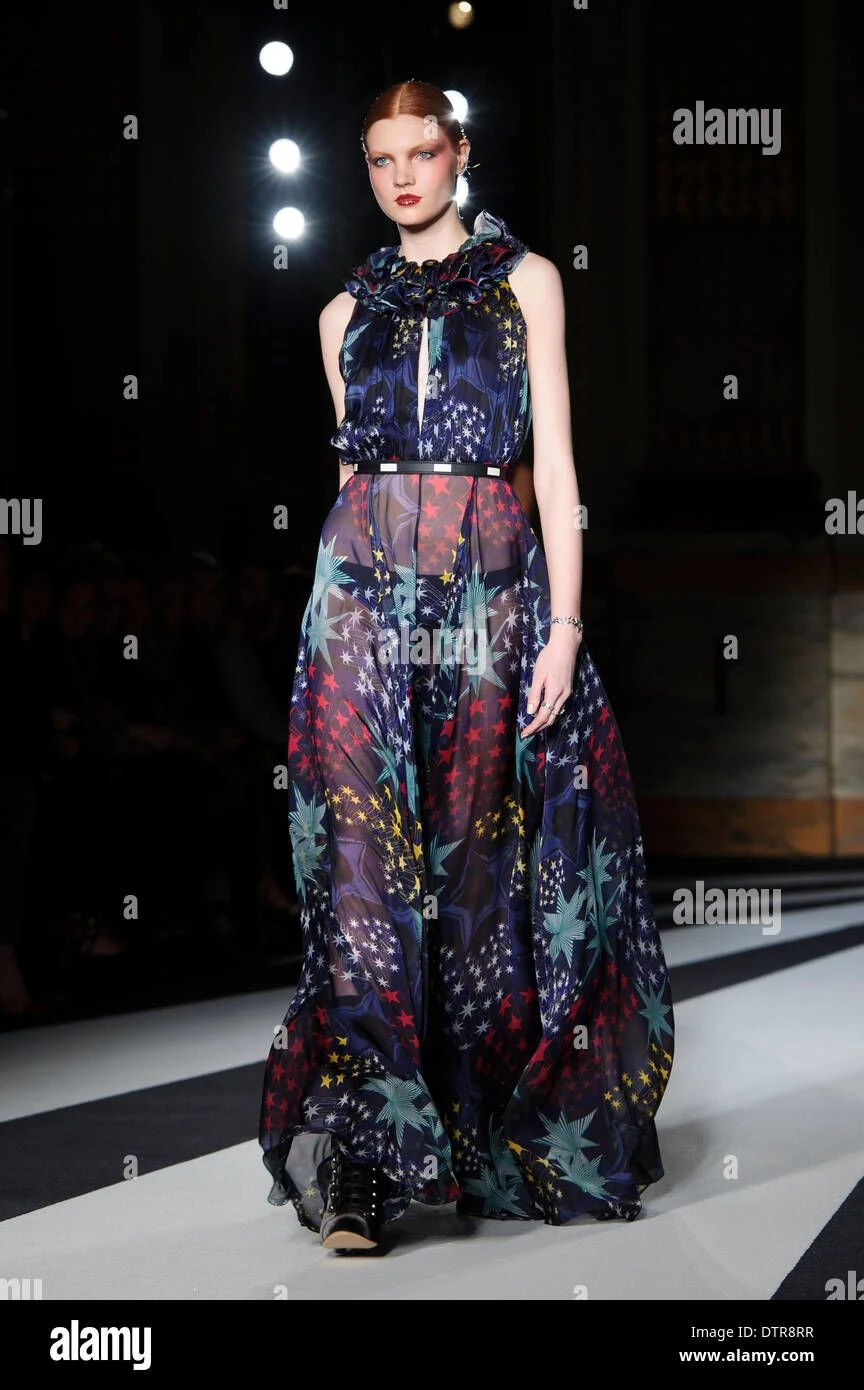
Matthew Williamson’s fashion career began in 1997 with a collection called Electric Angels and a strong visual signature: bold colour, elaborate detail and a bohemian sensibility. The launch helped establish his eponymous label, but the story did not stop at the catwalk. Over the following decades he designed for Pucci, developed collections for his own brand and extended his work into interiors, homeware and other collaborations.
Manchester beginnings and London training
Williamson was born in Manchester in 1971. He studied at Loreto College until the age of 17, then moved to London to attend Central Saint Martin’s College of Art and Design. He graduated in 1994. Those years gave him formal design training before the first major public step in a career that would move between fashion and interiors.
In February 1997, Williamson and Joseph Velosa founded the Matthew Williamson fashion house. Later that year, Williamson presented Electric Angels at London Fashion Week. The collection’s peacock feathers, vibrant colours and embellishment made a striking introduction. The original article names Naomi Campbell, Kate Moss and Helena Christensen among the models who appeared in the show; the collection’s title and debut at London Fashion Week mark the important career milestone.
Williamson’s work was not confined to London for long. His collections were shown during New York Fashion Week from 2002, and in 2004 he opened a store at 28 Bruton Street in Mayfair. In 2005 he launched a perfume range, widening the label’s presence beyond clothing. These developments show a designer building a recognisable identity across different forms of presentation and retail, rather than relying on a single annual runway moment.
A label and a creative-director role
Alongside his own label, Williamson took on a major role at the Italian fashion house Pucci. He served as its creative director from 2006 to 2008, succeeding Christian Lacroix. In September 2008 he returned to London full-time to concentrate on forthcoming projects and the expansion of his own label. The two-year Pucci appointment placed his work within an established international house, while his return signalled a renewed focus on the business carrying his name.
His career also intersected with music and publishing. In 2007, a runway show of his designs was incorporated into the video for Prince’s song “Chelsea Rodgers”, from the album Planet Earth. In 2010, Williamson introduced his first men’s capsule collection at retail. That autumn, Rizzoli published a book devoted to his work, written by Colin McDowell with a foreword by Sienna Miller and contributions from Anna Wintour, Alexandra Shulman and Diane von Fürstenberg. A photographic exhibition at Somerset House accompanied its launch.
In 2011, a licensing agreement with Italy’s Mariella Burani Fashion Group led to MW by Matthew Williamson, a diffusion line. The following year, the 15th anniversary of his career was marked by XV, a short film made in association with Swarovski and featuring friends of the brand, including Sienna Miller, Andrea Riseborough and Poppy Delevingne. The project was presented alongside a limited-edition Swarovski collection of crystal dresses.
From clothing to homes and public spaces
Interiors became an increasingly substantial part of Williamson’s work. In 2013 he began a collaboration with Osborne & Little on furnishing fabrics and wallpapers. Its later collections included Samana in 2014 and Cubana in 2015. In 2016 he created his first furniture collection with Duresta and worked with the United States homeware brand CB2. His other collaborations included sunglasses with Linda Farrow and products with The Rug Company.
Williamson’s interest in home design also reached beyond furnishing products. In 2022 he created a homeware collection for John Lewis, including wallpapers, bedding, cushions, towels, mirrors, lighting and candles. The collection brought his use of bold colour and botanical patterns into everyday domestic settings. That year he also designed the Birmingham location of The Cocktail Club, using patterned furnishings and decorative details to shape the interior.
In 2023 he designed the Design Kitchen, a dining space at the Design Museum in Kensington. The project brought him into close work with UK-based artisans and set soft leather furnishings against the museum building’s minimalist, industrial character. That year he also collaborated with British footwear and accessories brand Kurt Geiger on a limited-edition summer collection. Its products ranged from handbags, shoes and jewellery to beachwear and furnishings, united by prints created for the project.
Other work has included television and books. Williamson appeared as a guest on the seventh season of Project Runway in 2010 and later became a guest judge on BBC Two’s Interior Design Masters. In 2023 he published Living Bright: Fashioning Colourful Interiors, a book about applying colour to domestic spaces. These activities extended his public role from designer to commentator on how design choices can work in a home.
Recognition and a changing business
The Design Museum presented a retrospective, Matthew Williamson – 10 years in Fashion, in 2007. At the British Fashion Awards in 2008, he received the Red Carpet Designer accolade. He was also nominated three times for Designer of the Year at those awards. Together, the exhibition and award record document recognition of his fashion work, while his later collaborations demonstrate how his design practice widened into other settings.
By 2015, Williamson had moved to selling his brand’s collections online, with a renewed emphasis on licensing, and closed his London flagship. That change forms part of the career’s chronology: the label’s work continued, but its retail approach shifted away from a central London store. His practice now spans clothing and products for the home, as well as designed interiors and projects made with other brands.
Why Matthew Williamson deserves a place in British Legacy
Williamson’s place in British Legacy rests on a career that began in the British fashion system and repeatedly carried its work into new contexts. He trained at Central Saint Martin’s in London, established his fashion house with Joseph Velosa and made his debut at London Fashion Week in 1997. His subsequent appointment at Pucci and the presentation of his collections in New York show how a designer based in the British fashion world could work across international stages without abandoning his own label.
His contribution is also visible beyond clothing. Through collaborations with Osborne & Little, Duresta and John Lewis, Williamson’s design language entered homes; projects for the Design Museum and The Cocktail Club applied it to public interiors. His work with UK-based artisans on the Design Kitchen and his collaboration with British brand Kurt Geiger provide specific examples of that continuing connection to British design and production. The shift from a flagship shop to online sales and licensing is part of the record too: it shows a practice adapting its routes to an audience. Williamson’s legacy is therefore not simply a signature look, but a sustained movement between fashion, objects and spaces, with British training, institutions and collaborators central to the story.
Sources
Matthew Williamson — Wikipedia, revision 1375833687
Adapted in part from Matthew Williamson by Wikipedia contributors, under CC BY-SA 4.0. Text has been edited and combined with the existing article; this adapted text is shared under the same licence. Contributor history.