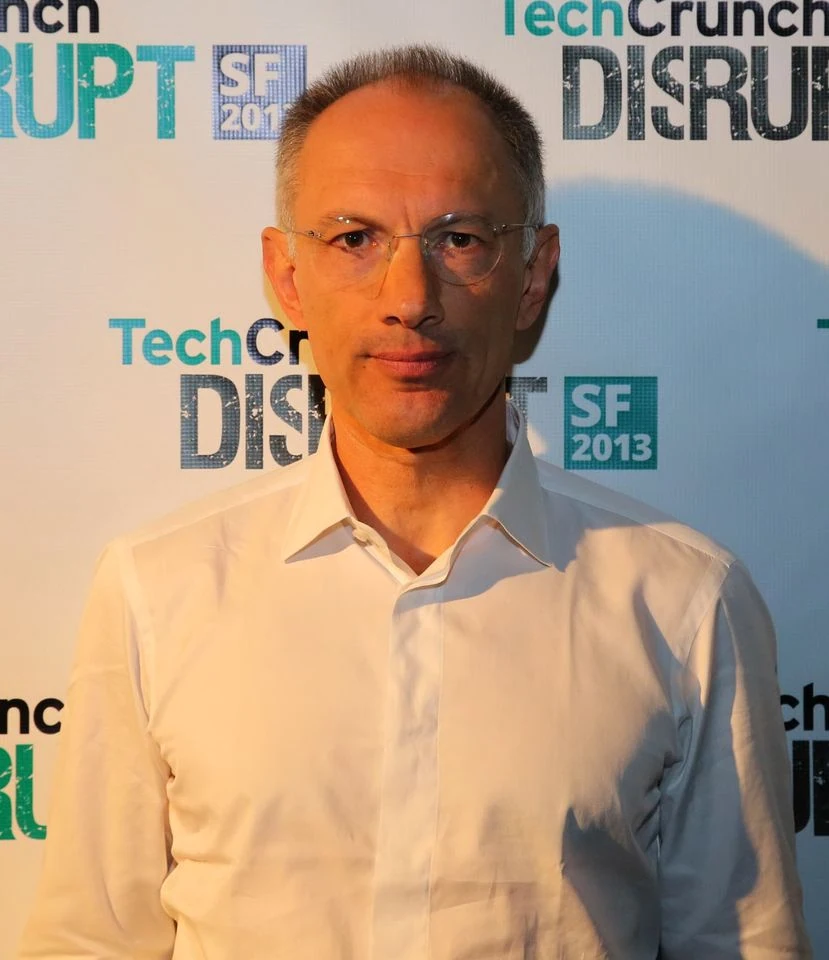
Michael Moritz’s career has crossed two distinct worlds: technology investment in Silicon Valley and philanthropy in Britain. Born in Cardiff, he studied history at Oxford before earning an MBA in the United States. He later became a partner at Sequoia Capital, investing in technology companies including Google, Yahoo!, PayPal and LinkedIn. His gifts to Oxford, including £75 million for scholarships for students from lower-income families, have brought a substantial part of his success back to the university where he studied.
Cardiff, Oxford and a career in journalism
Moritz was born in Cardiff on 12 September 1954. His parents, Ludwig and Doris Moritz, had fled Nazi Germany. His father became a professor of Classics at Cardiff University and later its vice-principal for administration. Michael attended Howardian High School and went on to study history at Christ Church, Oxford. In 1978, he completed an MBA at the Wharton School of the University of Pennsylvania as a Thouron scholar.
Before entering venture capital, Moritz worked as a journalist. He joined Time magazine and, in the early 1980s, was commissioned by Steve Jobs to document the development of the Macintosh computer. The project became The Little Kingdom: The Private Story of Apple Computer, published in 1984. Moritz later returned to the subject in Return to the Little Kingdom, a revised and expanded account published in 2009.
His relationship with Jobs became strained after Time published its 1982 Person of the Year issue, which focused on the computer rather than an individual. Moritz later described the issue as a source of anger for both of them. The episode forms part of the background to his book: it also marked a break between the journalist and the company whose early history he had set out to record.
From reporting to Silicon Valley investment
After leaving Time, Moritz co-founded Technologic Partners, a technology newsletter and conference company. In 1986, he joined Sequoia Capital, having co-written Going for Broke: The Chrysler Story with Time journalist Barrett Seaman. He went on to become one of the firm’s best-known investors.
Among the companies associated with his investments were Google, Yahoo!, PayPal, LinkedIn, YouTube, Zappos and Skyscanner. He also served on the boards of a number of technology businesses, including Google, Yahoo! and PayPal. Google was one of his co-investments with John Doerr of Kleiner Perkins Caufield & Byers. Its 2004 public offering helped make Moritz one of Wales’s wealthiest people. Forbes placed him at the top of its Midas List of technology dealmakers in 2006 and 2007; Time included him in its 2007 list of the world’s 100 most influential people.
In 2012, Moritz said he would step back from his day-to-day responsibilities at Sequoia while becoming its chairman. In July 2023, after nearly four decades with the firm, he stepped down. He subsequently focused on Sequoia Heritage, a wealth-management fund he had helped launch, which became independent of Sequoia Capital.
Oxford scholarships and other giving
Moritz’s Oxford connection has shaped a significant strand of his philanthropy. In 2008, he and his wife, Harriet Heyman, gave $50 million to Christ Church, his former college; the gift was described as the largest single donation in the college’s history. In 2012, the couple donated £75 million to the University of Oxford to fund scholarships for undergraduates from families with annual incomes below £16,000. The scholarships provide £11,000, helping students meet the costs of study.
The Oxford gift was reported as the largest financial donation to an undergraduate university in European history. Its practical purpose was to reduce the financial barrier facing students from lower-income households. Rather than a general pledge to support education, it was tied to a defined form of assistance for undergraduates, at the institution where Moritz had studied.
His giving has also reached institutions beyond Oxford. In 2013, Moritz and Heyman gave $30 million to the University of California, San Francisco, to establish the UCSF Discovery Fellows Program, alongside a matching-funds campaign. In 2016, they gave $50 million to the University of Chicago for its Odyssey programme, which supports lower-income students with outstanding potential, again with matching funds. Moritz is also a signatory of the Giving Pledge, committing to give away at least half his wealth to charitable causes.
Other commitments have included support for the Booker Prize through the couple’s charity, Crankstart. Announced in 2019, the sponsorship was planned for five years. The couple chose not to attach the charity’s name to the award, which returned to the name Booker Prize. These gifts show the range of Moritz’s philanthropy, from university access and research training to literary recognition.
Books, honours and public life
Moritz has continued to write about business and leadership. Alongside his books on Apple and Chrysler, he collaborated with former Manchester United manager Alex Ferguson on Leading: Learning from Life and My Years at Manchester United, published in 2015. In 2026, he published Ausländer: One Family’s Story of Escape and Exile, drawing on documents left by his mother to recount his family’s Jewish history of persecution and flight.
His honours include an honorary fellowship from Cardiff University in 2010 and fellowship of Aberystwyth University in 2014. He was appointed Knight Commander of the Order of the British Empire in the 2013 Birthday Honours for services to promoting British economic interests and philanthropic work. The award recognises a career whose principal investment activity took place in the United States, while his education, family connections and support for British institutions have kept a clear link to Wales and Oxford.
Why Michael Moritz deserves a place in British Legacy
Moritz’s place in British Legacy rests on a specific connection between personal success abroad and investment in opportunity at home. He was educated in Cardiff and Oxford, then built his reputation in the American technology industry. His gifts to Christ Church and the University of Oxford turned that connection into practical support: the £75 million scholarship donation was directed towards undergraduates from families below a stated income threshold. The scale of the gift matters, but so does its purpose. It addressed the cost of attending university for students who might otherwise find that cost a barrier.
His Oxford giving is part of a broader record of support for education, including programmes at UCSF and the University of Chicago, while his sponsorship of the Booker Prize extended his philanthropy into literary life. These actions offer a more grounded account of legacy than claims that any one investor transformed an entire industry or guaranteed national prosperity. Moritz’s career in venture capital linked him to companies that became familiar names in digital technology; his donations, by contrast, can be traced to named institutions and programmes. For Britain, the lasting relevance lies in the bridge between those strands: a Welsh-born Oxford graduate used wealth earned through international business to support students and cultural institutions, including the university that helped shape his own career.
Sources
Michael Moritz — revision 1378495488
Adapted in part from Michael Moritz by Wikipedia contributors, under CC BY-SA 4.0. Text has been edited and combined with the existing article; this adapted text is shared under the same licence. Contributor history.