Nick Faldo’s career was shaped by a decision to change the way he played. In the mid-1980s, after establishing himself on the European Tour, he rebuilt his swing with coach David Leadbetter. The work brought setbacks and criticism, but it preceded six major victories: three Open Championships and three Masters. Faldo’s record was built on control, course management and the ability to stay composed when a tournament tightened.
A late start, quickly made good
Born Nicholas Alexander Faldo in Welwyn Garden City, Hertfordshire, on 18 July 1957, he did not take up golf as a young child. At 14, he watched Jack Nicklaus play in the 1971 Masters on his parents’ new colour television and became fascinated by the game. He went on to qualify for the 1974 English Amateur. In 1975 he won both the English Amateur at Royal Lytham and the British Youths Open Amateur Championship, and represented Great Britain in the Commonwealth Tournament in South Africa.
A golf scholarship took him to the University of Houston, but he left after ten weeks, believing that study was distracting him from his game. Faldo turned professional in 1976 and joined the European Professional Golfers’ Association. He won a European Tour event in each of his first two seasons and became the youngest Ryder Cup player at the time when selected in 1977, aged 20. He won all three of his matches at that contest, including matches against Jack Nicklaus and Tom Watson. In 1983, five tour victories helped him finish top of the Order of Merit.
Those early successes established Faldo as a leading player, but they did not settle how far he could go in the majors. In the middle of the decade he embarked on an extensive swing reconstruction with Leadbetter. The change was demanding and, to some observers, excessive. Faldo later described his 1987 victory at the Peugeot Spanish Open as a turning point; it was his first European Tour win since 1984 and helped restore his confidence.
Majors won through control
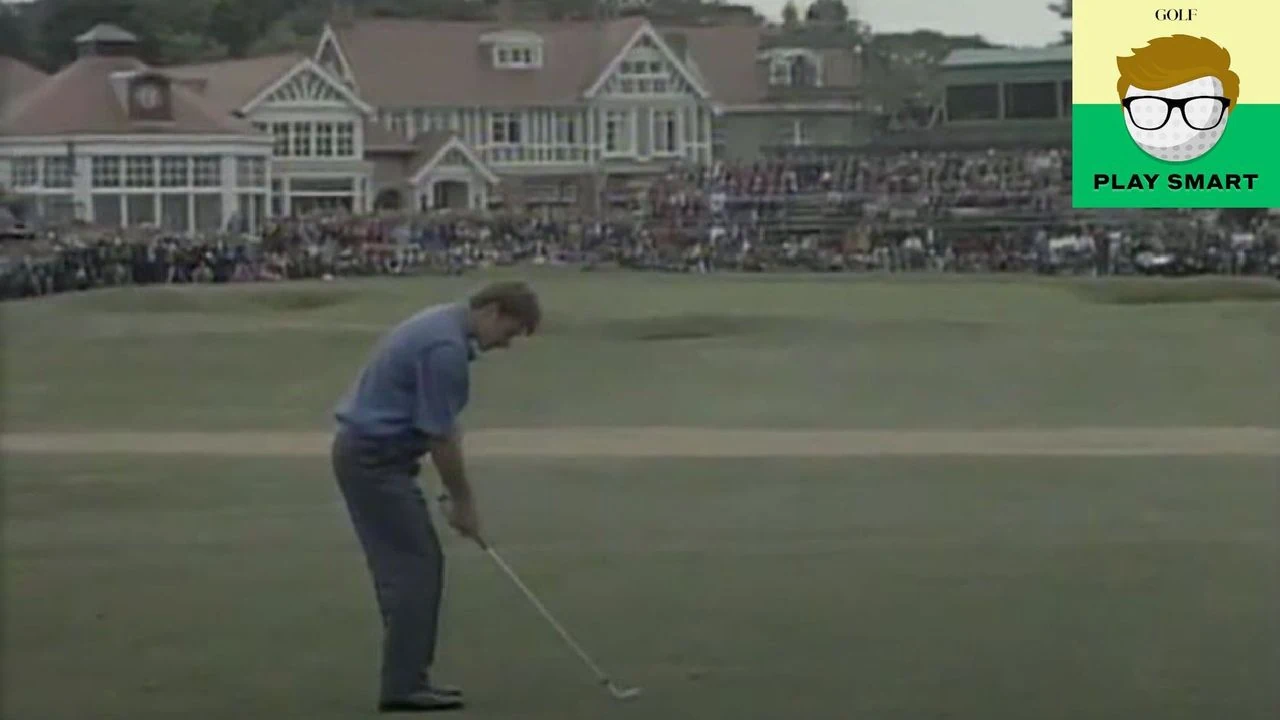
Faldo’s first major came at the 1987 Open Championship at Muirfield. In the final round, he made par on all 18 holes to win by one stroke. The performance captured the patient, low-error golf for which he became known: rather than chasing spectacular shots, he kept the ball in play and made his rivals find a way past him.
At the 1989 Masters, Faldo began the final round five strokes behind Ben Crenshaw. He shot 65 to join Scott Hoch in a play-off, then won on the second extra hole with a birdie putt. He defended the title in 1990, again winning a play-off, this time against Raymond Floyd. That year he also won the Open at St Andrews by five strokes, becoming the first golfer since Tom Watson in 1982 to win two majors in the same year.
His third Open title followed at Muirfield in 1992. Faldo had opened with rounds of 66 and 64, setting a record for the lowest first 36 holes at the championship, later matched by Brandt Snedeker. He lost his four-shot lead during the final round, but recovered with birdies over the closing holes to beat John Cook by one. The win made him a three-time Open champion.
Faldo’s sixth and final major came at the 1996 Masters. He started the last round six shots behind Greg Norman, then shot 67 to win by five as Norman finished with a 78. Faldo’s victory is often recalled alongside Norman’s difficult final round, but Faldo’s own score was a determined performance under pressure. After finishing, he embraced Norman and offered words of comfort. Faldo’s six majors comprise three Opens—in 1987, 1990 and 1992—and three Masters, in 1989, 1990 and 1996.
A wider record in golf
Faldo won 30 European Tour events and spent 97 weeks at the top of the Official World Golf Ranking. He twice finished first on the European Tour Order of Merit, in 1983 and 1992. His success also extended to the Ryder Cup: he represented the European side 11 times as a player and amassed 25 points. The record figures in the source account reflect the length and consistency of his involvement; his team career included wins in 1985, 1987, 1995 and 1997.
His playing style was the product of both technical work and temperament. Faldo was not noted for exceptional power; distance control, course management and concentration were among his strengths. The swing change that helped underpin his major-winning years also gave him a reputation for a methodical, conservative approach. Some critics felt it reduced the flair in his game; others saw a player who had removed weaknesses and made himself difficult to beat. His 18 consecutive pars in the final round at Muirfield in 1987 remain a striking example of that controlled approach.
Faldo also captained Europe at the 2008 Ryder Cup in Louisville, Kentucky. The United States won 16½–11½, ending Europe’s run of three consecutive victories. One of Faldo’s decisions was to select Ian Poulter as a wild card; Poulter went on to be the event’s leading scorer. Europe’s defeat forms part of the record of Faldo’s captaincy as surely as his playing triumphs form part of his competitive legacy.
From player to broadcaster and mentor
As his playing schedule diminished, Faldo developed a career in television. He worked on ABC Sports’ PGA Tour coverage from 2004 to 2006, alongside Paul Azinger and Mike Tirico. In 2006, he became CBS’s lead golf analyst, a role that curtailed his tournament appearances. His dry humour and detailed understanding of the game gave viewers an account informed by experience at the highest level. He joined the BBC Sport team for Open Championship coverage in 2012 and retired from his regular CBS broadcasting role in August 2022.
Faldo’s work with young golfers began before his broadcasting career. In 1996, he launched the Faldo Series, a set of competitions intended to give players under 21—women and men—opportunities to compete. The series has developed an international reach, and its graduates have included Rory McIlroy, Yani Tseng and Nick Dougherty. It offers a practical route from junior competition towards higher levels of the game, rather than relying on the example of a famous player alone.
He also established Faldo Design in 1991, a golf-course design practice, and co-founded the Faldo Golf Institute with Marriott in 1997. The institute’s programme was designed to help golfers of different abilities improve their skills and enjoyment of the sport. These projects extended his involvement beyond competition: one focused on courses, another on teaching, and the Faldo Series on creating opportunities for young players.
Honours and recognition
Faldo was appointed a Member of the Order of the British Empire in the 1988 New Year Honours and received a knighthood in the 2009 Birthday Honours, both for services to golf. He was named BBC Sports Personality of the Year in 1989, and the World Golf Hall of Fame lists him among its members. Other honours included the PGA Player of the Year award in 1990, European Tour Golfer of the Year in 1989, 1990 and 1992, and the Payne Stewart Award in 2014.
The prizes recognise more than a run of major wins. Faldo’s career included a substantial rebuild of his technique, a long record in European competition, repeated appearances in the Ryder Cup and a second working life in television. He also created programmes intended to give younger golfers a chance to compete and develop.
Why Nick Faldo deserves a place in British Legacy
Faldo’s place in British sporting history rests first on a clear record: six major championships, including three Open titles, and 97 weeks as the world’s top-ranked golfer. His victories came through different tests. At Muirfield in 1987 he made 18 consecutive pars in the final round; at the 1989 Masters he came back from five behind to win a play-off; at the 1996 Masters he turned a six-shot deficit into a five-shot victory. Those performances show why precision and composure became central to his reputation. His success also gave English golf a figure with sustained prominence across the European and international game.
His contribution continued after he stepped away from full-time competition. In the broadcast booth, Faldo explained golf to audiences from the perspective of a champion who had faced the same pressures he was analysing. The Faldo Series took a more direct approach to the sport’s future, providing international competition for young women and men and helping a number of players progress. Course design and golf instruction added further routes for his knowledge to reach players and the public. These are specific, lasting connections between achievement and opportunity: a competitive example for aspiring golfers, a familiar voice on major championships, and organised support for the next generation. Together, they make Faldo’s legacy broader than his six trophies, while keeping its foundation firmly in what he achieved on the course.
Sources
Nick Faldo — Wikipedia revision 1368917242 · Nick Faldo — Wikipedia
Adapted in part from Nick Faldo by Wikipedia contributors, under CC BY-SA 4.0. Text has been edited and combined with the existing article; this adapted text is shared under the same licence. Contributor history.