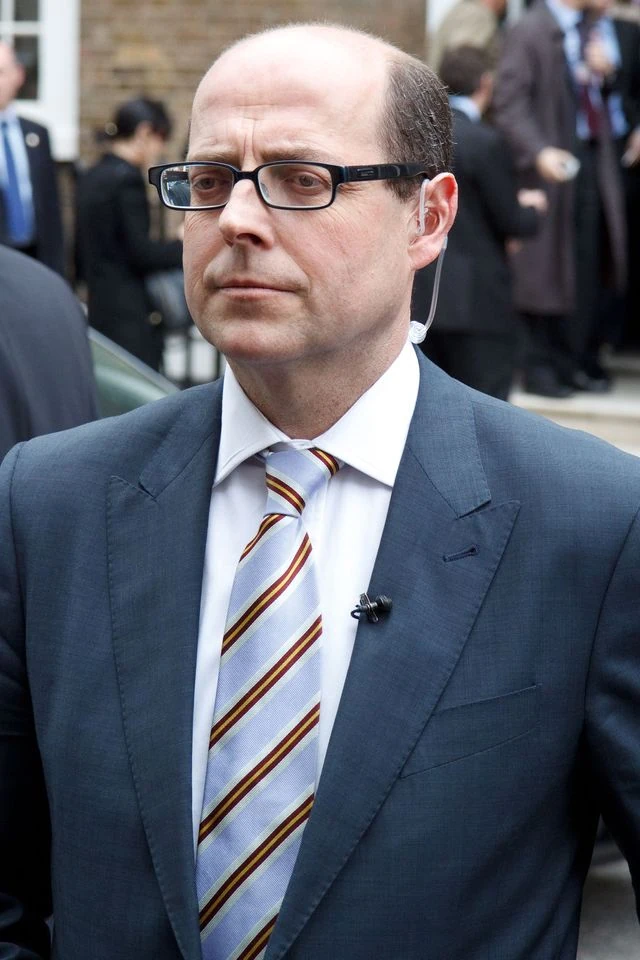
Nick Robinson’s career has taken him from the production rooms of broadcasting to the front line of British political journalism. He joined the BBC as a trainee in 1986, became a political correspondent a decade later, and went on to serve as political editor first for ITV News and then for BBC News. Since 2015, he has presented BBC Radio 4’s Today. Across those roles, he has covered elections, governments and arguments that have shaped public life in Britain.
From Macclesfield to broadcasting
Nicholas Anthony Robinson was born in Macclesfield, Cheshire, on 5 October 1963. He attended Cheadle Hulme School and studied philosophy, politics and economics at University College, Oxford. Politics was not only an academic interest: as a student, he became president of the Oxford University Conservative Association in 1985. His early political activity included roles in the Young Conservatives, where he was national chairman from 1987 to 1988.
Robinson’s first broadcasting job was at Piccadilly Radio in Manchester. He joined the BBC as a production trainee in 1986 and worked on programmes including Newsround and Crimewatch. He later became an assistant producer on On the Record. In 1993, he was appointed deputy editor of Panorama, a role he held for three years. These production and editorial jobs preceded his move into political reporting.
In 1996, Robinson became a political correspondent. He presented programmes on BBC Radio 5 Live, including Weekend Breakfast and Late Night Live, and covered the 1997 general election for BBC Radio. In 1999, he became chief political correspondent for BBC News 24 and also presented Westminster Live. The sequence matters: his career did not move directly from BBC trainee to chief political correspondent in 2002, as the earlier account stated. He left the BBC in 2002 for ITV News.
Political editor at ITV and the BBC
At Independent Television News, Robinson became political editor of ITV News. During the 2005 general election campaign, he challenged Prime Minister Tony Blair over a Labour Party poster that said the Conservatives would cut £35 billion from public services. Blair acknowledged that the figure was “disingenuous”. Robinson also questioned Blair about the make-up of an invited audience at a speech on immigration, asking why it appeared to include only white people. The episodes show the kind of direct questioning that became associated with his political reporting.
Robinson returned to the BBC in 2005 as its political editor, a post he held for ten years. He reported across BBC political programmes, including Today, The Daily Politics and Newsnight, and was part of the BBC’s election-night team. He also kept a political blog, first called The Campaign Today and later Newslog. These roles placed him across television, radio and online coverage rather than within a single programme.
His approach could be confrontational, and his exchanges with senior politicians drew attention. In 2006, during George W. Bush’s presidency, Robinson asked the US president whether he was in denial about the situation in Iraq. Bush replied, “It’s bad in Iraq. Does that help?” Robinson later described one of his own retorts in an exchange with Bush as a “fatal error”. Such moments became part of his public image, but they sit alongside a wider body of political reporting and should not be mistaken for its entirety.
Robinson’s coverage also prompted disputes about impartiality and judgement. During the 2010 spending-review coverage, he broke a protester’s placard and later said he regretted losing his temper. In 2013, he apologised after using the phrase “of Muslim appearance” when reporting on the suspects in the murder of soldier Lee Rigby. During the 2014 Scottish independence referendum, his exchange with SNP leader Alex Salmond prompted complaints from viewers about how the conversation was represented in a later report; the BBC said it considered the questions valid and the report balanced and impartial. These incidents form part of the record of a prominent journalist whose reporting and conduct were at times contested.
Election reporting, documentaries and radio
Robinson’s work extended beyond daily news coverage. He presented documentaries including The Street That Cut Everything, about a Preston street where council services were withdrawn for six weeks as an experiment, and The Truth About Immigration. For Radio 4, he made a 16-part series on British prime ministers and a three-part documentary, Can Democracy Work, ahead of the 2015 general election.
In July 2015, it was announced that Robinson would take over from James Naughtie as a presenter of Radio 4’s early-morning Today programme that autumn. The move marked a change from political editor to presenter, while keeping him in a daily setting where politics and public affairs are central. He has also presented election coverage and, in 2019, hosted the final head-to-head debate between Boris Johnson and Jeremy Corbyn before the general election.
Robinson’s political background has occasionally been raised in discussion of his reporting. He was active in Conservative youth politics before pursuing a broadcasting career; in a 2005 interview, he said his involvement with the Conservatives had ended twenty years earlier. Allegations of pro-Conservative bias were made, including after the 2010 election, but an allegation is not proof of bias. His record includes scrutiny of politicians across parties, as well as occasions when his reporting or on-air conduct attracted criticism.
A personal setback and return to work
In early 2015, Robinson underwent surgery to remove a bronchial carcinoid tumour. The operation was reported as successful, and he returned to BBC work on 13 April, during coverage of the general election campaign. The earlier account described his illness as lung cancer; the supplied Wikipedia article identifies the tumour more specifically as a bronchial carcinoid. This feature follows that account rather than repeating the broader description.
Robinson has written about his work in Live from Downing Street: The Inside Story of Politics, Power and the Media, published in 2012, and Election Notebook, published in 2015. These titles reflect two recurring subjects in his career: the machinery of political power and the demands of reporting an election. His broadcasting has combined newsroom roles, political editing, presenting and documentary work.
Why Nick Robinson deserves a place in British Legacy
Nick Robinson’s place in British Legacy rests on a substantial career in British political broadcasting. He moved through several distinct stages: production work at the BBC, political correspondence, political editorship at ITV News and BBC News, and presentation of Radio 4’s Today. That progression offers a view of how political journalism reaches audiences through different formats and institutions. His reporting has included election campaigns, government decisions and public arguments, while his work on programmes such as Panorama, Newsnight and Today connects him to enduring parts of British current-affairs broadcasting.
His legacy should not be reduced to praise about influence or claims that he changed journalism. The record is more specific and more useful: Robinson challenged Tony Blair over campaign claims and audience selection, questioned George W. Bush about Iraq, covered the formation of the 2010 coalition, and reported on the Scottish independence referendum. His career also includes occasions when his conduct or reporting attracted criticism, which belong in an honest account of a public journalist. Taken together, these examples show the responsibilities and scrutiny that come with reporting political power. Robinson’s work merits recognition because it has brought consequential political events and disagreements into broadcast coverage for audiences across Britain, while its contested moments remind readers that journalism’s public value depends on questioning and accountability.
Sources
Nick Robinson (journalist), revision 1367723188
Adapted in part from Nick Robinson (journalist) by Wikipedia contributors, under CC BY-SA 4.0. Text has been edited and combined with the existing article; this adapted text is shared under the same licence. Contributor history.