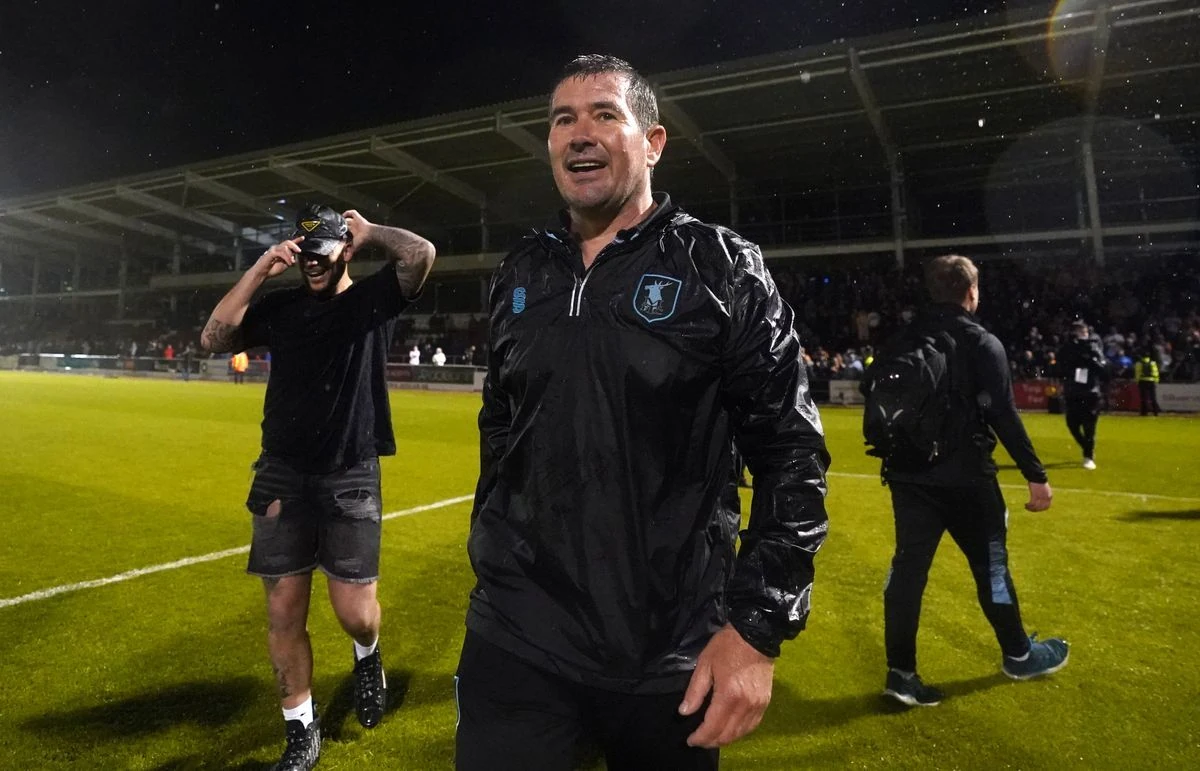
Nigel Clough’s career has crossed English football’s divisions in both directions: from Nottingham Forest and Liverpool as a forward, to the dugout at clubs including Burton Albion and Mansfield Town. He won the League Cup twice with Forest, earned 14 senior England caps and, as a manager, led Burton to the Championship and Mansfield to League One. His record connects high-profile clubs with the patient work of taking smaller sides towards promotion.
A footballing upbringing and a place at Forest
Born in Sunderland on 19 March 1966, Clough is the son of Brian Clough, the former striker and manager. Nigel grew up in Allestree, Derby, after his father became Derby County manager in 1967. When Brian took charge of Nottingham Forest in 1975, the club became central to his son’s own footballing development. Nigel joined Forest as an apprentice in 1982, spent a spell with Heanor Town, then returned to the City Ground and signed a professional contract in December 1984.
Clough made his league debut on Boxing Day that year against Ipswich Town. In 1985–86 he became a regular and Forest’s leading scorer, with 15 goals; he was also named the club’s Player of the Season. He remained an important part of the side as Forest established themselves among the leading teams of the period. A forward by trade, he could also be used in midfield and, towards the end of his Forest career, in defence.
Forest won the League Cup in 1989 and 1990, with Clough part of both trophy-winning teams. He also helped the club win the Full Members’ Cup in 1989 and 1992. Forest reached the FA Cup final in 1991 and another League Cup final in 1992, finishing runners-up in each. In the 1992–93 season, Clough was again Forest’s top scorer, but the club were relegated from the Premier League. His father retired as manager that year.
Across two spells at Forest, Clough scored 131 goals in league, cup and European matches, according to the career account, and became the club’s second-highest scorer. His league record for Forest was 311 appearances and 101 goals. Those figures help distinguish his substantial contribution from the more limited picture of a player who simply passed through a famous side.
Liverpool, Manchester City and England
Clough joined Liverpool in 1993 for £2.25 million. He scored twice on his debut, against Sheffield Wednesday, and had found the net four times by the end of August. Competition for places increased as Robbie Fowler emerged alongside Ian Rush, and Clough’s opportunities diminished. One of his most memorable Liverpool performances came against Manchester United in January 1994: he scored twice as Liverpool came back from three goals down to draw 3–3 at Anfield. He left the club in January 1996.
He moved to Manchester City, then fighting relegation from the Premier League. He played in all 15 of the club’s remaining league games that season, but City went down. A loan return to Forest followed in 1996, and he later had a loan spell at Sheffield Wednesday. His senior playing career ended at 32, after City’s relegation to the second division in 1998.
Clough represented England at under-21 level 15 times, scoring three goals, before making his senior debut against Chile in May 1989. He won 14 full caps between 1989 and 1993 without scoring, and was part of England’s squad at UEFA Euro 1992. His international career ran alongside a decade in which he was a regular figure in English top-flight football.
Building Burton Albion and taking charge at Derby
In October 1998, Clough became player-manager of Burton Albion, then in the Southern Football League Premier Division. He remained in the role until January 2009, combining management with playing for part of that time. Burton rose from the seventh tier to the Conference, and in 2006 held Manchester United to a goalless draw in the FA Cup third round before losing the replay at Old Trafford. The tie drew attention to the non-League club; Burton also earned a reported £600,000 from the replay.
Burton did not reach the Football League during Clough’s first spell. Instead, the side came close: in the 2008–09 season, a run of 11 consecutive league wins took them 13 points clear at the top of the Conference Premier before Clough left for Derby County. His time at Burton also brought success in regional and lower-league competitions, including the Northern Premier League Premier Division title in 2001–02 and the Southern League Cup in 1999–2000.
Derby appointed Clough in January 2009, following his father’s earlier tenure at the club. He led the side to Championship safety in his first season and remained in charge until September 2013. Derby finished 10th in his final completed season, 2012–13. The club dismissed him after a mixed start to the following campaign, with three defeats in eight days leaving them 14th after nine matches.
Sheffield United, a return to Burton and Mansfield
A month after leaving Derby, Clough became manager of Sheffield United, then in League One. The club were in the relegation zone when he arrived; a run of improved results lifted them clear, and they reached the FA Cup semi-final in 2014. They also made the League Cup semi-final in 2014–15, beating Southampton on the way. Sheffield United and Clough parted company in May 2015.
He returned to Burton in December that year. The club finished second in League One in 2015–16, securing promotion to the Championship for the first time in its history. Burton stayed in the division for two seasons before relegation in 2018. Clough stepped down in May 2020, citing the financial impact of the Covid-19 pandemic on the club.
In November 2020, Clough took charge of Mansfield Town, who were 22nd in League Two. Mansfield finished seventh in 2021–22, reached the play-off final and lost to Port Vale. Two seasons later, the team finished third and secured promotion to League One, ending a 21-year absence from the third tier. Clough received the EFL League Two Manager of the Season award for 2023–24 and was named the division’s Manager of the Month in February 2024. Mansfield finished 17th in their first League One season, and Clough signed a new two-year contract in July 2025.
Honours across a changing career
Clough’s playing honours include two League Cup winners’ medals and two Full Members’ Cup winners’ medals with Nottingham Forest. He was Forest’s Player of the Year in 1985–86 and 1987–88. As a manager, his career has brought achievements at different levels: Burton’s Northern Premier League title, promotion with the club to the Championship, and Mansfield’s promotion to League One. His Sheffield United side’s cup runs added two major semi-final appearances to that record.
These milestones make clear that his managerial work was not confined to the clubs and divisions associated with his playing career. At Burton, he spent a decade building towards Football League status; at Derby he managed in the Championship; and at Sheffield United and Mansfield he took on sides with promotion or survival challenges. The settings changed, but his career continued to revolve around English club football and the work of assembling competitive teams.
Why Nigel Clough deserves a place in British Legacy
Nigel Clough deserves a place in British Legacy for a career that joins two different forms of achievement in English football. As a Forest forward, he helped win two League Cups and scored 131 goals across his two spells at the club. He also played for Liverpool and Manchester City, and represented England 14 times. These are specific contributions to the national game, not simply a reflected reputation from being Brian Clough’s son.
His managerial record adds a different kind of legacy. At Burton Albion, Clough spent more than a decade taking a non-League side towards the Football League, then returned to guide it into the Championship for the first time. At Mansfield, he led a club from a relegation position in League Two to promotion into League One. Those outcomes matter to the clubs and their supporters: promotion changes the level at which a team competes, while sustained management gives a club a route to build on that progress. His work at Sheffield United, including runs to both major domestic cup semi-finals, further demonstrates the breadth of his career. Together, his playing honours and long service as a manager offer a grounded account of his place in English football history.
Sources
Adapted in part from Nigel Clough by Wikipedia contributors, under CC BY-SA 4.0. Text has been edited and combined with the existing article; this adapted text is shared under the same licence. Contributor history.